“Wicked: For Good:” Where The First Act Succeeds, The Second Act Falls Short
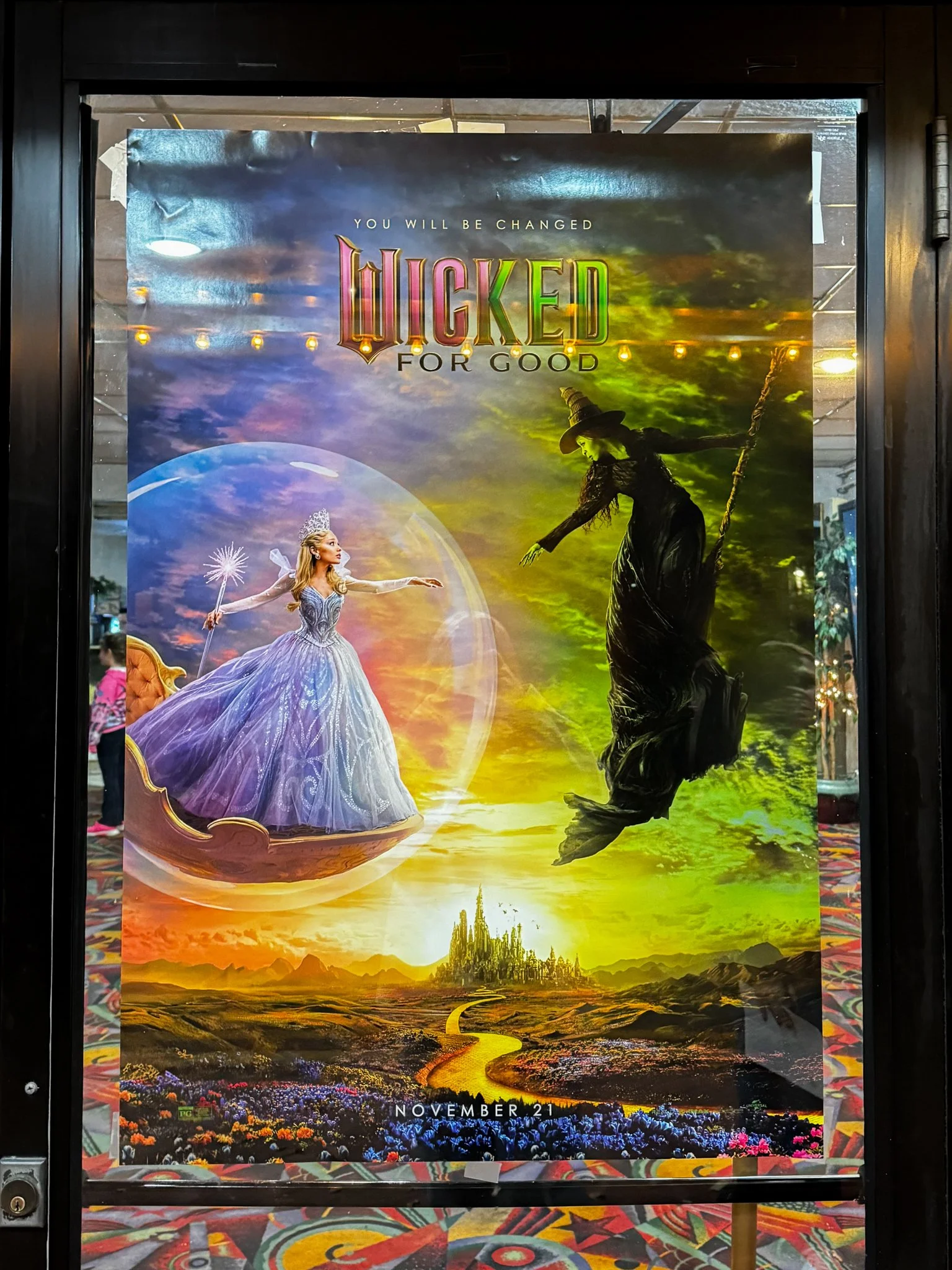
Wicked: For Good, the sequel to Wicked is now in theatres, but has gotten mixed reviews compared to it's predecessor. Photo by Ava Battinelli '26
Prancing down the yellow brick road of Oz comes “Wicked: For Good,” aiming to deliver a fulfilling closure to this live action adaptation of the iconic Broadway musical.
Most of the original filmmakers and cast make their return, with Jon M. Chu taking his seat back in the director’s chair, the two main leads of Cynthia Erivo and Ariana Grande reprising their roles and composer Stephen Schwartz writing the soundtrack.
Based on these premises alone, this film has all the makings of safely landing the Wizard’s hot air balloon on a strong note.
Released exactly one year apart from each other, the first film, “Wicked,” blossomed into a monumental success from the opinions of both fans and the film industry as a whole. It managed to reach over $750 million worldwide and took home two of eight nominated Oscar awards, setting a high bar for the impending sequel to replicate.
Therefore, as the only question to ask, does it ultimately live up to its lofty expectations?
The story picks up five years proceeding the events of the story’s first half, following Glinda, now the appraised and celebrated Glinda the Good, and Elphaba, now known as the dangerous and exiled Wicked Witch of the West.
It's not until major events start to occur in the world of Oz that the relationship between the two becomes fragmented. Despite their personal disparities, Elphaba looks to reunite with Glinda and help come to terms with their roles in the world.
As the stepping stone to this magical analysis, the remarkable visual style and effects from the first film are carried over and upholding the source material.
The magical immersion set within Oz is able to engross the audience into this fantastical, lively world, exhibiting vibrant colors that stretch across buildings and woodlands while showcasing the strong methods of worldbuilding. The subtle CGI and practical effects work hand and hand, coming together to build a fantastical environment the audience is riveted into.
The soundtrack was one of the first film’s biggest strengths that allowed it to reach its success. The same praise is warranted with the soundtrack of “Wicked: For Good,” skipping no beats in properly conveying the vocals and visuals that complement the film.
Set designs are illustrated through the aforementioned visual effects, choreography with the actors is exciting and the emotions of the story is carried through the lyrical performances of the two leads.
The star-studded cast shines again in their individual roles, with Erivo and Grande portraying more emotion and conflict between Elphaba and Glinda, making for a compelling relationship as they attempt to let bygones be bygones.
Every supporting character serves their own significant role, with Jonathan Bailey returning as the charming Prince Fiyero, Ethan Slater returning as Boq in a bigger role and Jeff Goldblum as the endearing and deceptive Wizard of Oz. Despite not being given equal focus, every major character shines in their given scenes that help build the overall drama of the story.
While the aesthetic filmmaking and strong performances of “Wicked: For Good” recaptures the fantastical nature of its predecessor, the film’s story that pairs both films together is where its shortcomings exist. While this may not affect the enjoyment for fans of the musical, the disjointed plot and uneven narrative pace restrict the film from reaching the heights of Act 1.
As the story progresses from where it left off, many story beats and themes that are newly introduced are not given enough time to be expanded upon, due to the shorter runtime compared to the first film and the congested amount of plot points loosely pieced together.
It projects the sense that the story is held together using leftover pieces of duct tape, trying to successfully conclude the story while tying itself into the original plot of “The Wizard of Oz.” This goes against the success of the focused, concise first act, making this second half of the story much more convoluted yet raw.
The film’s general pacing fluctuates throughout the runtime, either padding out sequences for long, drawn-out stretches or rushing through major points. This can be both a blessing and a curse, as the plot moves at a brisk or slow pace to focus on the essential sequences, but can also feel jarring and perplexing to follow. In this case, the inconsistency of the pacing ends up damaging the story, causing the narrative structure to crumble under its own impact.
“Wicked: For Good” delivers on its forefront goal, closing out the two-part story of Wicked through a vibrant, emotional conclusion. While the narrative struggles to land smooth sailing, there is no doubting the film’s technical achievement regarding its visuals, acting and music, successfully adapting the recognized Broadway musical to the silver screen.