How “Love Story” Brings 1990s Style Back to the Screen
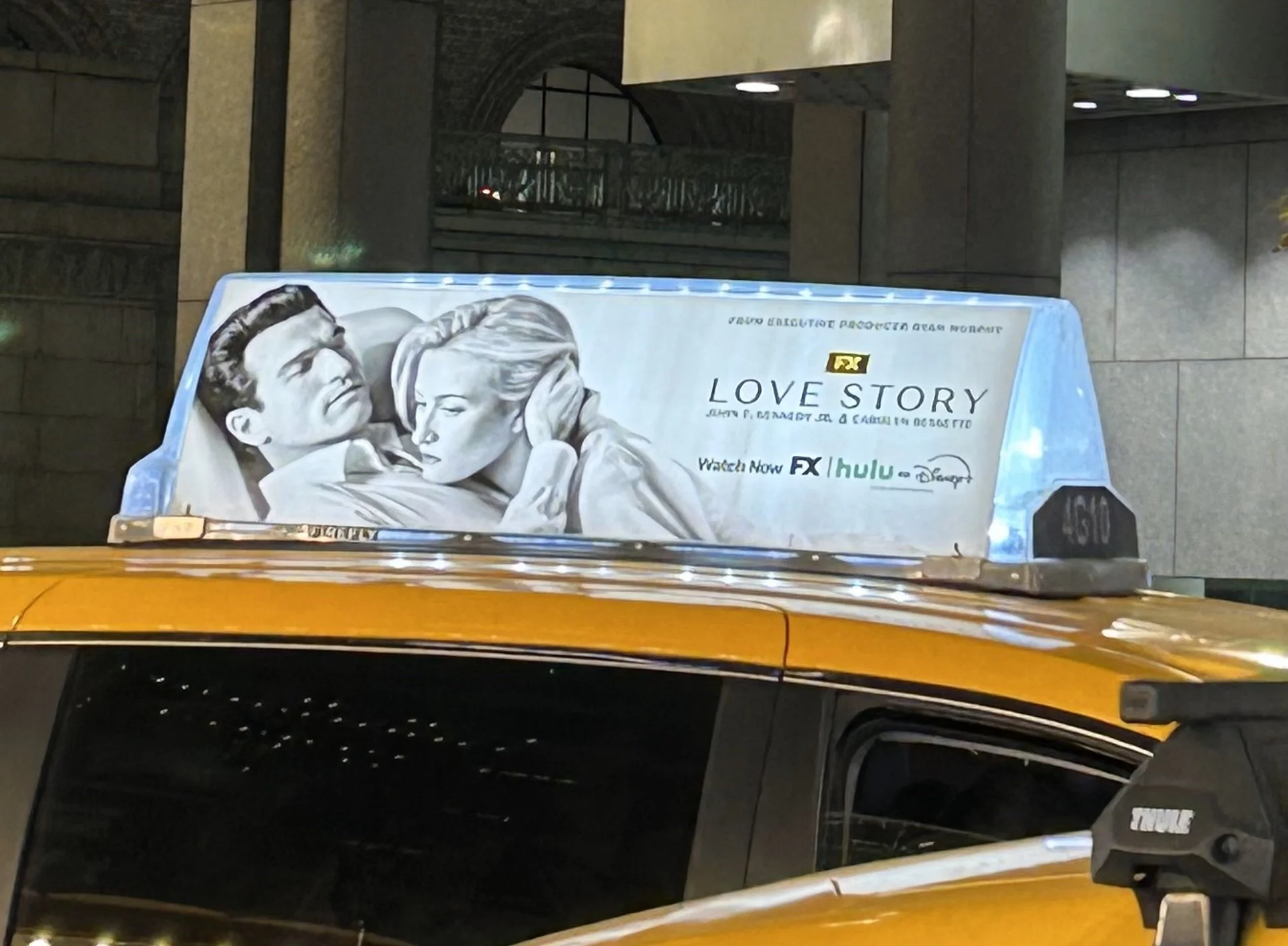
The poster for FX’s "Love Story" highlights the minimalist aesthetic and romantic tone of the series about Carolyn Bessette and John F. Kennedy Jr. Photo by Isabella Milojevic '28
In the late 1990s, Carolyn Bessette and John F. Kennedy Jr. were more than just a celebrity couple. Whether they were simply walking through their home neighborhood of Tribeca in New York City or having a heated fight in Battery Park, they were constantly followed by paparazzi and subject to endless commentary about their lives. Their relationship was often portrayed as glamorous and aspirational while also being subjected to intense public scrutiny.
Now, more than 25 years later, executive producer Ryan Murphy, creator of “American Horror Story” and “Monster,” is bringing the famed couple back to television screens and tabloids with “Love Story.” Instead of leaning into the scandal and tragedy surrounding the lives of Carolyn and JFK Jr., the series relies on style, aesthetic and production design to channel the nostalgic energy of the 1990s.
Carolyn Bessette’s style was understated yet refined. She avoided logos, favoring neutral palettes and clean, elegant silhouettes that emphasized timeless sophistication over trends. When first-look images from “Love Story” were unveiled, the internet criticized Sarah Pidgeon’s stark, bleached-blonde hair and what they saw as a dull attempt to recreate Bessette’s signature look.
After listening to public feedback, the production team made changes, inviting costume designer Rudy Mance onto the team, who examined fashion archives of the time to better reflect the way she dressed. The “Love Story” costume team gets one thing correct: it is not about creating an exact replica but about curating an aesthetic that matches the time.
For Carolyn Bessette, who worked at Calvin Klein, and John F. Kennedy Jr., luxury staples and clean silhouettes defined their style. At the time, Calvin Klein was a highly desirable workplace in the fashion world, shaping the sleek and modern aesthetic of the time.
The series highlights this 1990s minimalism, reinforcing Bessette’s lasting fashion influence. Its popularity has also sparked renewed interest in her personal style, with the pharmacy she frequented going viral for selling her signature headbands.
Beyond the costumes, the production design and lighting play a major role in shaping the tone of “Love Story.” Most interior shots take place inside of Calvin Klein’s offices, JFK Jr.’s Tribeca home or Jackie Kennedy’s Fifth Avenue apartment.
Contrasted with the minimalist, industrial themes of her son’s loft, Jackie Kennedy’s home is cluttered with pieces of history from her own life and evidence of being a well-traveled woman. JFK Jr.’s apartment was very plain, with clean lines and limited decor, potentially highlighting his desire to make a name for himself outside of his family’s famous history.
Throughout the show, the lighting is very complimentary, making scenes between Carolyn and JFK Jr. inviting and warm. The lighting allows the viewer to feel a sense of nostalgia for the time, even if they were not alive when these events were happening. This combination of visual choices contributes to the emotional feel of the story, allowing viewers to connect with the couple beyond the headlines that once described them.
The soundtrack of “Love Story” also helped bring the world of the 1990s to life. Recognizable songs from the decade such as “Heaven or Las Vegas” by the Cocteau Twins, “Fade Into You” by Mazzy Star and “Lover, You Should’ve Come Over” by Jeff Buckley, appear during key scenes, cementing the show in its time period.
However, not everyone has supported the series.
Jack Schlossberg, nephew of JFK Jr., publicly criticized the show and executive producer Ryan Murphy. In an interview with “CBS Sunday Morning,” Schlossberg said Murphy “knows nothing about what he’s talking about, and he’s making a ton of money on a grotesque display of someone else’s life.”
His comments reflect concerns from members of the Kennedy family about how their family’s personal lives and affairs have been on display for decades.
While “Love Story” focuses on recreating the style and atmosphere of the 1990s to advance the narrative of JFK Jr. and Carolyn Bessette, it also points to a rise in television shows retelling famous relationships and scandals. Murphy is not new to this genre. Shows such as “Monster” have received criticism for its portrayal of the Menendez brothers and murderer Ed Gein.
Through its emphasis on fashion, production design and music, “Love Story” aims to recreate not only events from Bessette and JFK Jr.’s lives but also elements of the late-1990s cultural atmosphere surrounding them.
Rather than centering the narrative on tragedy or scandal, the series presents their story through aesthetic choices that frame and contextualize their relationship.
For viewers who lived through that era, the show acts as a nostalgic reflection of a time defined by minimalism and tabloid journalism. For younger audiences, it offers a new perspective on a couple whose image still lingers in media and pop culture today.