The Rock and Roll Hall of Fame and the Elusivity of Genre
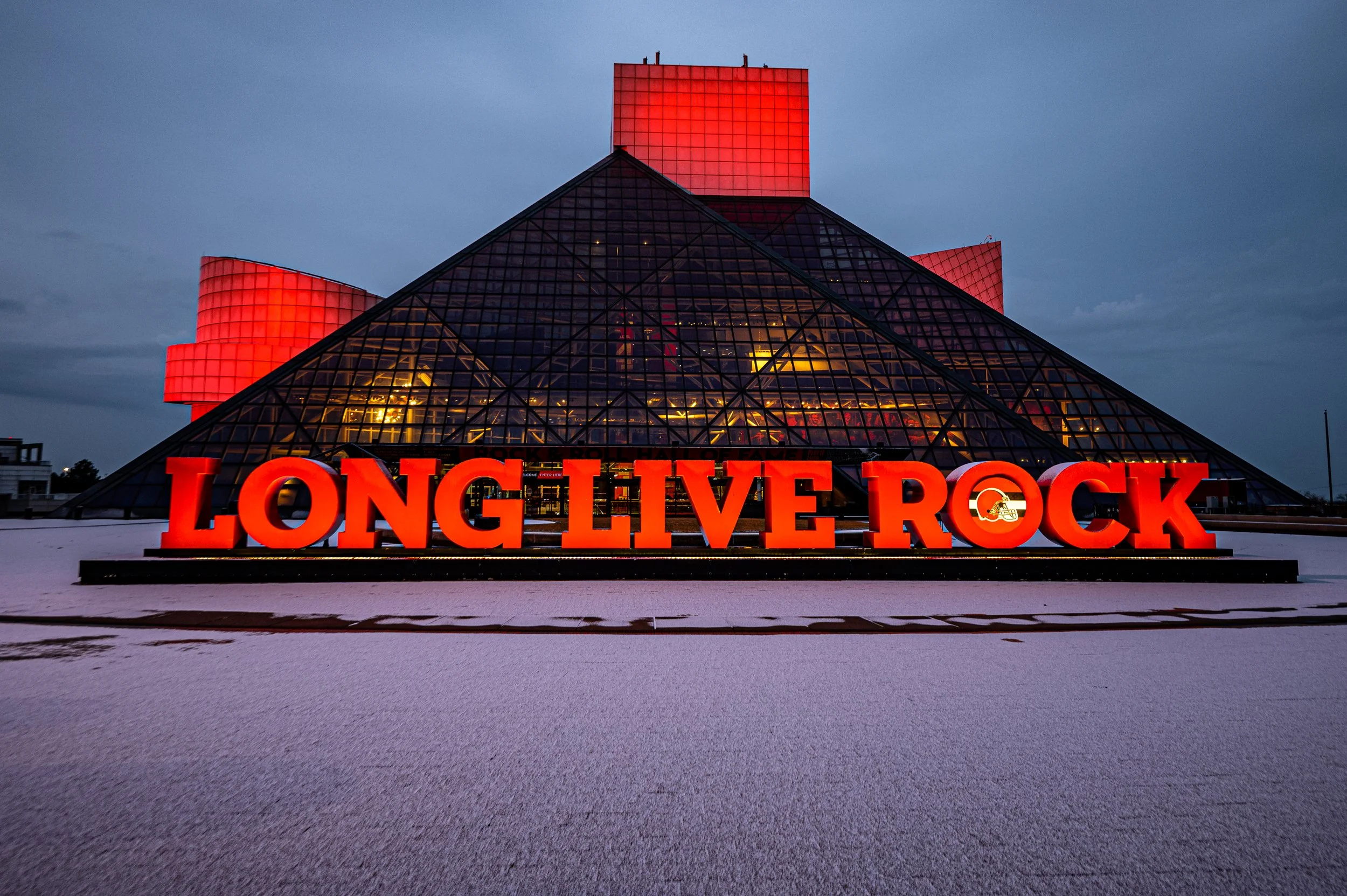
The exterior of the Rock and Roll Hall of Fame in Cleveland, Ohio. Photo by Erik Drost via Wikimedia Commons
The 2026 Inductees for the Rock and Roll Hall of Fame were announced on April 13, listing a variety of performers as new members of the incoming class. This round of performer inductees includes Joy Division/New Order, Celia Cruz, Iron Maiden, Sade, Fela Kuti, Oasis, the Wu-Tang Clan, Billy Idol and many more.
This wide array of artists spanning across genres showcases the current state of the Rock and Roll Hall of Fame; one that recognizes rock’s lack of dominance as a mainstream genre, and one that has become more open to breaking down the musical boundaries that genres often set.
Despite this progress from the Hall of Fame, the organization has not always been on this linear path of diversity within the inductee class.
The Rock and Roll Hall of Fame, which self-proclaims to be “music’s highest honor,” has been no stranger to controversy and criticism when it comes to who gets inducted and when. The inaugural class of 1986 featured no women in the lineup.
While that class highlighted influential artists such as Chuck Berry, Little Richard, Elvis Presley, Buddy Holly and others, women who pioneered the genre were excluded from being part of the initial honor.
In 1987, Aretha Franklin was inducted into the hall rightfully so; other influential women who serve as pillars of the genre, such as LaVern Baker (inducted 1991) and girl group The Shirelles (inducted 1996), have had to fight their way to induction.
Because of the unconventionality of genre and the Rock Hall’s emphasis on “authentic” rock music, one that favors guitar-wielding white men, women, and especially Black women, have been victims of the hall’s sidelining.
Only in 2024 was Big Mama Thornton inducted into the Hall of Fame, despite her being the original singer of the Elvis hit “Hound Dog,” penned by Jerry Leiber and Mike Stoller.
Thornton’s powerhouse vocals went on to influence Janis Joplin. However, Thornton is majorly hidden within the broader conversations about rock ‘n’ roll.
Associate Professor of History Dr. Steven Garabedian, who teaches an upper-level history course called “Rock ‘n’ Roll as U.S. History” at Marist University, weighed in on the institution of the Hall of Fame.
“As with any award ceremony like the Oscars, the Emmys or the Rock and Roll Hall of Fame, we would like to all participate in the social recognition of this as a meritocracy. And it does not appear to be a meritocracy… Women and people of color are conventionally snubbed disproportionately,” said Garabedian.
It is ultimately the decision of those in power who decide who goes into the Rock and Roll Hall of Fame and when.
Former Rock and Roll Hall of Fame board member and Rolling Stone co-founder, Jann Wenner, who famously stated in 2023 that Black and female musicians were not “as articulate enough on this intellectual level,” provides a glimpse into the mindsets of those who dictate inductees.
“If a dominant mentality of the Rock and Roll Hall of Fame board, that jury that makes these decisions, is dominated by thinkers like Jann Wenner and [rock music critic] Robert Christgau, then they want their dangerous, guitar-playing heroes in the Rock and Roll Hall of Fame, as soon as possible,” said Garabedian.
While there has been this emphasis on what is “authentic” and what fits the mold of “traditional” rock ‘n’ roll music, the Rock and Roll Hall of Fame has turned a corner in terms of its musical inclusivity and its acknowledgment of other genres that exist as offshoots of rock ‘n’ roll.
The Hall of Fame’s decision to start including performers from other genres perhaps speaks to the greater idea that rock ‘n’ roll serves as a musical pillar.
“One way to look at it from the point of view of the board members, if they’re looking for a line of integrity as far as the logic of it, we could say, there would be no rap and hip hop as contemporary popular forms, or contemporary pop music, without the explosion and the earth shattering nature of rock ‘n’ roll,” said Garabedian.
This “youth music from the margins,” as Garabedian described it, that was pioneered by African Americans has seeped into the musical landscape in a much broader and far-reaching way. The more “untraditional” inductees like the Wu-Tang Clan, Fela Kuti and Sade all encompass this rock ‘n’ roll spirit as musical innovators in their own way.
Talking about the recent inductees of the past few years that span genres outside of rock ‘n’ roll, Garabedian said, “It highlights the arbitrary nature of genre in the first place, because the genre of rock ‘n’ roll was an arbitrary construction.”
Rock ‘n’ roll as a genre has always been fluid and ambiguous. A direct offshoot of the African American-dominated rhythm and blues genre, rock ‘n’ roll owes its merits to the performers who exist within that canon.
The genre also has roots in soul, gospel, country and many other musical styles and traditions, showcasing just how “arbitrary” rock ‘n’ roll is a standalone genre.
Rock’s lack of dominance in the mainstream is evident with the hall’s decision to open its doors to performers from a plethora of genres. The Rock and Roll Hall of Fame can be viewed as a case study for the fragility, elusivity and transcendence of genre as a whole, and the 2026 class of inductees exemplifies that.