World Leaders Gather in New York for the UN General Assembly
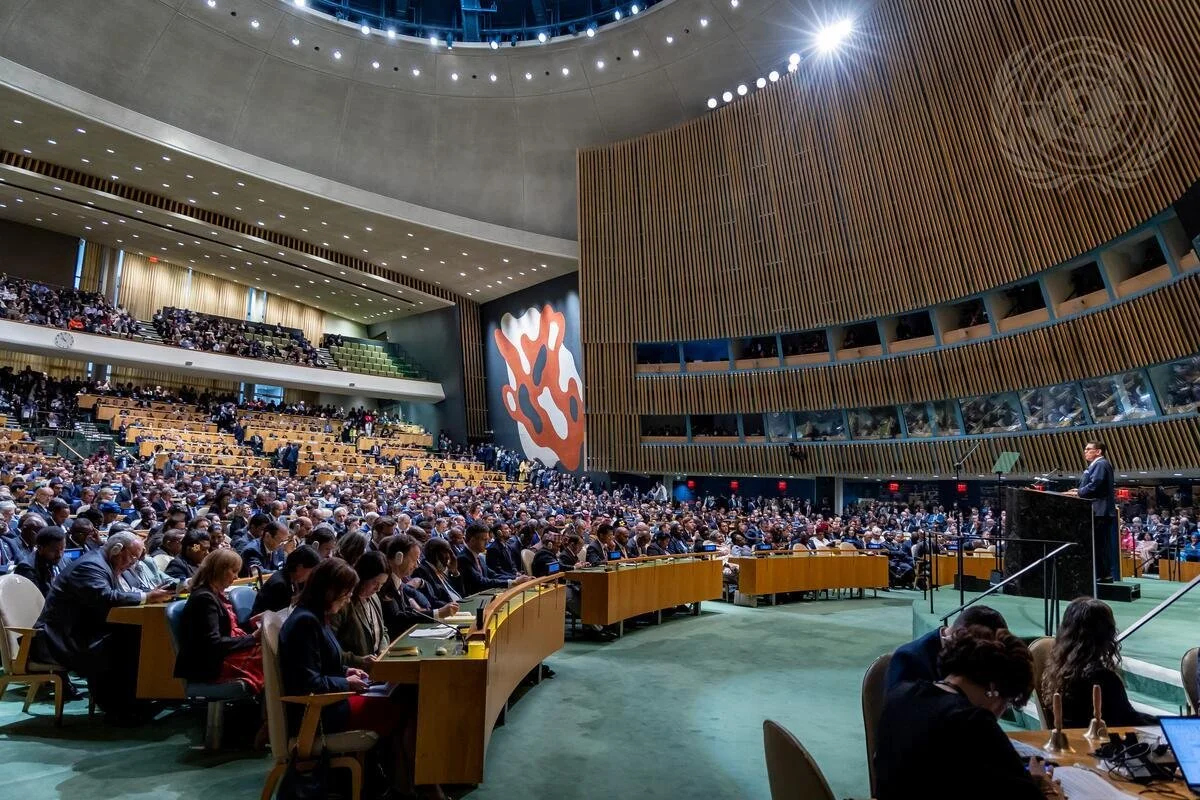
The General Assembly Hall in New York City during the opening of the general debate of the 2026 UNGA. Photo: UN Photo/Laura Jarriel
Leaders and representatives of UN member states met south of the Marist University campus in New York City for the general debate of the 81st United Nations (UN) General Assembly from Sept. 22-28. Topics ranged from climate change and artificial intelligence governance to pandemic prevention and response.
These annual assemblies bring world leaders together to discuss solutions to global crises. The UN has no standing army or police force of its own; member states contribute personnel to its peacekeeping operations. Sanctions and diplomatic tools are also used to address global crises.
The agenda for this year’s meeting focused heavily on climate change, including the Early Warnings for All initiative and a meeting to address the existential threats posed by sea level rise.
The Early Warnings for All initiative aims to provide warnings about multiple natural hazards, giving people time to prepare and evacuate. According to the UN, countries with comprehensive systems have disaster mortality rates nearly six times lower than those with limited capabilities.
A UN press release on early warning protection cites the glacial floods in Nepal in August 2026 as an example of what can happen when people have little or no time to evacuate. Since 2015, the number of countries reporting multi-hazard early warning systems has increased by 143%, according to the UN. More than 160 countries are receiving direct support to strengthen their systems.
The discussion on sea level rise and the existential threats it poses focused mainly on recognizing its effects on coastal cities and regions. The UN secretary-general’s report summarizes suggested measures and information to support informed decision-making.
Artificial intelligence was also discussed at a side event during the UN’s high-level week. Various panels discussed the role of AI in the future, framing the technology as an essential part of the world’s development.
Cardinal Pietro Parolin, secretary of state of the Holy See, said AI could benefit fields including medicine, agriculture, education and culture. He also emphasized the need for ethical guidance grounded in an understanding of humanity.
World leaders also met Sept. 25 to discuss pandemic prevention, preparedness and response. The World Health Organization estimates that 14.91 million excess deaths were directly or indirectly associated with the COVID-19 pandemic in 2020 and 2021. Pandemic prevention and responses to possible health threats were among the main focuses of this year’s General Assembly.