Supreme Court rules against Colorado’s Conversion Therapy Ban
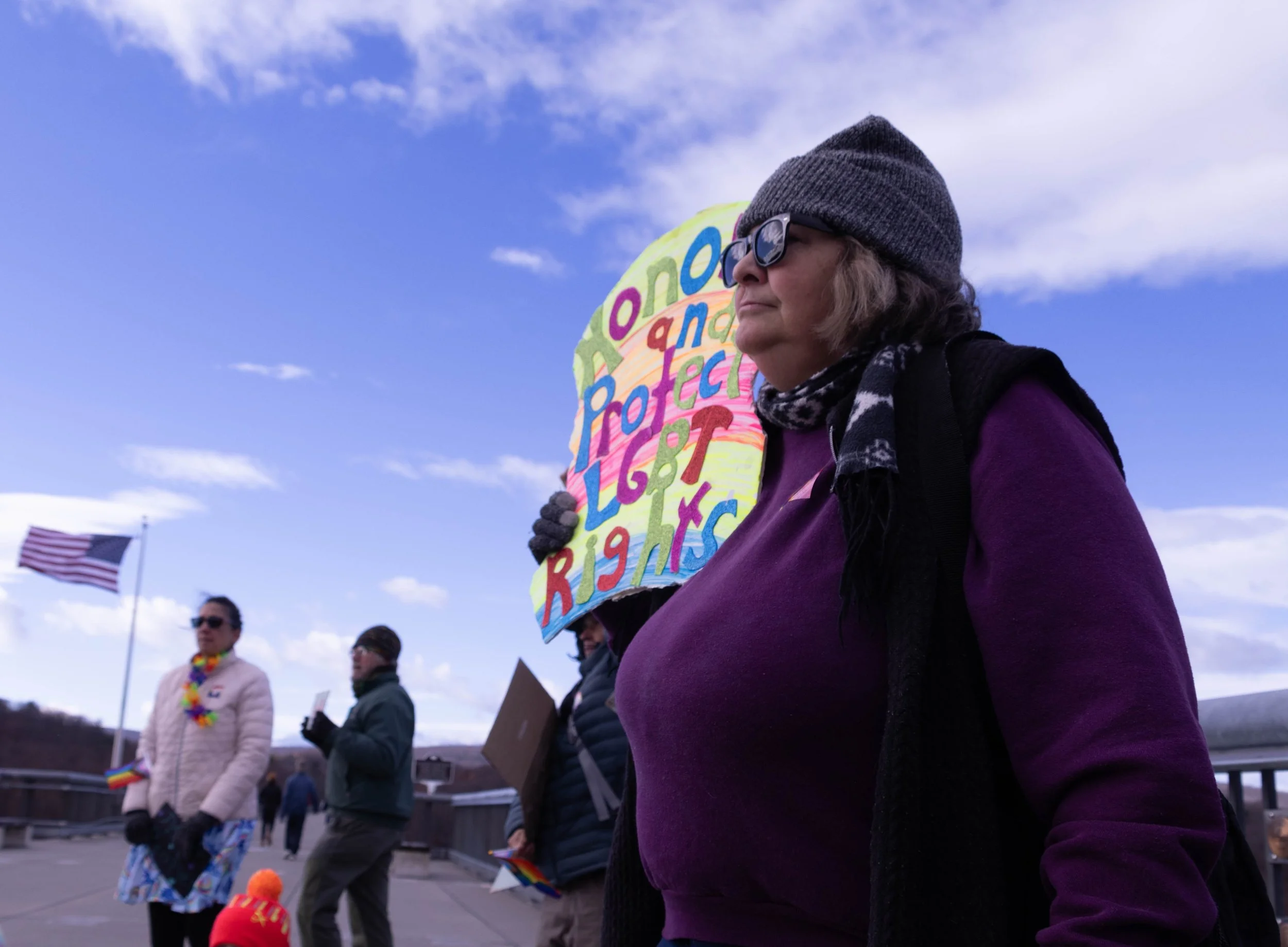
A marcher holds a sign at a local pro-LGBTQ+ demonstration on the Walkway Over the Hudson on Nov. 23, 2024. The demonstration was held in anticipation of federal attacks against LGBTQ+ rights after the reelection of Donald Trump. Photo by Cora Flynn '26
A ban on ‘conversion therapy’ for LGBTQ+ children and teenagers in Colorado was ruled against by the Supreme Court on March 31, sending the request back to a lower court to be tested for legality. The Supreme Court sided with a Christian Counselor, claiming an infringement on free speech within the First Amendment, according to AP News.
Colorado is one of 24 states in the US that forbids ‘conversion therapy,’ which attempts to prevent children and young adults from engaging with and expressing queer identities. Now, the Supreme Court denied the states the right to ban the practice, claiming that it would limit the right of Free Speech. The court ruled eight to one, with Justice Ketanji Brown Jackson being the only one opposing the decision. Jackson argues that states should be able to “regulate health care, even if that means incidental restrictions on speech.”
The case was brought forward by Christian Counselor Kaley Chiles to reverse Colorado’s ban on conversion therapy that has been active since 2019. She did so to stop the state from banning her practices. Chiles says that she uses conventional counseling methods to help her clients “with their stated desires and objectives” in counseling, which sometimes includes clients seeking to reduce or eliminate unwanted sexual attractions, change sexual behaviors, or grow in the experience of harmony with one’s physical body.
Chiles says that modern-day “conversion therapy” is different from previous, physically abusive practices, like shock therapy. Chiles’ attorneys argue that the ban would make it increasingly difficult for parents to find therapists willing to discuss gender identity without the counseling encouraging gender affirming care.
The Supreme Court sided with Chiles, claiming that Colorado’s ban on conversion therapy primarily targets medical treatment that claims to change a person’s sexual orientation or identity. Speech should not be included in this ban since it is a right protected by the Constitution.
Jackson argued in a 35-page dissent that the practice of conversion therapy is "ineffective and harmful” and by banning said practice, Colorado is holding practicing counselors, such as Chiles, “to the same standard of care that all other licensed medical professionals in that State must follow.”