Shooting at White House Correspondents’ Dinner: The Experience of Marist Students and Faculty in Attendance
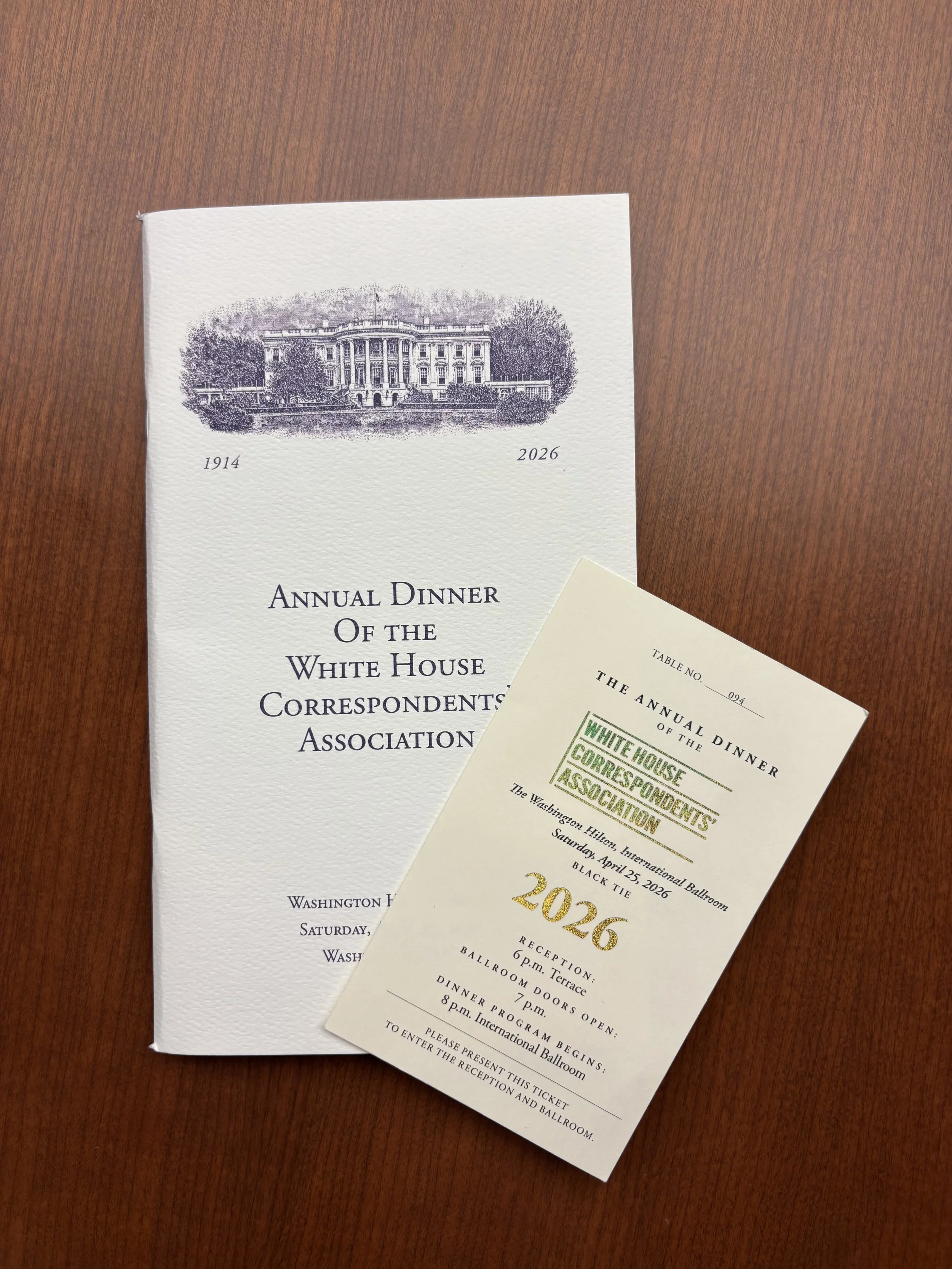
Christopher DeVizio's '27 ticket and program from the event. Photo by Jacquelyn Drain '27
On April 25, shots rang out at the Washington Hilton Hotel in Washington, D.C. during the annual White House Correspondents’ Dinner. Ten Marist faculty and alumni with the Marist Poll were present at the event, including two current students.
Cole Tomas Allen, a guest of the hotel, was identified as the alleged gunman. After the first course, the shooter opened fire on Secret Service agents in the hallway outside the main dining area. The suspect injured one Secret Service agent and was arrested at the scene. Agents swarmed President Donald Trump, Vice President J.D. Vance and members of the Cabinet who were present inside the ballroom.
Shortly before the shooting, Allen sent his manifesto to family members. “I am a citizen of the United States of America. What my representatives do reflects on me,” he wrote. “And I am no longer willing to permit a pedophile, rapist and traitor to coat my hands with his crimes.” Allen also specifically named administration officials as his targets, prioritizing highest to the lowest-ranking officials.
This annual dinner was started in 1921 in an effort to celebrate the First Amendment and the press. This was the first year that Trump had attended since taking office.
“This was an event dedicated to freedom of speech that was supposed to bring together members of both parties with members of the press, and in a certain way it did,” Trump said in a press conference following the incident. “The room was just totally unified, it was in one way very beautiful.”
Director of the Marist Institute for Public Opinion, Lee Miringoff, has attended this dinner since 2009. However, this year was the first time that students were invited to join. Christopher DeVizio ‘27 and Ethan Solury ‘26 were the exceptions.
The event began at 5 p.m. with the red carpet. DeVizio and Solury watched guests passing before entering the lobby for the cocktail hour.
“We are one of the first people in the ballroom because we are all just very excited to get in there,” said DeVizio. “We were all very giddy.”
Upon entering the dining room, DeVizio and Solury immediately used their program to mingle with the esteemed guests.
“This is like the holy grail of the event because it's a map to everyone in the room,” said DeVizio. “Ethan and I immediately start going on facial recognition, like, ‘Hey, can we get a picture?’”
According to DeVizio, these pictures ended up keeping him away from the gunfire. “If I didn’t see RFK, I would have gone to the bathroom right before the dinner started, and then you would have a different story, " DeVizio added. “I would have been in the bathroom or in the crossfire.”
It was about 30 minutes later when the scene changed.
“At first we heard glass shatter,” DeVizio recalled. “There’s a mirror on the wall of the stairs. That was the first thing hit by the Secret Service when they were shooting.”
The room's acoustics added more confusion to the situation. “I’m hearing a gun fire really loud and other people at my table didn’t even hear it,” said Miringoff.
Many in the room were left wondering what was going on.
“I didn’t know whether they [the Secret Service] were on our side or the other side,” added Miringoff. “When I was under the table, I assumed Trump had been shot.”
For family and friends trying to check in on those in attendance, the lack of information was worse.
“There’s no service in that room. There are 3,000 people in this room, and you’re three stories underground,” said DeVizio. “My parents never watched the news; they watched the news for the first time ever, thinking they might see me. They did see me, but then they saw me getting under a table.”
According to DeVizio, guests were only under the table for three minutes until they were given the all-clear. “It felt like 40 minutes,” said Miringoff.
On Thursday night, before the shooting, Mirighoff was able to show the students around the ballroom before it was packed for the event. “I wanted to show them because on Saturday night, it all looks so different,” he said.
After walking around the ballroom and scouting where their table would be, they headed backstage. “It’s where we suppose Trump was brought after the shooting,” said DeVizio. “I find it a little discomforting that we were able to do that,” added Miringoff.
According to footage released by the Department of Justice, the shooter also walked around the ballroom at 10:30 p.m. Friday, just 24 hours after the students.
“The gunman did the exact same thing as us. The odds that we bumped into this guy are high. We were doing the same thing,” said DeVizio. “What if it wasn’t 24 hours apart?”