The New York State Department of Health Lifts 50-Year Hudson River Fish Ban
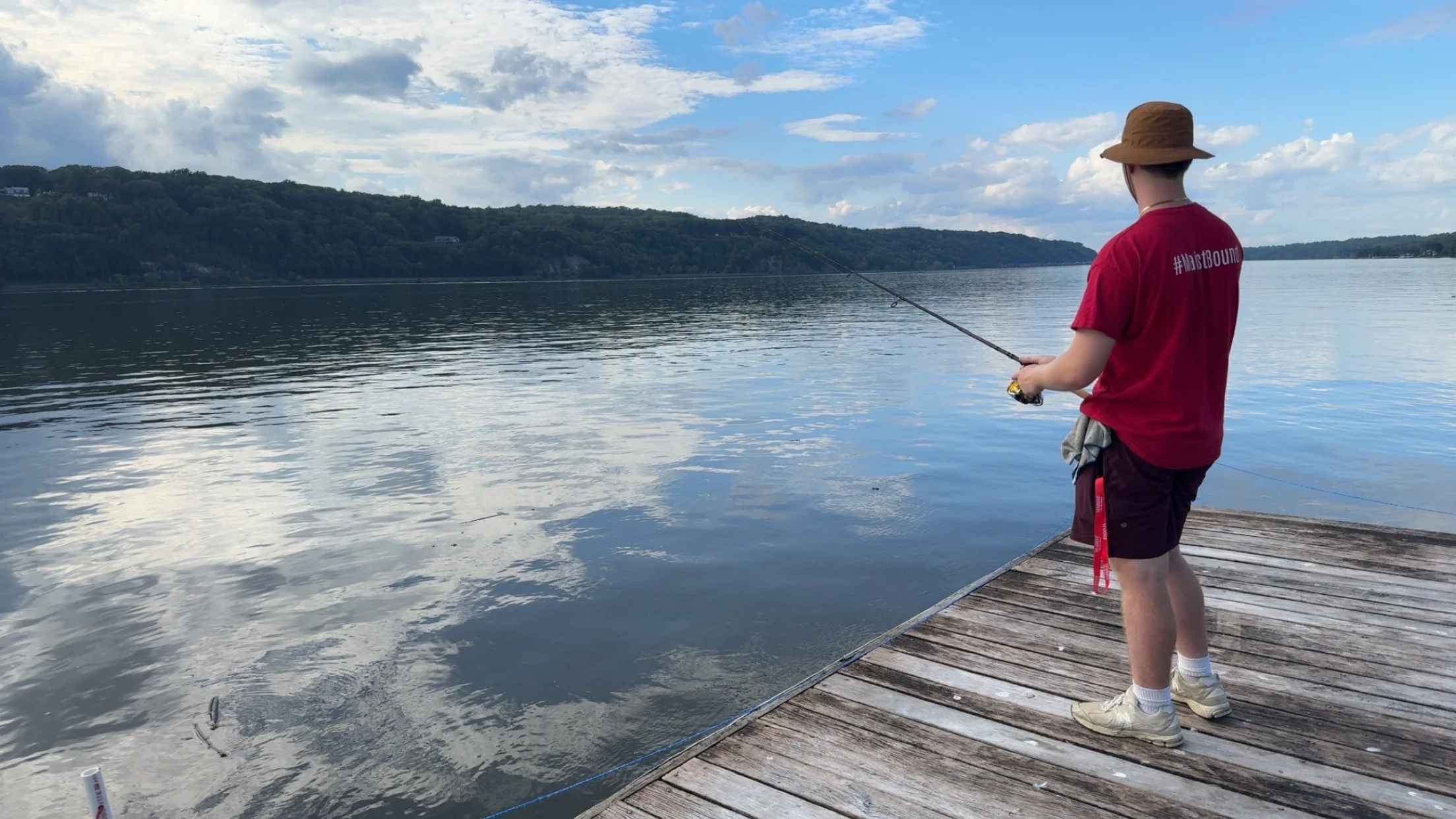
A Marist student fishes off of the dock at the campus riverfront. Photo via Kevin Torres '27
While the weather gets warmer and fishing season returns, the New York State Department of Health’s (NYSDH) website posted a press release stating that families can now eat some fish from the Hudson River following a 50-year consumption ban.
Polychlorinated biphenyls (PCBs), also known as “forever chemicals,” have long polluted the Hudson River, making the fish from the waters unsafe to eat. However, new declining levels of PCBs have allowed the relaxation of previous department advisories set in 2020.
In the release, the lower Hudson River (Rip Van Winkle Bridge in Catskill to the NYC Battery) was marked by the NYSDH as a region safe for limited consumption, with species like striped bass now having lower detected levels of PCBs.
The NYSDH website also issued new restrictive advice for waters containing fish contaminated with perfluorooctanesulfonic acid (PFOS).
Though limitations have been lifted on certain Hudson River fish and locations, species such as carp and smallmouth bass, as well as the Mid-Hudson region of waterways, are still under a non-consumption ban.
Though the lifting of the 50-year ban does not indicate that all Hudson River fish are safe to eat, the action signifies a shift in the progression of cleaning forever chemicals from the waterways.
“I think the main reason for improvement is strong environmental laws over the past few decades, but recently there has been a large investment in dredging work to clean up PCBs in sediment over the past decade in key areas,” said Dr. Zion Klos, environmental science department chair and associate Professor of environmental science at Marist University.
“This helps solve some of these issues for the long-term, though a very expensive process,” he added.
Community action groups such as the volunteer-led Riverkeeper of the Hudson region host river quality monitoring and state-wide cleanup efforts, which aid in the mitigation of waterway pollution.
Riverkeeper’s website includes a fishing and fish health interactive map where online users can check safe consumption advisories in their local waterways. Each section of the Hudson River’s map features species tables that list the fish that are currently safe to consume based on at-risk and general populations.
Marist’s own Dining Services sources its fish from Red’s Best, a Massachusetts shore fishery aggregator. The “Fresh Catch” section of the Marist Dining Hall features East Coast seafood on a rolling basis.
“All of Red’s Best can be traced to boat origin, catch method (line, net, trawl, etc.), and supplies a QR code for students and guests to transparently review sourcing of the fish,” states Michael Eggert, General Manager of Gourmet Dining at Marist.
“I’m doubtful that at this point, any suppliers of fish from the Hudson River would be able to comply with our sourcing requirements and safety guarantees,” Eggert stated in response to the lifting of the ban.
“My hope is that the waters remain safe and continue to improve to ensure we have a much cleaner and safer local environment,” he said. That said, I don’t foresee anything from the Hudson hitting a plate on campus any time soon.”