Stuck in the Mid-Semester Slump? You’re Not Alone
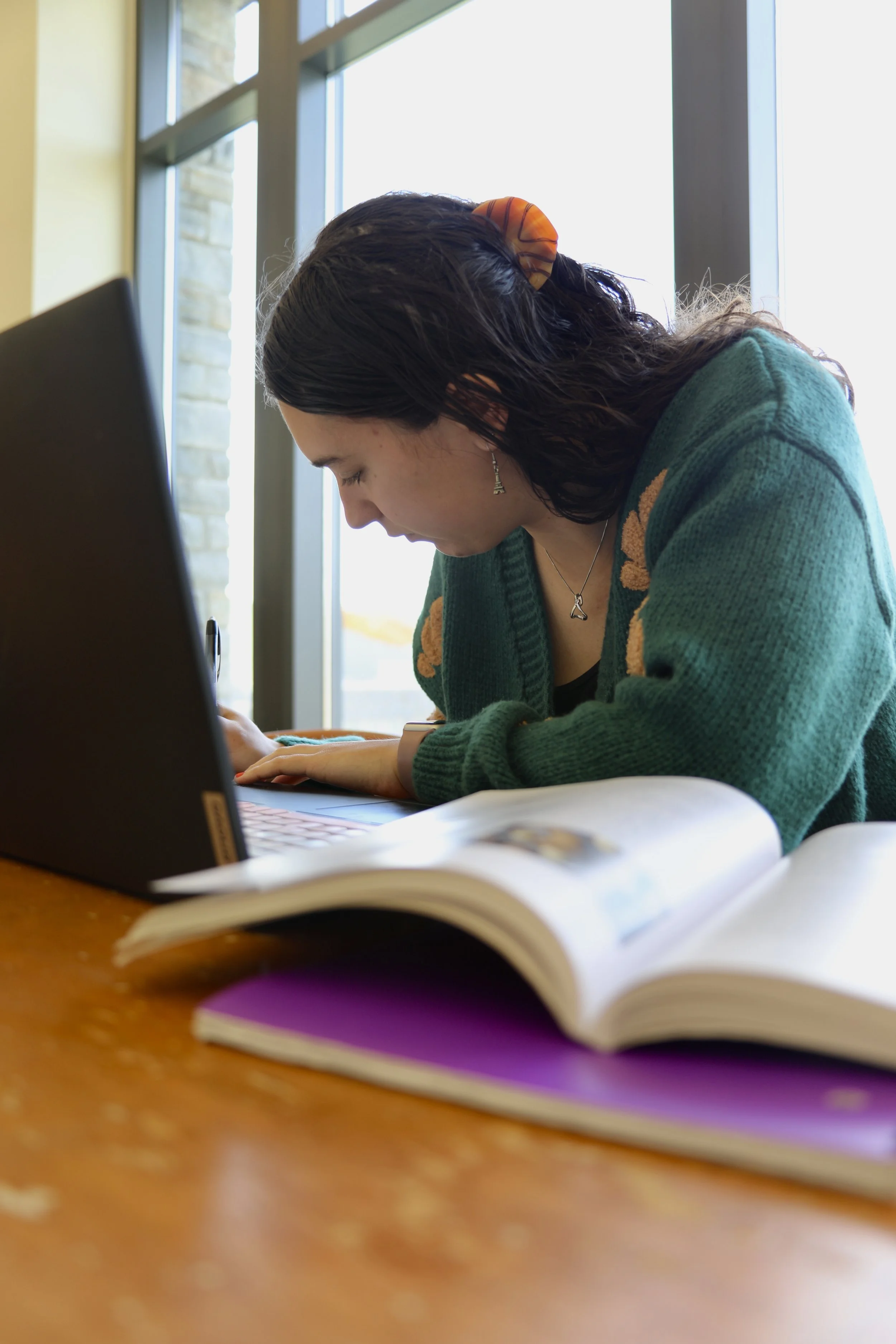
Student Kaitlyn Orzol '28 keeping up with coursework in the library. Photo by Ethan Orchanian '27
Fall isn’t just the season of apple picking and flannels; it also marks a time of increased stress and responsibilities weighing on many undergraduate students.
The “mid-semester slump” refers to this period of noticeable decline in motivation, energy and overall performance among college or university students. Between shorter days, colder weather and academic pressure and workload ramping up during and after midterms, it’s a familiar challenge with unique facets each year.
“I didn’t have a name for it before,” said Samantha Stulbaum ‘26. “For me, it’s about being less motivated. I get in a good flow at the beginning of the year, but then midterms come, I have a break, and I can’t get back into a groove.”
Amanda Gorrin ‘28 said that her slump started mid-October. “It’s getting a bit harder to get out of bed every single day, especially for my 9:30 a.m. class. I feel like I can never put the brakes on.”
Students have observed that this lull in motivation or performance is rather unanimous among their peers. “I’ve noticed a lot less people attending class,” said Miles Byrnes ‘27. “In my Intro to Cybersecurity class, only about half the people show up.”
Gorrin agreed, observing a similar pattern in her smaller courses. “We end up talking about how tiring it is to go to class. It’s a mutual feeling, and it makes me feel better that I’m not the only one,” she said.
Everyone’s experience is different, and whether this fall feels harder or easier depends on perspective and roles to fulfill.
Alexa Akselband, assistant director of Marist Counseling Services, said, “Students consistently express difficulty with meeting deadlines, managing their time and workload, maintaining work-life balance and communicating their struggles with their professors.”
Beyond academics, she also reported on environmental, social, familial and cultural factors impacting students.
“Some have expressed elevated levels of stress as a result of missing family and friends at home, strained relationships due to long distance, adjusting back to campus after studying abroad, preparing to study abroad in upcoming semesters and navigating today's political climate,” she said.
From a student's point of view, Stulbaum said, “It’s the same challenges, different semester. As a senior, the semester as a whole has felt stressful regarding what comes next. However, my class load is smaller, and I have more of an interest in what I’m learning, so it kind of balances out.”
Kaitlyn Orzol ‘28 said, “This semester has been particularly challenging in managing a new type of project-based class and preparing for frequent presentations while also being an ambassador and attending tennis practices.”
While some academic burnout is expected mid-semester, psychologists suggest that seasonal and environmental factors can make this lull worse in places like the Hudson Valley. Losing daylight hours affects mood-regulating hormones, potentially leading to Seasonal Affective Disorder, also known as seasonal depression. This condition is characterized by feeling down, losing interest in typically enjoyable activities, and experiencing low energy or sluggishness nearly every day.
This fall has also seen erratic weather patterns, with unusually warm days followed by sudden temperature drops, which can further disrupt sleep and routines.
Even in the thick of their slumps, students have developed creative ways to stay positive and afloat and avoid burnout as the semester drags on.
“I like to treat myself to a good snack after a productive study session or an exam, and I bake sweet treats after a long week,” said Orzol. Maintaining a positive mindset has also allowed her to overcome the grasp of this lull. “It’s fulfilling to see all my hard work come to fruition while seeing how I can push myself academically and participate in extracurriculars.”
For Stulbaum and Byrnes, it’s all about accountability and self-pacing.
“It’s fully deadlines,” Stulbaum said. “I push myself to stick to my own schedule.”
Byrnes added, “I refer to my checklist that’s organized by subject and prompt. I update it weekly based on what I need to get done, and it’s kept me on track the entire semester.”
Gorrin turns to a new hardcore but effective study tactic: looping a song or music artist she dislikes until finishing her work. Recently, she’s had “Like a Rolling Stone” by Bob Dylan on repeat. “It’s a reward when I get to turn off a song I can’t stand, and I find myself completing assignments faster.”
However different their strategies, each emphasizes that when motivation dips, finding small ways to reward or maintain progress can make all the difference.
When personal strategies aren’t enough to break through the slump, students are encouraged to seek out additional campus resources for support. On campus, resources such as Counseling Services, the Academic Learning Center and peer tutoring programs remain available for students who require additional support.
Assistant Director Akselband stated, “The Counseling Center offers support to students via individual and group counseling, as well as campus-wide workshops such as Let's Talk and Mind Your Mind. If students wish to seek support elsewhere, we happily facilitate referrals to other providers via Thriving Campus, a search engine made specifically for this purpose.”
Many students also agree that professor accessibility is beneficial.
“Attending my professors’ office hours has been a great resource for me to keep myself organized,” said Orzol. “Having approachable professors has made it easy to receive feedback on my work.”
As finals approach, students are already manifesting a much-needed break and returning to normalcy.
Gorrin acknowledged her lack of quality rest due to the slump. “I am most looking forward to getting adequate sleep and feeling relaxed, like there’s a weight off my shoulders.”
Stulbaum echoed the same message. “I can’t wait to get back into a schedule and have more consistency.”
While the mid-semester slump is a challenge nearly every student faces, it’s also a reminder of just how resilient the Marist community can be. With personal strategies, peer support and campus resources, students are equipped to navigate the fatigue and find their rhythm again. The semester’s second half may be demanding, but students can rest assured of well-earned breaks ahead.