There’s More than Meets the Eye with Marist’s Department of Spiritual Life and Service
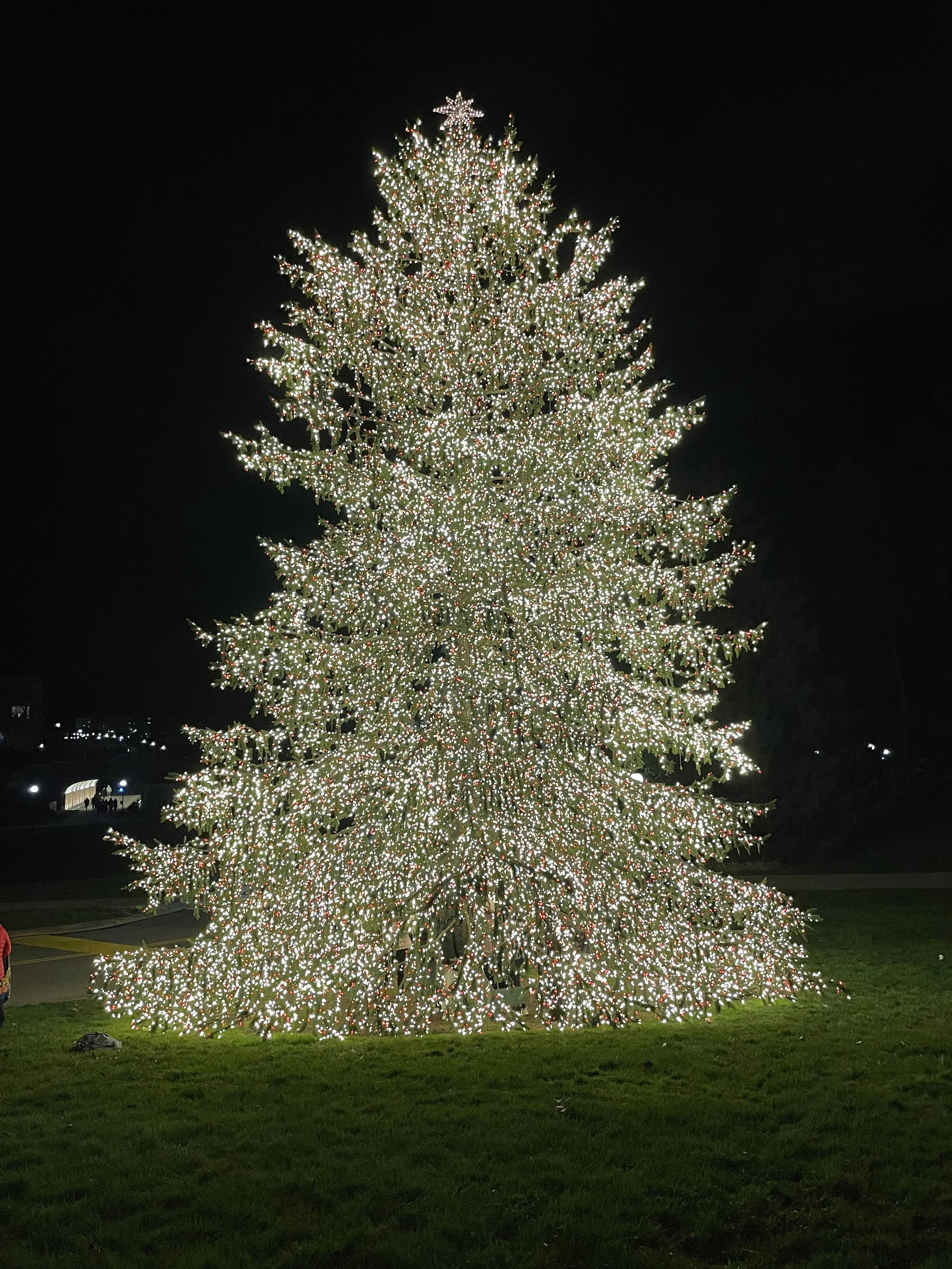
The Department of Spiritual Life and Service organizes a wide variety of on- and off-campus programs, including the lighting of the Marist tree. Photo by Emma Gaecklein '26
Nestled beside Leo Hall on Marist University’s campus, sitting on the east bank of the Hudson River, lies Byrne House. The building is not visible from the main areas of campus, such as the green, the Dyson Center or the Gartland Commons dorms, but it’s a busy hub for one particular department at Marist: the department of Spiritual Life and Service (SLS).
Formally known as Campus Ministry, Spiritual Life and Service serves as a forum and support system for students, staff and faculty at Marist.
“You meet students where they are,” said Miriam Eisenmenger, a chaplain with SLS. “Whenever you’re in an educational institution, you’re going to be changing with the students and with the times.”
The department changed its title from Campus Ministry a little over two years ago to adapt to the growing number of students who identify with religions besides Catholicism or do not identify with a religion at all. The new name also highlights the community service aspect of the department.
“That came out of talking with students, and students not knowing what Campus Ministry actually means,” said Eisenmenger. “Back in the day, the majority of our students came from Catholic high schools, so they knew what Campus Ministry was. Today, not many people come from those schools.”
The trend of having no religious affiliation has grown with each generation. The Public Religion Research Institute found that 34 percent of Gen Z and 35 percent of millennials identify as having no religious affiliation, compared to 25 percent of Gen X and 19 percent of baby boomers.
The 2023 to 2024 Religious Landscape Study from Pew Research Center found that as respondents’ level of education increased, their reported belief in God decreased. 60 percent of respondents with a high school education or less said they believed in God or a universal spirit, while 48 percent of respondents with a full college education said they believed and 47 percent of respondents with a postgraduate education said they believed.
“Here at Marist, roughly 30 percent of people have no spiritual identity or affiliation,” said Eisenmenger. “But they want to do good. They want to give back to the community. That’s where our service side comes in, being able to do those good things that all humans have the desire to do and providing opportunities for that.”
Service projects through Campus Spiritual Life and Service include Hunger Awareness Month during the month of November, the Giving Tree project during the holiday season and collecting donations of gently used clothes from students at the end of the school year.
SLS is responsible for organizing the annual Hunger Walk across campus to raise awareness of food insecurity. The department also organizes Food Drive Week to collect canned and nonperishable goods for families in need in the Poughkeepsie area. This year, goods are being donated to Dutchess Outreach, a nonprofit focused on food insecurity in Dutchess County.
From mid-November until early December, SLS also organizes the Giving Tree Project. The Project, now in its 34th year, utilizes gift and monetary donations from the Marist community to help those in need.
To participate, students, faculty and staff find a tree on campus and pick an ornament. The ornament has information on the recipient, including age and a description of the gift to purchase. From there, donors purchase their gifts and drop them off at the Lady Seat of Wisdom Chapel on campus.
Giving Trees can be found in academic buildings across campus, including Lowell Thomas, the James A. Cannavino Library, Dyson and Hancock.
Along with organizing these service projects, SLS provides opportunities for all chartered clubs to get involved in the community. The department offers service vans that clubs can use for transportation to service projects. Drivers just need a valid driver's license and receive training from someone from SLS.
“Our service vans, they’re open to any club or group that wants to get together and go out and do service,” said Eisenmenger. “If you’re trying to do good, we’ll help you.”
This accessibility extends past the department’s service work. SLS is open to all religious and spiritual affiliations, as well as those who are nonreligious, and works to close the gap between these groups.
“A lot of times, students will hear ‘spirituality’ and make assumptions about what it means,” said Eisenmenger. “We want to destigmatize that and help them understand, we’re not here to convert anybody. We’re here to meet you where you are on your journey.”