More Than a Bin: Taking off the Lid on Marist Composting and Disposal
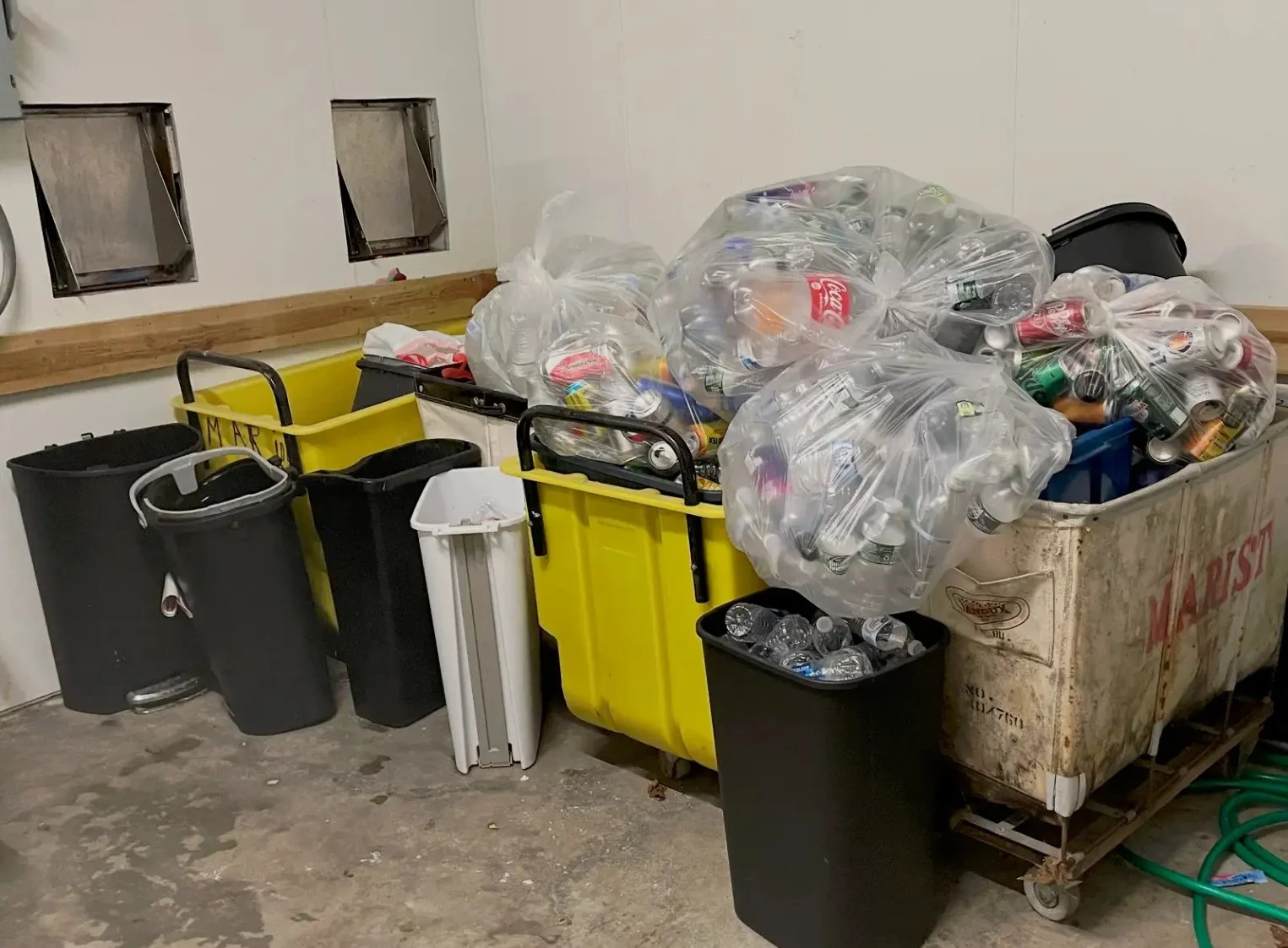
Sorting recyclables at Marist is a massive undertaking. Photo courtesy of Kim Bodendorf
Tucked away beyond lower Fulton lies the Marist University Physical Plant, responsible for housekeeping, maintenance and the enormous task of sorting, transporting and disposing of waste on campus. While the process ends for most at the trash bin, it continues for both Marist staff and outside companies.
Marist operates a four-stream waste system, separating waste into eRecycle, trash, recyclable and compostable categories. Much of the composting process is handled through Greenway, an organic disposal company that picks up green compost bins (each lined with compostable bags), resets them and transports the full ones to Highland for processing. This partnership allows Physical Plant to move material off campus efficiently, keeping the composting pipeline running alongside the broader waste operation.
Having produced 187,445 pounds of food waste in 2025 alone, Marist is subject to New York laws on food donation, obligating it to compost or donate excess food scraps. Even with composting being an ongoing goal, Physical Plant’s recent updates are making the process faster and more consistent for both the end user and composting partners. Marist partners with Greenway, an organic disposal company, to send away much of the material they use for compost.
“We already do recycling and trash, and now we’re getting uniform for composting,” said Kim Bodendorf, associate director of Physical Plant.
Most composting action happens at the Murray Dining Hall, with signage encouraging students to place food scraps into green compost bins. Gourmet Dining does some of the composting process in the dishwashing stage, but much of it falls onto students. This new signage, designed to inform and encourage, accompanies Physical Plant’s shift to all-blue recycling bins and all-green composting bins across the entire campus, a project completed in February.
"We've taken some steps back so we can get this right and forge ahead,” said Bodendorf.
Contamination is a major hurdle for the composting process. While sorting food from waste is typical in the dining hall, buildings like Dyson see high rates of plastic contaminating compost bins, resulting in more manual labor needed to get it moving in the process.
The sheer quantity of garbage produced on campus is the largest factor that slows down the composting process. Students can combat waste concerns on campus by using reusable bags and bottles and being sustainable wherever they can. Taking special care to place items in the correct bin is also a crucial step for Physical Plant and other partners.
“The way we’re going to move forward is more education and eventually have actual students police the composting at the busy hours in the dining hall,” said Bodendorf. “It’s a challenge for Gourmet, but it’s the students, too.”
Physical Plant works closely with Gourmet Dining and the Sustainability Action Planning Committee (SAPC), involving both students and faculty, to keep Marist up-to-date on sustainability and composting initiatives.
Composting is just one of many ongoing tasks for Physical Plant, which is also working towards reducing print materials, reusing materials in programs like the Semester Sweepout and educating Marist students on various environmental practices.
“At big events like commencement, first we would aim for carbon zero and eventually decarbonization and zero waste commencement,” said Bodendorf. “You have to do the right thing. If you consume less, you can worry a little less.”