Marist Dining Prioritizes Dietary Restrictions for all Students
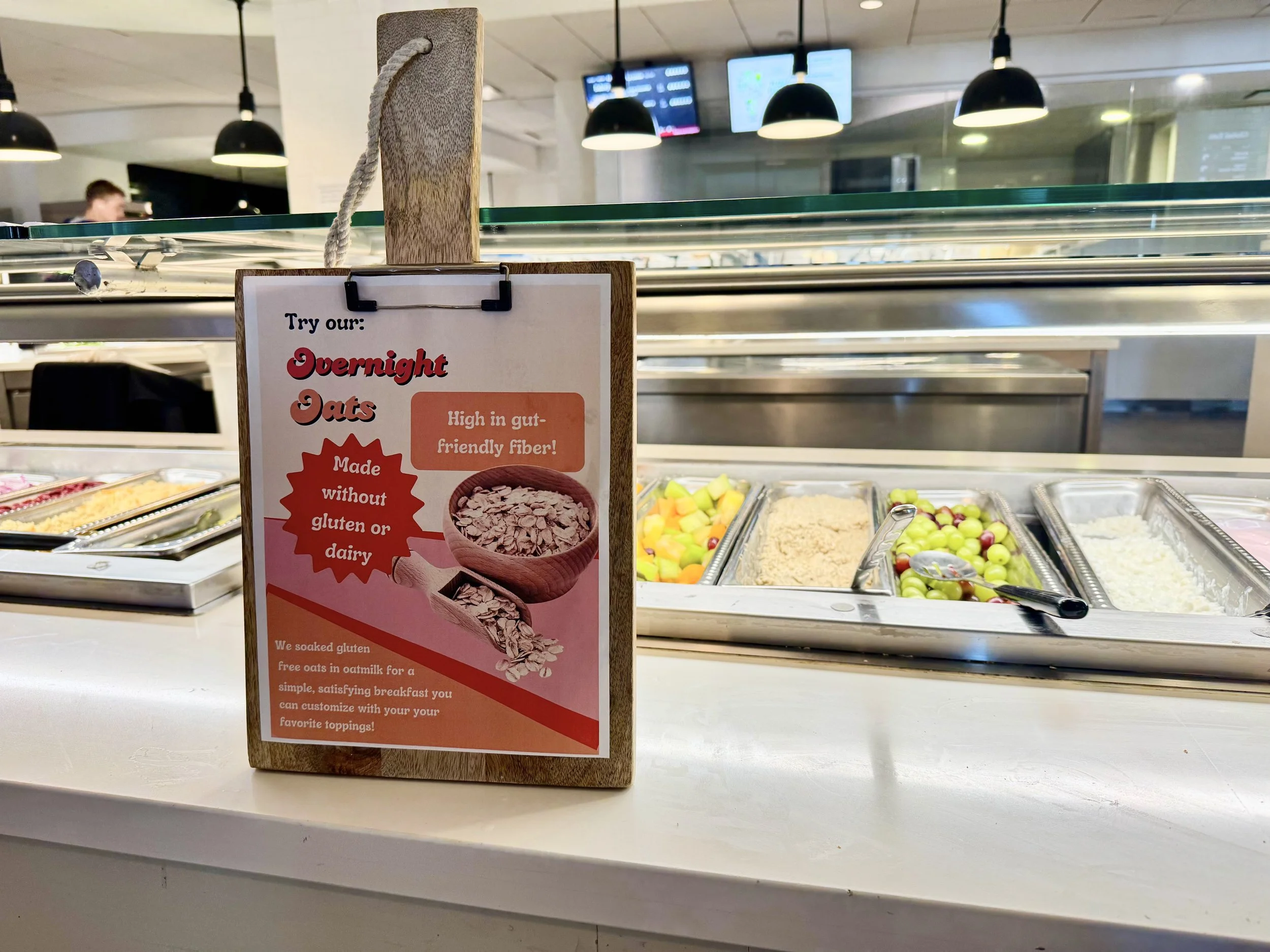
The Marist Dining Staff recently added "Overnight Oats" made without gluten or dairy for students with dietary restrictions. Photo by Ava Battinelli '26
Many students have dietary restrictions. Whether that be due to an allergy, religious obligation or health preference, every person has a unique palette.
For Marist University Dining Staff, abiding by every student’s diet is a top priority.
A new development this semester is a pop-up screen on the GrubHub app that prompts students to specify if they have any allergies when placing an order. This way, the staff can keep an eye out for any cross-contamination or potential allergens when serving student orders across campus.
“Marist is adapting to an allergy-friendly environment, where, even digitally, students have an option to disclaim allergies and read what ingredients are in our food,” said Megan Doshi ‘26.
Doshi has a nut allergy and feels more secure ordering her food when she can specify each time, no matter what dining location on campus, that she has an allergy.
Mike Eggert, manager of the dining staff, said, “That was part of our solution, which was to be able to allow students to add it themselves to the GrubHub order. Grubhub itself doesn't have the best platform for communicating allergens. So we were trying to ideate a solution that could mitigate opportunities for people to have exposure.”
“It’s not 100% effective, but it's our best foot forward to try to meet the needs of the students here,” Eggert added.
While this system benefits Doshi, the new development is not as useful for students who have a niche allergy.
Max Van Gyzen ‘26 found out he had an allergy to corn right after he started his first year at Marist. He relied on hamburgers and ham and cheese sandwiches from Murray Dining Hall exclusively during his freshman year.
Now, as a senior, Van Gyzen said the only place he knows he can eat is Donnelly because he asked an employee from Rossi’s exactly what he can have without an issue.
“I’m not always confident that the people here actually know,” he added.
As for the GrubHub allergen alert, Van Gyzen said it doesn’t help him because his allergy is not common, but “it probably helps for some people.” Van Gyzen, who now lives off campus, cooks his meals at home to avoid an allergic reaction.
However, for students who don’t have the option or space to cook for themselves, Murray Dining Hall acts as the dining hub. Many freshmen depend on the dining hall for breakfast, lunch and dinner each day, without fail.
To accommodate students with allergies and dietary restrictions, the dining hall utilizes signage to help students navigate the options. In the signs, students can read the top nine allergens listed to see if they are present in the dish.
“If they have questions beyond that, we encourage them to speak to an ingredient expert, who here at Murray is one of our chefs in the back, or me, to be able to get the answer to that question,” said Eggert.
In terms of cross-contamination, Murray Dining Hall has a LIFE station, which has its own dedicated kitchen. If students have an allergy that falls under the top nine, they are encouraged to get their food from there for extra precautions.
“Across the board, it's a staff training approach,” said Eggert. “Annually, we have a full training for all staff hired in food allergy service, which includes helping them understand how to wipe down surfaces, remove allergens from surfaces and have stations as cross-contact-friendly, so to speak, as they can be.”
However, because nut allergies are the most prevalent amongst college-age students, Murray Dining Hall avoids nuts altogether.
“With having a nut allergy, the amazing employees who work in dining have a lot of compassion and understanding to work with students and accommodate our needs,” said Doshi.
The dining staff also recognizes dietary restrictions due to religious reasons, and offers special menus during Ramadan, the Jewish holidays and during Lent.
“We're offering more vegetarian, plant-based or fish options during those times so that students have access to them,” said Marie Murphy, director of Nutrition and Wellness. “We encourage all students, if they have a religious restriction that they need more guidance with, to work with me to help them understand how and where they can find foods that fit into their lifestyle.”
During Ramadan, the dining staff worked with the Department of Spiritual Life and Service and the Muslim Student Association to accommodate students' needs as they observe the holiday.
Students who observe the month are required to fast from sunrise to sunset. In accordance with this, the dining staff is providing food bags for students to take nightly, so they have food ready for them when they wake up before sunrise.
The dining staff has also been serving Halal-certified meats at LIFE during Ramadan, so when the sun sets, and students come in for dinner, they will always have an option.
If a student has an extreme dietary aversion, restriction or allergy, the dining staff addresses it on a case-by-case basis or through communication within Murray Dining Hall. Additionally, students with medical needs for certain diets are encouraged to go through the accommodations process and receive specific accommodations based on their needs.
Additionally, the new meal plan allows students more freedom in the way they spend their money on meal swipes.
“I think it really is in the best interest of students with special dietary needs to have the autonomy of where they can dine,” said Eggert. “I think that the defining factor of the meal plans is the flexibility, and the choice that it provides for someone who might want to craft or diet on a little bit of a more unaccustomed level, so they can do whatever they want.”