Interview with the No.1 Fizz User
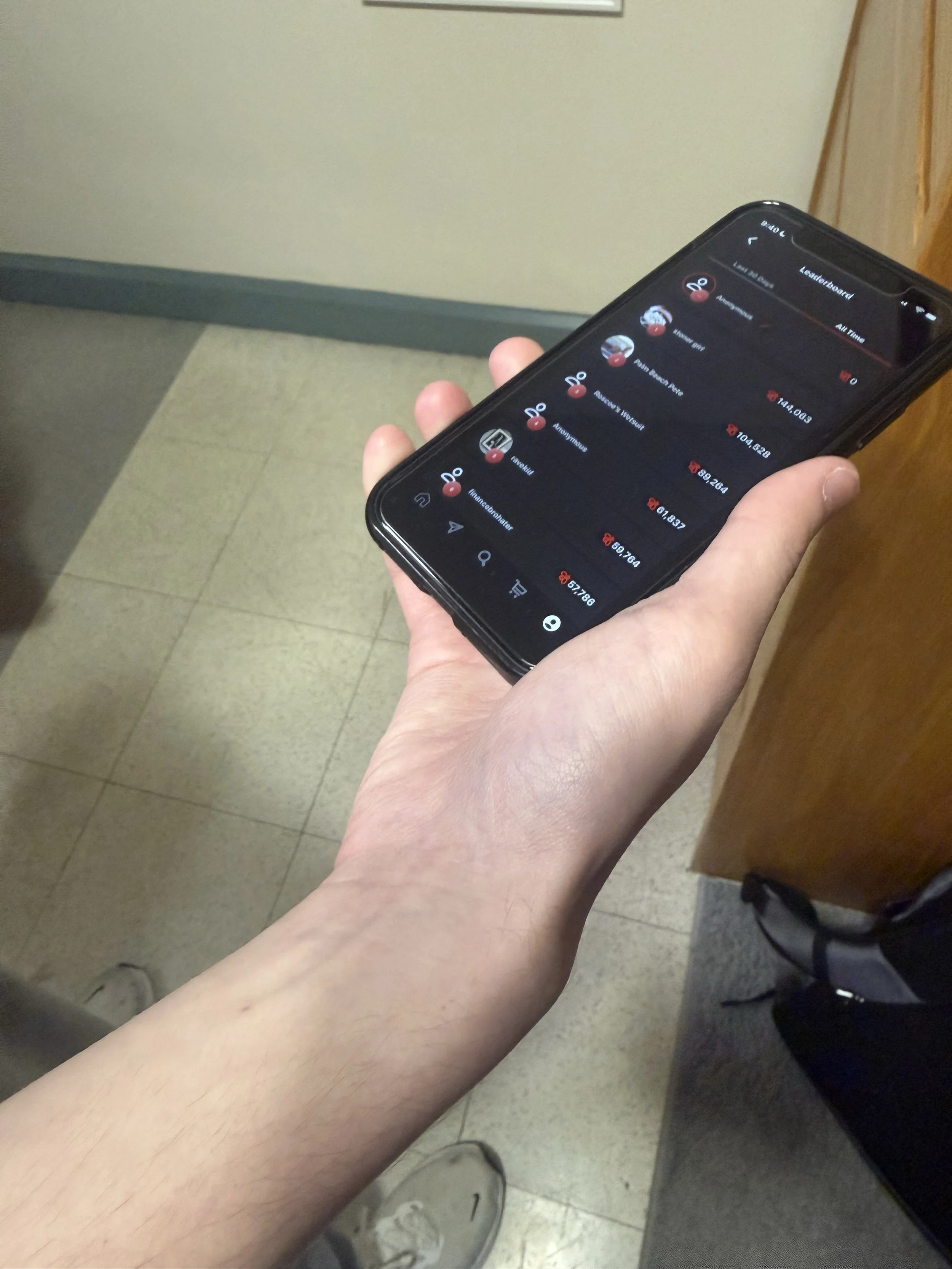
A student using Fizz on their phone. Photo credits: Andrew Ariano '29
Apps such as Fizz and YikYak are popular options for college students to communicate, ask questions and air out grievances. For the users of Fizz in particular, there has been one figure who has left an impact by creating a culture of positivity while keeping their identity a mystery.
As a graduating senior, user “stoner girl” has consistently dominated the karma leaderboard on Fizz, a social media platform where Marist University students can anonymously post hot takes and questions about their community. On the app, users are evaluated in a karma system, granting points for liked posts, which are used to rank students against one another.
“I started Fizz sophomore year, and at first I thought it was a total joke,” said stoner girl. “Some girls I was friends with recruited some of us first-year abroad girls to hand out donuts and promote the app. So I said, yes, I would love to work for 6 hours and make 100 bucks.”
Besides the initial advertising effort and the gift of a hat as a bonus for working the job, this was the only connection the student had to Fizz at the time, as it started up on the Marist campus. But soon after, she decided to start making posts.
“I can’t remember how exactly I started. I’m never at the top of the karma list because why would I need to be? Now I have 879 posts,” stoner girl said. “My earliest post from Fizz is from September 2023, and it looks like I made my handle by March 2024. It’s not hard to get karma on Fizz, because Reddit communities were so hostile, I decided to start karma farming Fizz instead. It was easy to get karma just posting some NPC stuff, like ‘We need more parking,’ and ‘Manifesting snow day on Tuesday.’”
Stoner girl feels strongly about combating growing negativity in the wider Marist community. After holding her No. 1 spot for so long, she no longer feels the need to post often, instead using her notable name to interact in the comments of posts in the community.
“There’s so much negativity, so why not interact with people asking things like ‘what should I name my fish,’ or wish someone ‘happy birthday,’” she said. “I do it for the people who appreciate it, and if they don’t, then I’m gonna just keep doing me.”
“We need more positivity. There's such a lack of nuance online, and with algorithms feeding content that's meant to anger you and so many bots since 2016,” says the student. There’s an apparent influx of obscene claims and bizarre, fake-sounding stories on the platform that consistently garner great attention from users. “People are so mad that they just want to ragebait,” she continued.
Stoner girl believes that she’s inspired some level of change in the community with her influence, saying, “Before nobody was engaging with each other, but it’s a little different this year, and I’d like to think that part of it is me inspiring people, because why not comment under a post?”
There’s an environment at Marist that this student has taken notice of and it’s much deeper than just social media interactions.
“This is a larger issue with the culture of Marist,” stoner girl said. “I’ve made multiple posts about this, and everybody is so judgmental here. People are so self-conscious of being perceived here because of how negative our culture is, because everybody talks down to each other for how they look, and that’s a bigger issue I'm hoping improves with newer classes.”
Alongside the judgment within Marist culture, the student also raised concerns about the conformism that comes from these feelings, as well as problems within the Marist system that complicate the ability to interact with others.
“Why are we making people meet for clubs at 9:30 or 10 p.m. when they should be at home resting or doing homework?” she said. “Why are some intramural sports at 12 in the morning when there are 8 a.m. classes offered here?”
Stoner girl reflected on what habits and traits she thinks should be inherited and emulated by future students.
“There’s a difference between seeing people of color or queer people in media and actually being around those people, especially with how strong stereotypes can be,” stoner girl said. “It’s different from being in a city, where you see people from all walks of life. I don’t feel as much anxiety about being perceived in the city as I do here.”
The experiences of a student serve to shatter misconceptions, and the key to reaching progress is spreading awareness of true life experiences. As the time of the 2026 graduating class draws to a close, stoner girl believes it’s the job of the underclassmen to carry on the ideals that came before them. By reflecting on both the good and bad, the class of 2029 and beyond can create meaningful positive change for those who come after.
“Be positive, be kind, but also be honest,” stoner girl said. “We need to give value to honesty. Everybody’s tired and struggling, and I want to bring back that humanistic community, just a connection with people to not be so angry and negative.”