Rising Sodium in Poughkeepsie Water Raises Concerns for Marist Community
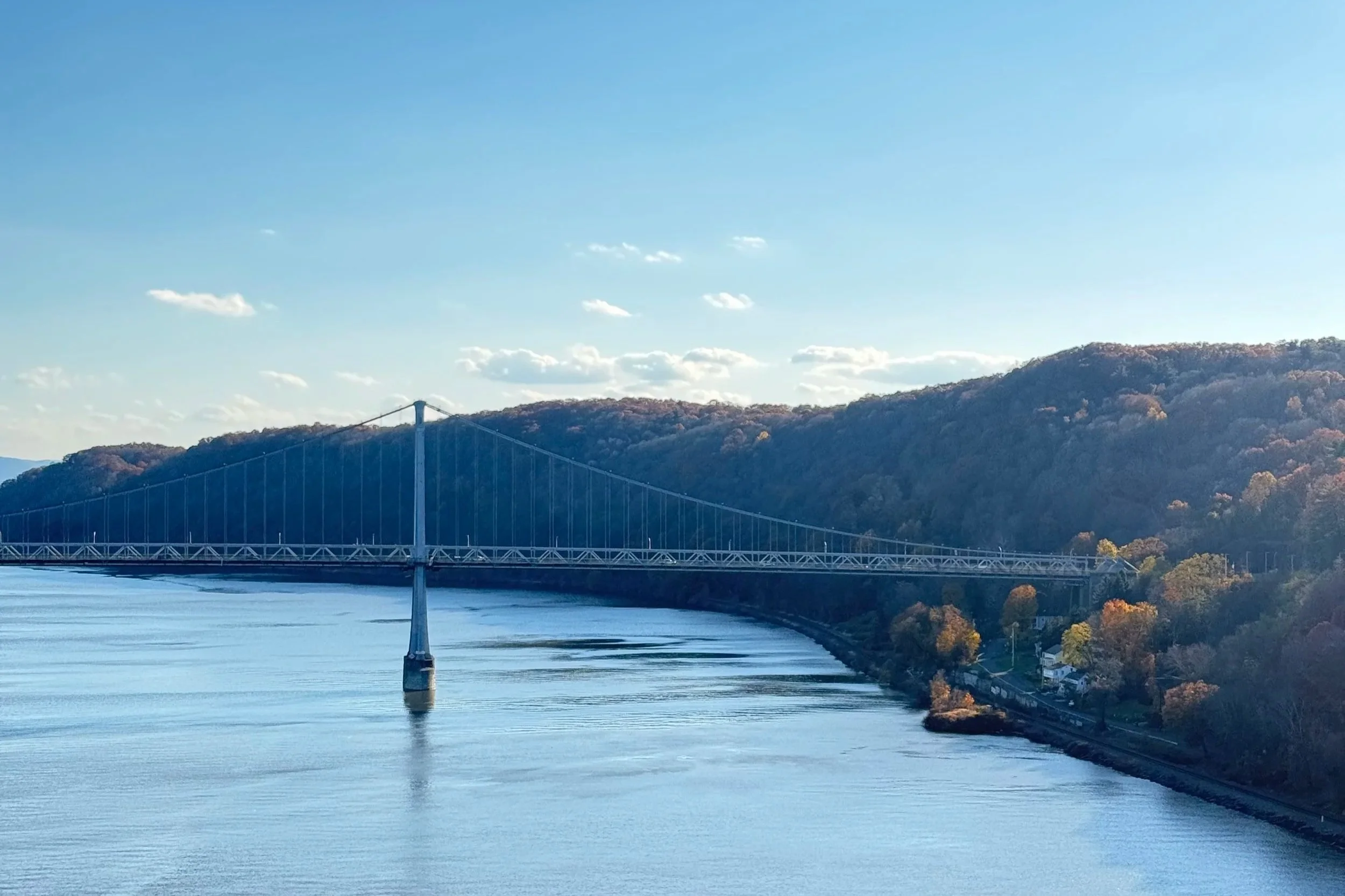
The Hudson River has recently experienced a salt front that has raised sodium and chloride levels in the Poughkeepsie water. Photo by Hannah Tone '26
Elevated sodium and chloride levels in Poughkeepsie's drinking water have been reported following concerns about an off-putting taste and odor to the tap water in people’s homes. Following these complaints, the Poughkeepsie Water Treatment Facility reported in late September that an unusually strong salt front had traveled up the Hudson River, causing the inconsistencies. Although this issue does not pose a significant health threat, it marks the most extreme salt intrusion seen in this region.
The issue arose from a rare set of environmental conditions that had not been observed in this area before this fall.
“We’re on a tidal river, so we get an influx from the ocean,” explained Al Losee, senior operator at the Poughkeepsie Water Treatment Facility. “Typically, the salt front stays down below Newburgh. But we’ve had a drought up north [...] They haven’t released any water, and we’ve had storms out in the Atlantic, which pushed up. So we’re thinking that played a part in this extended release of sodium levels.”
The Hudson River moves about four miles a day, meaning the fresh water is regularly circulating throughout the region. However, without sustained rainfall and a state-issued drought emergency, the river’s natural flow has weakened.
During past droughts, Losee explained that the sodium increases were mild and short-lived, in comparison to what is now being seen.
“I’ve been here for 34 years. The plant has been here for over 150 years. It’s the first time we’ve seen this for this extended period of time and for it to be this high,” Losee added. “It seems to be rectifying now. It’s down in the 300s, not in the 3,000s, which is a start.”
According to the Poughkeepsie Water Treatment Facility, sodium levels have ranged from 53 to 223 mg/L, with a normal average of approximately 115 mg/L. While this increase may seem alarming, Losee emphasized that the numbers must be understood in context.
“If you go home now and you open a can of soup and eat that soup, you’re eating almost 2,000 milligrams of sodium,” Losee explained.
While this may bring comfort to some, Losee still encourages those on low-sodium diets to consult their doctors.
When asked what residents can do to keep themselves safe, Losee explained that there is nothing residents can specifically do.
“Boiling the water won’t do anything for you, unless you’re going to capture the steam,” he said.
As local authorities continue to monitor the issue, Marist University students have expressed their concerns because the university has not notified them. Many students said they were unaware of the problem until seeing a post from Marist’s Student Government Association (SGA).
“Marist should have issued an official email to students to reduce confusion and alarm in the student body. At the minimum, residence life should have been informed so that they could properly relay this to students who live on campus”, said SGA VP of Sustainability, Megan Connor ‘26.
Losee assures residents that the facility has been closely monitoring conductivity and has adjusted pumping schedules accordingly. In years past, operators could time the pumping around the tides to dilute salt levels, but the scale of this year’s intrusion makes that method ineffective. “We can’t pump around the tides for four months,” Losee explained.
Looking ahead, the city is considering investing in desalination technology; however, this technology poses significant financial and operational challenges.
“It's so hard to maintain and very, very expensive to operate. If you jump the gun and have this technology and don't need to use it, people are still going to be paying for it,” Losee said.
For some students, the lack of communication on this issue raises broader questions regarding Marist’s handling of environment and health issues.
“This lack of communication creates a sense of distrust between the student body and the college. Students rely on their college being transparent about health and safety issues that may affect them. Will they be just as complacent when it comes to informing the student body on their environmental actions, especially those that are less immediate and alarming as water quality? Will they be just as vague about sustainability measures?” Connor emphasized.
Despite the unprecedented intrusion of salt, the facility remains hopeful that the river will return to normal as rainfall increases. “Mother Nature threw a curveball at us, and we’re hoping we don't see it again” Losee said.