The Marist Pantry opens with Apple Cider and Cookies
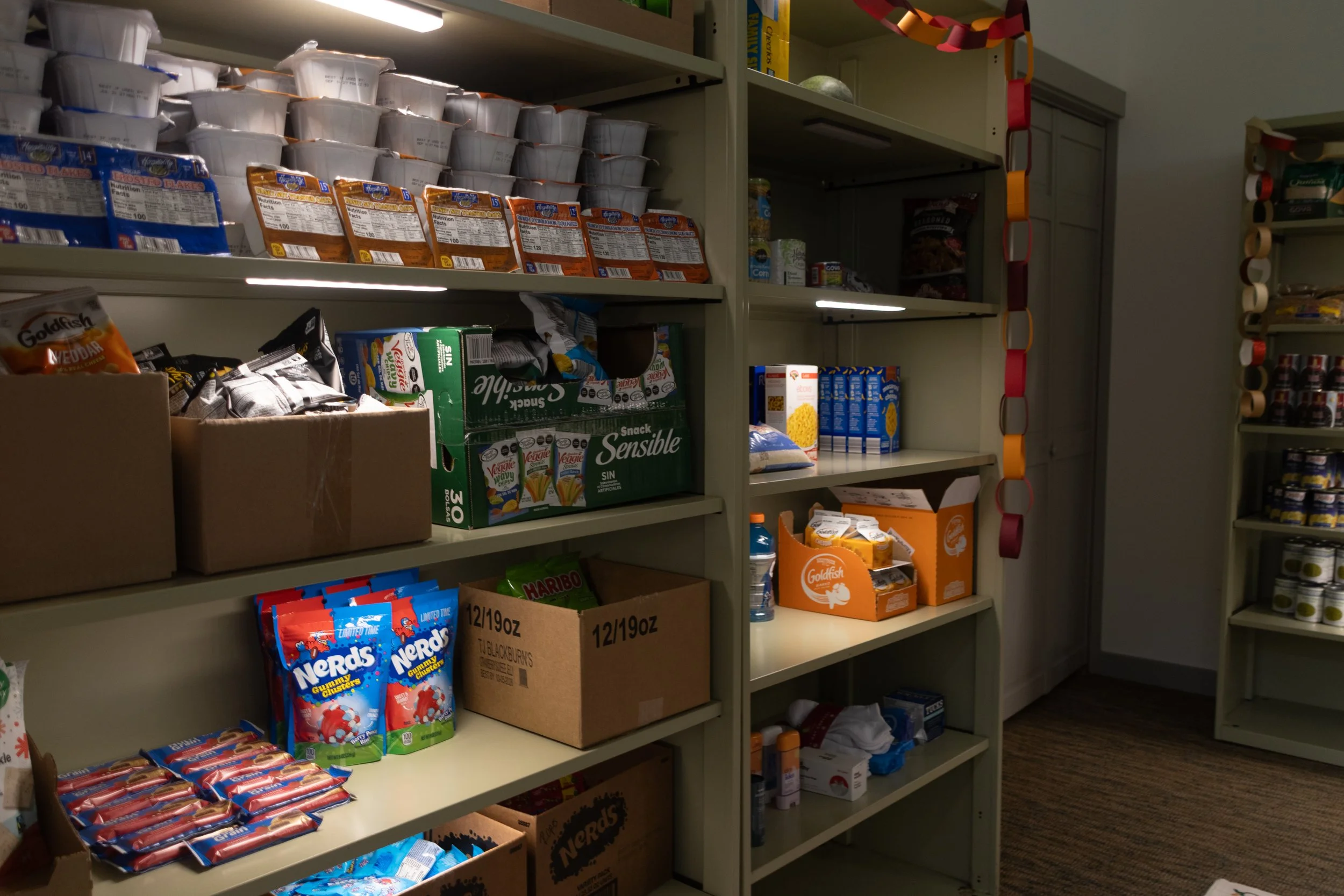
The Marist Pantry is well stocked and inviting.
Photo by Ava D'Angelo '28
The Marist Pantry opened its doors on Oct. 13 in the Kirk House with cookies and cider, adding Marist University’s new resource against food insecurity on campus. The Marist Pantry is a project that was made possible by the Office of Student Affairs and Marist Health Services, which offer free resources to those who might struggle to afford them at the moment.
The Kirk House, located close to the Foy Townhouses, used to house the Marist ROTC program until a year ago when the project of the Marist Pantry was officially set in motion. The idea for opening the Marist Pantry was crafted in cooperation with Regional Foodbanks who took inspiration from similar projects on other college campuses.
The pantry is accessible to all Marist students, faculty and staff to grab items they need. Products ranging from pasta and various sauces, chips, snacks and even toothpaste and toilet paper can be found on the shelves of the lower level of the Kirk House.
Food insecurity and anxiety are a considerable issue on Marist’s campus, according to Kyleen Martin, director of student support and advocacy. Through surveys, as well as in-person conversations, the wish for such a project had been posed frequently.
“Worries about food not just affect mental health but also academic performance,” Martin said.
While donations towards the Marist Pantry are appreciated, the system does not rely on them, instead placing orders with the Regional Foodbank and collecting those orders from Dutchess Community College. The team behind the project is still collecting data on what is required the most, through surveys conducted in the Pantry itself.
If someone still decides they want to contribute, the Marist Pantry currently accepts non-perishable items like paper towels, toilet paper and toothbrushes.
“When you go to the grocery store, you don’t just grab food,” said Alexa Connor ‘27, one of two student interns at the Marist Pantry.
Marist had different programs running to support students struggling to afford food. On the Grubhub app, Den Dollars or meal swipes can be donated through the “Swipe Out Hunger” tab and different offices around campus often have small snacks or instant foods for those who need them. Matt McMahon, dean of students, explained that the Marist Pantry is trying to create a central space to fight food insecurity.
“We want to meet the needs of the community,” McMahon said.
If students are interested in learning more about the Marist Pantry, they have an Instagram account (@themaristpantry) which has additional information.
So far, internship positions in the project had been directed mainly towards Marist’s psychology department, but McMahon assures that any major or minor is more than welcome. As the Marist Pantry is getting started, volunteers are greatly appreciated and potential opportunities of student employment might arise in the future.
“We are trying to think what’s most helpful for students,” said Thea Nhim ‘28, who is also interning for the Marist Pantry.