Marist Celebrates Black History Month with Campus Events
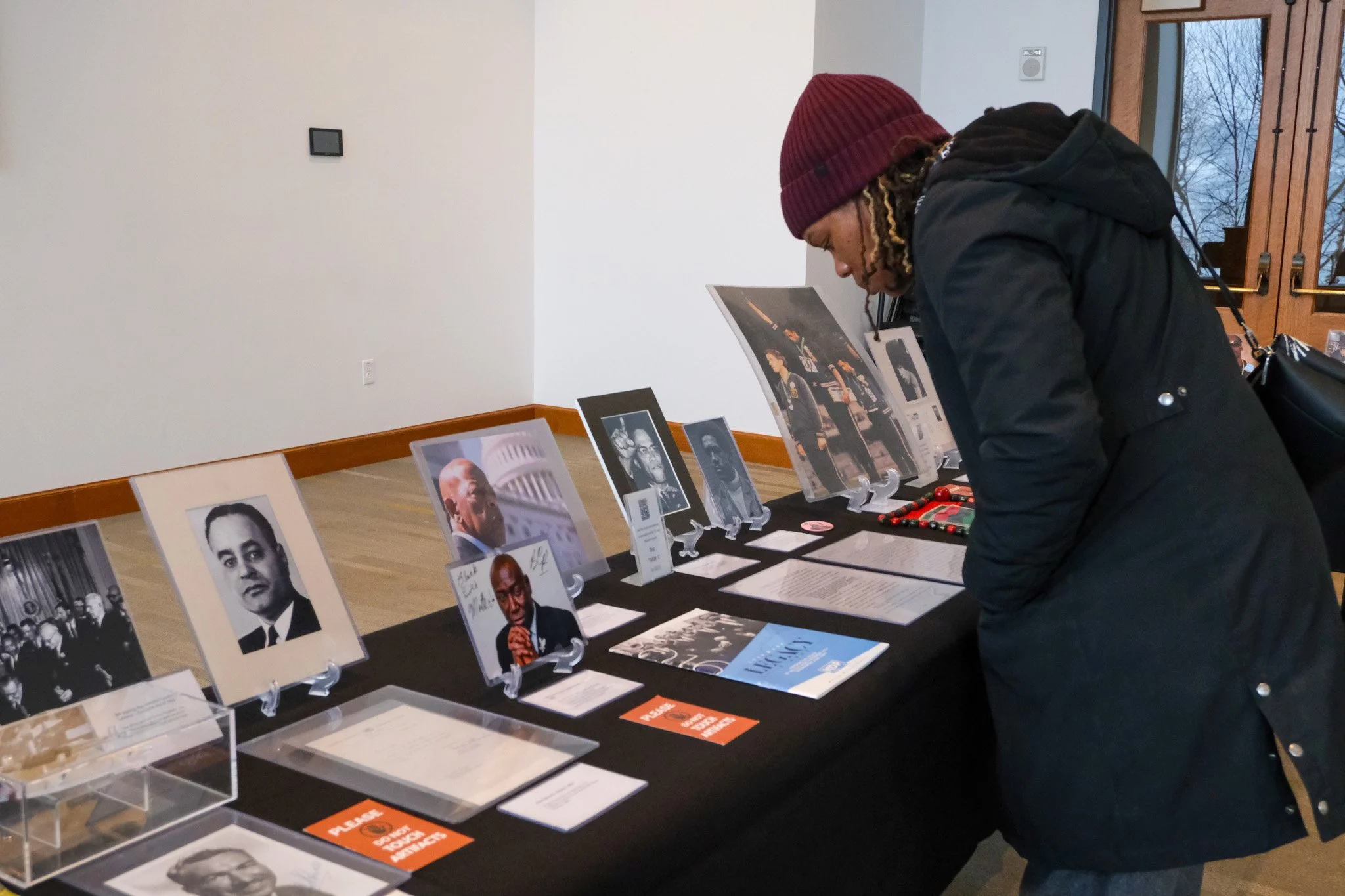
During Black History Month, Marist hosted The True Black History Museum, a traveling exhibit showcasing artifacts from the late 1700s to the 21st century. Photo by Ava Battinelli '26
With Black History Month in full swing, Marist University’s Office of Community & Belonging (OC&B), Black Student Union (BSU), and several other campus organizations are hosting various events and initiatives across campus to celebrate Black history.
Campus events throughout February have included a collaboration between Gourmet and BSU in which the Murray Dining Hall served food and played music inspired by Black communities, a traveling exhibit called the True Black History Museum, a discussion with NPR journalist Ayesha Rascoe and more.
“Student organizations are not simply participants; they are leaders,” Vice President of Community & Belonging Edward Antonio said of planning events. “The Black Student Union, SGA/DEI Board, Silver Needle Runway (SNR), the Hispanic/Latino Club and the Student Programming Council have all played significant roles in conceiving and hosting programs… this level of student ownership is essential.”
On Feb. 11, OC&B collaborated with SNR for a Black History Month Panel that featured Antonio, BSU President Justine Cole ‘26, design student Sika Sena-Akoto ‘26, and LVMH’s Head of Diversity and Inclusion, North America Corey Smith. The nearly two-hour discussion covered a wide range of topics, including the importance of leadership, personal experiences, the meaning of Black History Month and goals for the future of inclusivity and equality.
“I liked how Corey talked about being intentional,” Cole said. “And then Dr. Antonio kind of added on with authenticity, so I think their points on being an intentional leader and being authentic to who you are definitely stuck with me.”
Each of this month’s events raises awareness throughout the Marist community about Black history, while the variety of events engages more students.
“A variety of events ensure that students encounter Black history not as a single narrative, but as a complex, global, and evolving story,” Antonio said. “It also allows students to engage in ways that resonate with their own interests, whether through scholarship, art, dialogue or food.”
The demographics of Marist’s student body also play into the importance of Black history programming. As of 2024, Marist consisted of 71.7% white students, with just 3.2% being Black or African American.
“Being at a predominantly white institution, not only do non-white students have the opportunity to learn and engage in a culture that’s different from their own, but the majority white body can do the same,” Cole said. “I think this month there’s a lot of attention… but definitely there is a need for more of those events and more of that attention on this campus and in this setting.”
Between the partnerships and collaboration spanning various campus organizations, international programming at Marist’s branch campus in Florence and various hands-on, participatory events, this year's Black History Month programming is representative of the three ways that the OC&B looks to refine their approach annually: greater cross-campus collaboration, global integration and experiential learning.
“[Black history] encompasses global cultures, disciplines, professions, artistic traditions, political movements and intellectual contributions,” Antonio said. “This year’s programming spans esports, fashion, culinary history, museum exhibitions, academic lectures, mental health conversations and international programming in our branch campus in Florence.”
Several events remain as the month wraps up, including a lecture on poetry during the Harlem Renaissance featuring Yale University’s Dr. Shane Vogel and a banana pudding cooking class with Gourmet.
Some events are available on the OC&B site. Others are posted on the BSU Instagram page and other campus accounts.