Where Do People Stand on Physical Media?
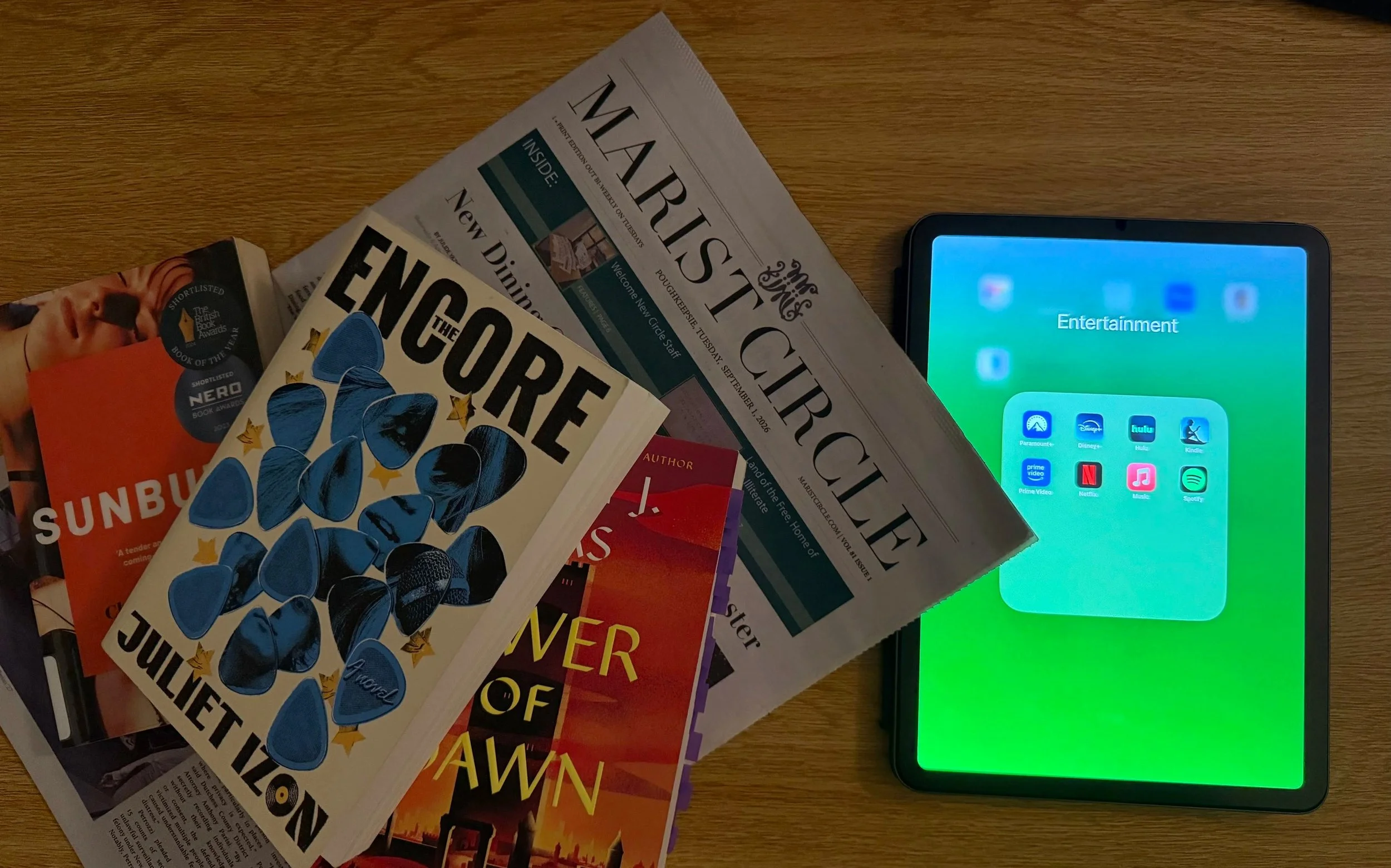
Physical media alongside a collection of digital media apps. Photo by Shane Mulvey '28
Right now, you’re either reading this on the Marist Circle website, or you decided to pick up a physical copy of the paper. Most prefer one over the other, either having all their media on a simple device or physically owning each individual entity.
Over the years, physical media has slowly been disappearing due to the rise of technological advances, streaming services, e-readers and downloading. Resorting to digital media has left physical media in the dump. In a world where everyone used to gloat over their physical movie collection, it's been reduced to whatever is on your Netflix watch history.
According to an article by Felix Richter, “a sizable 42 percent of Americans have fully embraced the shift to digital, leaving discs and tapes behind for good,” leaving some to believe this could be the end of physical media.
There has to be a plus side to it, right?
Producing CDs, DVDs and game discs emits harmful plastics and toxins out into the world, making the transition from a physical disc to digital downloading more eco-friendly.
On July 1, 2026, PlayStation announced that it will end the production of physical discs for its video games due to consumer preferences having shifted toward digital licenses. This will take effect in January 2028.
“I don’t like having physical copies of games because they take up space and get damaged,” said Matthew Sultana ‘28.
Digital games offer the ability to purchase a game through the comfort of one’s home, with no need to leave your house or worry that your disc is gonna scratch, targeting those who prefer to have an easier way to access games.
At first, the idea of getting rid of physical games doesn’t seem too bad, as a lot of conveniences come with digital games. But with these conveniences comes the fact that you don’t actually own digital video games.
“They can take the rights away at any time and you lose everything and you don’t get your money back and sometimes if you don’t have internet you lose access to your media,” said Randall Shawn, who has his own gaming company, Ye Old Press, in an interview conducted for this article.
When you purchase a digital game, you are essentially purchasing a license, which can be revoked at any time, unlike owning a physical disc that's yours to keep indefinitely. In the past, many PlayStation users received emails claiming they were going to lose access to movies and TV shows they paid for, with no form of compensation listed.
This becomes increasingly worrisome because, beginning in January 2028, new games released on PlayStation consoles will only be available digitally.
It's becoming apparent that some people are fed up with staring at a screen for everything, especially Gen Z. A little ironic since it's the generation that grew up during the rise of technology, but Gen Z is aiming to bring back nostalgia and living in the moment with physical media.
Following the increase of AI and endless doomscrolling, Gen Z is starting to notice the harm AI can have on the world, altering the way they feel about technology. Seeing it as a trap or harmful to the mind, physical media offers them an escape from the digital world.
“You can choose how and when to engage with media. In other words, there’s a way to disconnect without being sucked into the black hole of the algorithm,” said Kian Bakhtiari in a Forbes article.
With physical media, we’re able to control not only the media itself, but ourselves. Having a shelf with various DVDs allows the user to physically pick up and decide what to watch, rather than scrolling Netflix for an hour, taking away from the risk of sitting on their phone.
“The resurgence of physical media owes much to the confluence of two trends: nostalgia and growing interest in an analog lifestyle,” Bakhtiari said.
Sarah Brennan ‘28 spoke about her love of opening up a physical book or hearing the crackle of her vinyl records.
“These experiences make me feel fulfilled and present in the moment when I am using the physical media, whereas I normally become distracted when engaging with digital media as its accessibility makes my experience fleeting and easy to let go of,” said Brennan.
Brennan spoke about the ways that we can utilize both formats for different situations, using digital media as an accessible on-the-go tool while also maintaining the love for physical media.
“I see the positives of both media types for different situations,” she said. “Digital media lets me access the content I desire when I need it, and physical media provides impactful and fulfilling experiences.”
Although technology still seems to slowly take over the world, people are still finding ways to detach themselves from the screens and take some time to relive the nostalgia of physical media, holding out some hope it won't disappear completely.