Marist Generously Volunteers Their Students to Feed Each Other
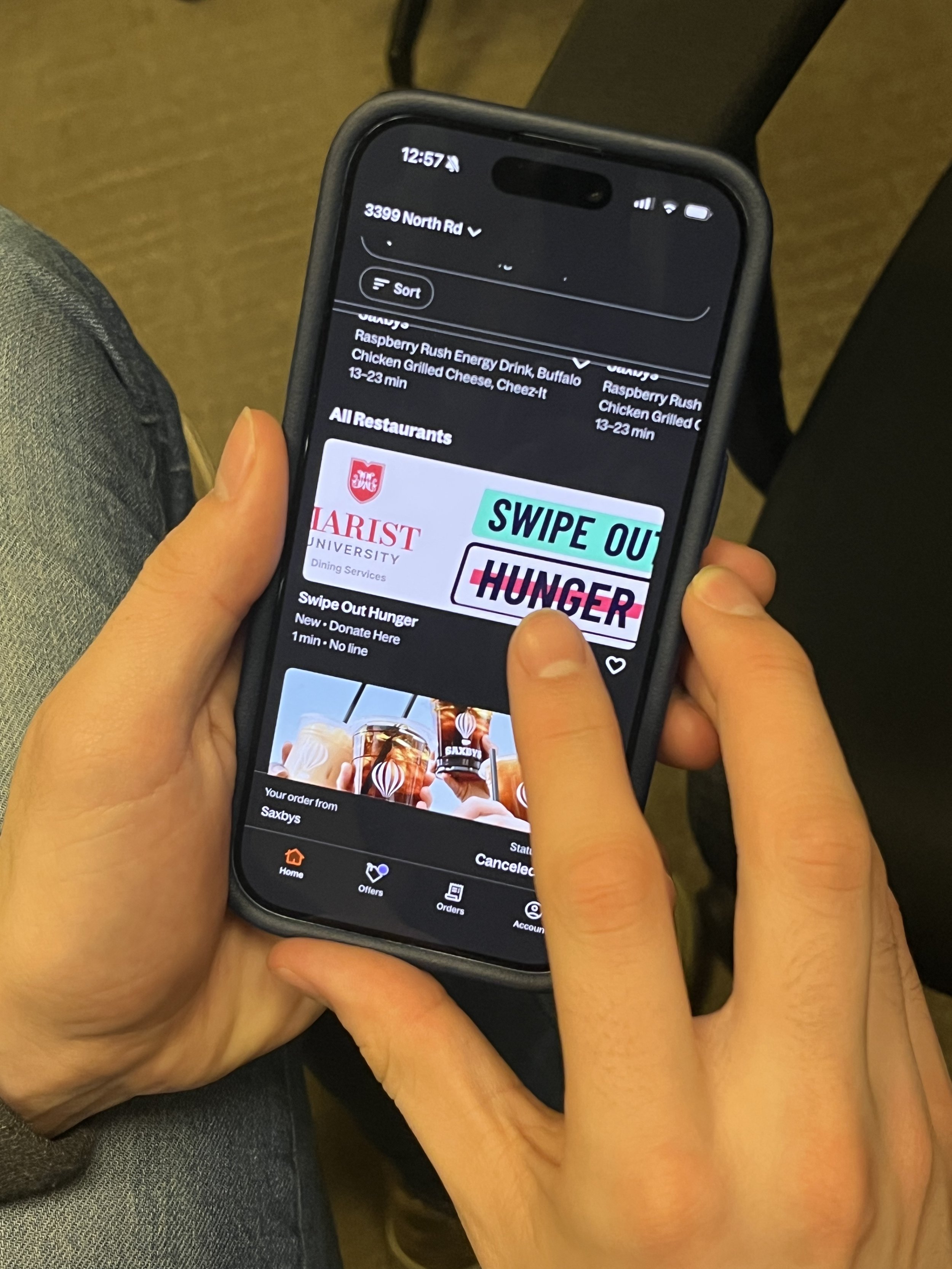
Marist's Grubhub offers students the opportunity to donate meal swipes Photo by Lilian DeFilippis '26
Marist University recently joined the national Swipe Out Hunger initiative, enabling students to donate meal swipes and Den Dollars to students facing food insecurity. While Gourmet Dining provides initial money to begin the program, it is expected to be largely funded by student donations.
Students can participate in the program by requesting swipes via a Microsoft Form or by donating their swipes and Den Dollars via Grubhub. A QR code outside the dining hall reminds students of their option to donate and the donation portal is the first thing listed on the Grubhub app. Both on your phone and in person, you must move past a reminder that, while there’s food insecurity on campus, it’s your fault for ignoring it.
Den Dollars are abstract. They are not tied to a standard of currency. Tomorrow, Marist Dining Services can announce that one U.S. dollar is equal to 400,000 Den Dollars if they want. They can also set the entry price of the dining hall to 14 cents, grant 12 random students 300 swipes and make it so free water is included with the purchase of a breakfast sandwich.
Notably, meal swipes and Den Dollars added via the program do not transfer across semesters. A graduate giving their leftover 15 extra swipes in the spring means absolutely nothing come fall. This is another flaw of the system that Gourmet Dining literally creates and enforces before asking tuition-paying students to help them create the solution.
Marist has addressed food insecurity in the past in more amplifying ways. Marist’s Center for Civic Engagement and Leadership (CCEL) connects students to volunteer opportunities to address food insecurity both on and off campus.
“We facilitate opportunities to volunteer at partner organizations such as Dutchess Outreach’s Lunchbox, a food kitchen, and Hope on a Mission, a street-based outreach and ministry program,” said Victor Rivera Jr ‘27, co-coordinator for Marist’s Food Corps. “Whether we contribute our presence or prepare food items, such as sandwiches, we aim to make a positive difference.”
Rivera emphasized that there are several outlets to voice complaints, concerns and comments regarding how Marist Student Government Association and Marist handle food distribution on campus.
“We hope members of our community can see past the assumption that there is equal access to food on campus,” Rivera said. “There is not. We are committed to doing everything we can to create an equitable campus for all. Food is a human right.”
No student should go hungry at Marist. There is no shame in donating swipes or using this program if you need the support and the Samaritans who swipe in their friends at the end of the semester have good karma in their future. It’s the audacity of framing the issue as a fact of life that a private institution such as Marist cannot address without the support of tuition-paying students that leaves much to be answered.