Are we Seeing the Difference yet?: Gendered Language is Being Used to Defend Actions
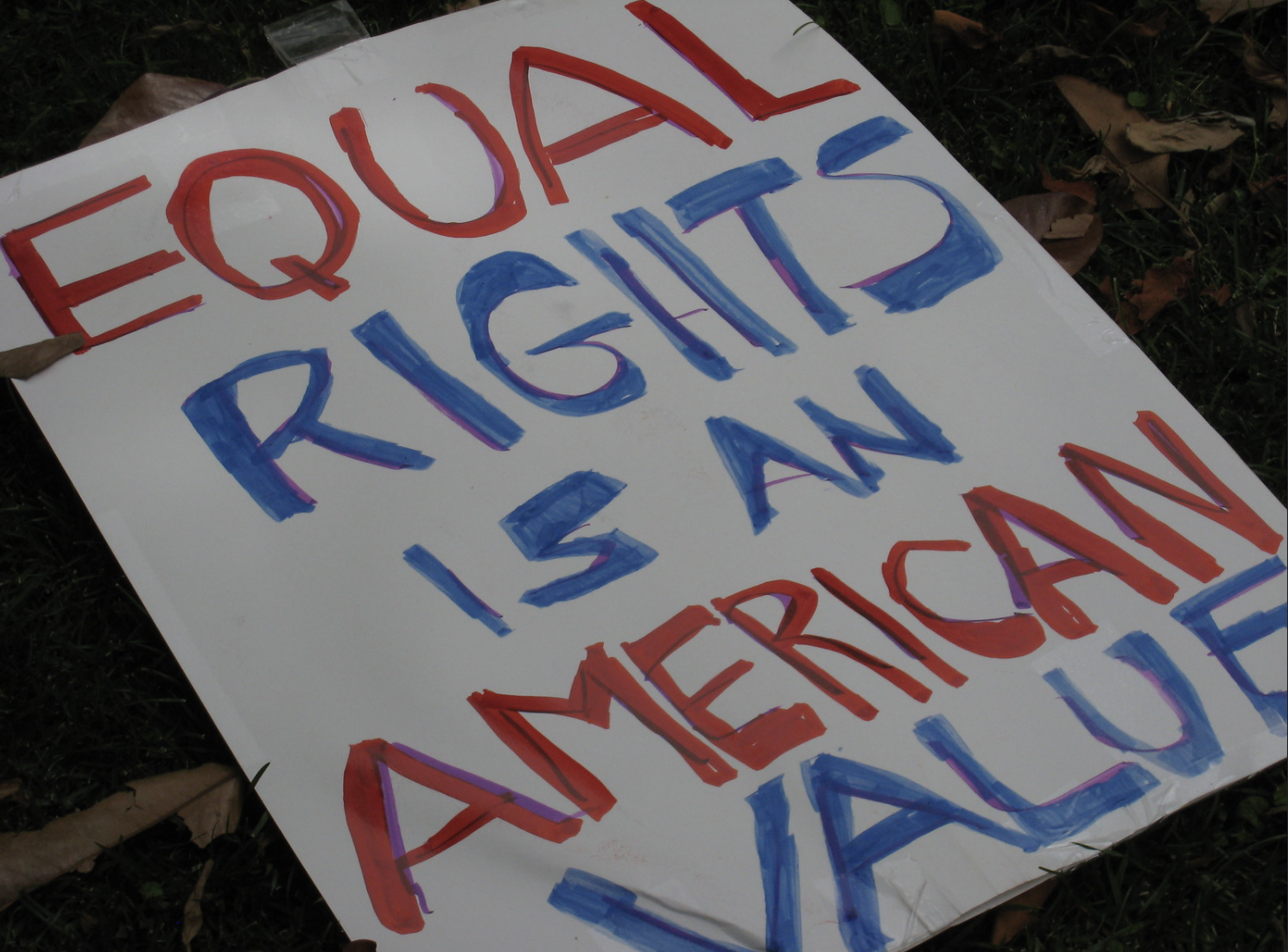
"Equal Rights Is An American Value" protest sign from May. 30, 2009. Photo courtesy of Steve Bott on Flickr
Language is a delicate instrument, one that people use in an intricate manner to persuade society into thinking or behaving a certain way.
A major instance of using language to implement a way of thinking is through gendered language. In this instance, however, I’m not referring to “girlie” nor “boyish” examples. I’m referring to something deeper.
On Jan. 30, three and a half million more Epstein Files were released. With this, many disturbing images and emails containing horrific content regarding children became available to the public, and the content sparked concern.
Upon further investigation, I noticed something rather disturbing about the phrasing used within these files to describe the female children who were unfortunately named in the files.
These children were referred to as “young women” and/or “underage girls”.
Using this specific diction is meant to make the situation seem less grotesque, in a way. Saying “women” allows for the victims to seem older, whereas saying “underage” doesn’t sound as icky as referring to these victims as what they are, children.
This concept of verbally aging up young girls is, sadly, nothing new; it is just becoming more evident with the release of the files.
Referring to young girls as “young women” or “underaged girls” strips them of innocence and places a subconscious responsibility on their shoulders, even though in reality, they’re just children.
I guarantee every single woman can attest that they have had the phrase “girls just grow up faster” said to them multiple times during their life.
Girls are held to higher standards than young boys of the same age, and oftentimes, higher standards than actual grown men.
In October of last year, a Young Republicans group chat was leaked. The messages in this group chat contained racist jokes, homophobic and antisemitic rhetoric, and it was just overall hate speech.
While most people were outraged at their actions, Vice President J.D. Vance denounced the criticism of these perpetrators and referred to them as “kids.”
These “kids” were between the ages of 18 and 40. These were not kids; these were men who should have known better. Yet, our very own vice president defended them as if they were children who did not know any better.
Are we seeing the difference yet?
Are we noticing how these girls, these children within our society, are treated as if they are meant to know better than adult men? Are we noticing how politicians are feeding into this ignorance with their own diction? Are we noticing how they do not care about these young girls?
These politicians will bend over backwards to defend grown men who should know better by calling them kids, coming up with every excuse in the book to give them another chance, something they will always get because they have the privilege of being a man.
Then these same politicians will denounce the victimhood of the female children in these files, who will condemn that the president himself didn’t have relations with them, even when the facts are all there before them. These children, some of whom are now women, never received the justice they deserved.
Rather, they are seen as nothing more than victims. Victims, who were once referred to as “young women” when they were just kids themselves, ones who will continue to be referred to as every dehumanizing phrase in the books to be kept down and not seen as legitimate in the eyes of society.
Think about all the times you or a woman in your life has been spoken down to or forced to act older than your age, while the men around you were able to live in a state of bliss.
Are you seeing the difference yet?