Melania Trump’s Ideal Future For Education: AI Educators
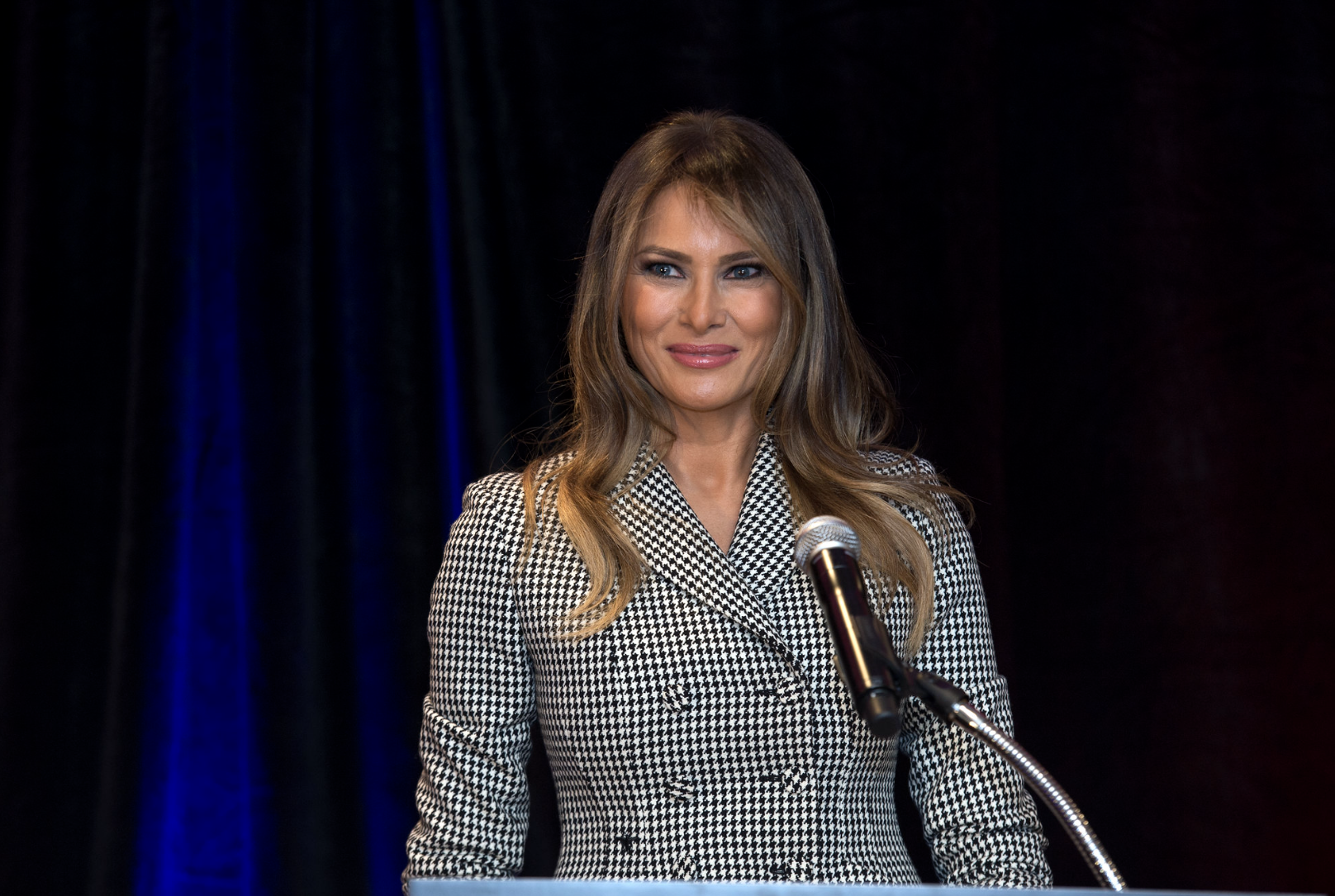
First Lady Melania Trump reacts to applause during her speech to US team families and competitors in the 2017 Invictus Games in Toronto, Canada Sept. 23, 2017. (DoD photo by EJ Hersom) Photo by EJ Henderson, DoD on Flickr
It is plain to see that artificial intelligence is an ever-growing platform. It is seeping into our everyday lives at an astronomical rate, sometimes against our will. AI content floods our social media, AI responses are the first to pop up on Google and now AI may infiltrate our education system on a deeper level than ever before.
In an opinion piece published on Fox News, First Lady Melania Trump argued for the use of artificial intelligence in the American education system to prevent the United States from falling behind in the “AI technology-driven future”. Trump emphasized the importance of embracing AI rather than “fearmongering about robots”.
However, the First Lady was not simply speaking about the use of platforms such as ChatGPT; she proposed something broader and, in truth, disturbing.
Trump introduced a humanoid AI power-driven robot called “Plato” at the White House summit on Mar. 25. She essentially made it clear that it is a goal of hers to eventually have this humanoid robotic educator as a staple within the classroom. Trump claimed that these robots, “will provide a personalized experience, adaptive to the needs of each student,” so “our children will develop deeper critical thinking and independent reasoning abilities.”
The First Lady’s attempt at personifying AI within the education system is one that can be seen as controversial. Artificial intelligence is still extremely new and is often criticized in the education world for its lack of creativity and instruction.
How do future educators here at Marist feel about Trump’s proposal regarding placing a human-like AI figure in the classroom?
Education major and future president of Teachers of Tomorrow, Brooke Posner ‘28 stated, “As an adolescent math education and special education major, I believe the idea of using AI in education has its pros and cons, but the goal should not be to replace teachers. While Melania Trump has suggested AI robots could serve as replacements, this overlooks the human connection and interpersonal skills that teachers bring, something AI cannot replicate. AI can be a powerful tool when used appropriately and ethically.”
Posner continued, “In my Education Technology class last semester, we spoke extensively about how AI can be used in the classroom to support personalized learning, provide immediate feedback and allow teachers to focus more on meaningful instruction and student relationships. However, it should be used to enhance education, not replace the role of educators. We should focus on how AI can help future teachers individualize education and become better educators, rather than searching for a replacement in an ever-changing and essential profession.”
Posner’s view on artificial intelligence is one that many future educators hold, as you often have to roll with the times rather than stick to more conservative manners. Education is always changing and with ever-growing technology, I’m sure we are bound to see changes more often than not. Thus, AI has the ability to be used ethically in a classroom. Yet, Trump’s proposal is, indeed, not ethical.
When asked for her take on this situation, education major Alex Daley ‘29, stated, “Looking at AI as a whole, I am not the biggest fan of the platform. It can take away creativity and original thought, and as an education major, those are some of the most important characteristics. Our world is changing and it’s upsetting to imagine that creations like this could take away the social aspect of education, which is so key for student development. It also leads me to question if jobs could be taken away from dedicated educators, wondering if my future is at risk.”
Daley’s concern is extremely valid. Educators are constantly undermined, especially under the Trump administration, where the Department of Education is constantly under attack. Even the idea that a robot could slightly do what teachers do every single day is, to put it simply, insulting.
Teachers are passionate, something artificial intelligence can not be. Teachers are educated, logical beings. Teachers may not have instantaneous answers, and they may make mistakes, but everything they do is for the betterment of their students.
Artificial intelligence is designed to digest questions and regurgitate answers with zero regard for who they are helping. Teachers articulate their intellect in ways that best fit the students they are educating.
Teachers are irreplaceable. While educators are now expected to ethically embrace AI in their classrooms, AI could never fully replace them as a whole.