The Ugly Truth of Double Standards in the Music Industr
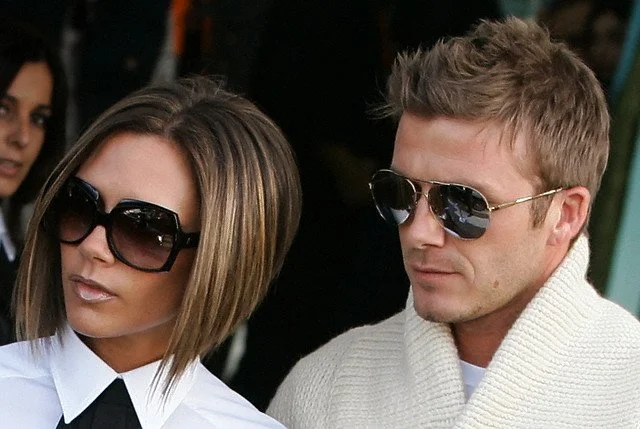
Victoria and David Beckham are pictured together. Photo by riskytuna on Flickr
Everybody has opinions; it’s only natural. Opinions make us human and allow us to express our thoughts and feelings on certain topics. People especially love to develop opinions around celebrities within the music industry, not just about their craft, but about them as individuals as well. But do our opinions and views on celebrities provoke double standards?
It seems that when female celebrities like Chappell Roan get backlash for calling people out on invading their space, the world likes to pin them as rude and awful women, but when male celebrities like Chris Brown assault their significant others, they still have a platform and fans. Weird, right?
Let's consider recent events. These past two weekends, the Anschutz Entertainment Group hosted its popular music festival “Coachella,” marking 25 years of the festival. Artists spanning multiple genres were set to perform, including popular headliners like Sabrina Carpenter, Justin Bieber and Karol G.
Carpenter laid it all out on the stage. Performing over 20 songs with multiple different sets and costume changes. She even brought out special guests, and to close it off, a seat lifted from a car, shooting water like a makeshift fountain during her final song, “Tears.” Attendees and fans alike were baffled by the Broadway-esque, theatrical performance Carpenter put on.
The next day, Bieber took to the stage, and some fans were ecstatic while others were completely let down. Along with some of his recent hits, Bieber spent a good amount of time on stage, sitting at a desk scrolling on YouTube, playing some of his old music videos and songs. No costume changes, no set changes, just a man on stage in a hoodie and jorts singing some songs.
From a performance standpoint, it clearly shows the way female musicians are expected to give audiences this huge, extravagant show filled with all these different elements in order to get recognition and praise. Whereas male artists can just show up and be praised for their work.
Let’s just say that if Carpenter showed up to Coachella and did what Bieber did, she would’ve gotten hate and been called lazy, boring or not putting in the effort. On top of all of this, Bieber was reportedly paid $10 million for his performance, whereas Carpenter was paid half that at $5 million and still put on a showstopping performance. The demand for female artists is so drastically different from the demands of male artists.
“Unfortunately, I think a major contributor to double standards is gender,” said Lily Yazdi ‘28, who, beyond just being a student here at Marist, interns for a music marketing company, giving a standpoint from someone who sees these double standards happening in the field.
“But if [Carpenter] were to have a more stripped-down set or look disengaged, it would most likely spark some sort of controversy or entitlement when putting on a performance as big as a Coachella headline,” Yazdi said. “In an ideal world, everyone would be held to the same standard, but in reality, most people's opinions are shaped by biases or loyalty, etc. So judgment isn’t always consistent.”
On the topic of musicians, Taylor Swift has probably experienced the greatest extent of double standards. Swift has been a target for the press between her albums to see if she's breathing too much air in the world and not saving enough for the rest of us.
“Her entire career has been filled with people putting her down and calling her weird, when all she is doing is having fun on stage. Do you see that happening to a man?” said Leanna Cooper ‘28.
In a 2019 interview with CBS News, Swift discussed how there's a different vocabulary when it comes to men and women, showing the way people will criticize a female compared to a male.
“Okay: A man does something, it's 'strategic'; a woman does the same thing, it's 'calculated,'" Swift said. "A man is allowed to 'react'; a woman can only 'over-react.”
This raises a huge question: Should everyone be held accountable for their actions equally, regardless of their gender or status?
“I do think people should be held accountable equally. I don’t think artists should be criticized for personal expression either way as long as it’s not hurting someone,” said Alexis Moss ‘28, who doesn’t pay too much attention to the entertainment or celebrity industries, but still thinks it's right and only fair if everyone is treated equally.
“Do I think everyone should be held to equal standards in the music industry? Yes, unless differences are relevant to the judgment that artists receive. In practice, however, female-presenting artists often face a double bind: they are expected to balance between hyper-femininity and restraint, and either choice can become grounds for criticism,” said Matthew Wright ‘26, talking about how these female artists are tasked with so much more than just performing. They have to be satisfied to the greatest extent.
Double standards are showcased throughout many different fields, often putting women as less than compared to men. No matter the action, women are more likely to get the brunt of the hate, leaving many wondering if there’s ever a future where these standards cease to exist.