The Lost Art of Social Skills: Can Gen Z Keep the Conversation Alive in the Digital Age?
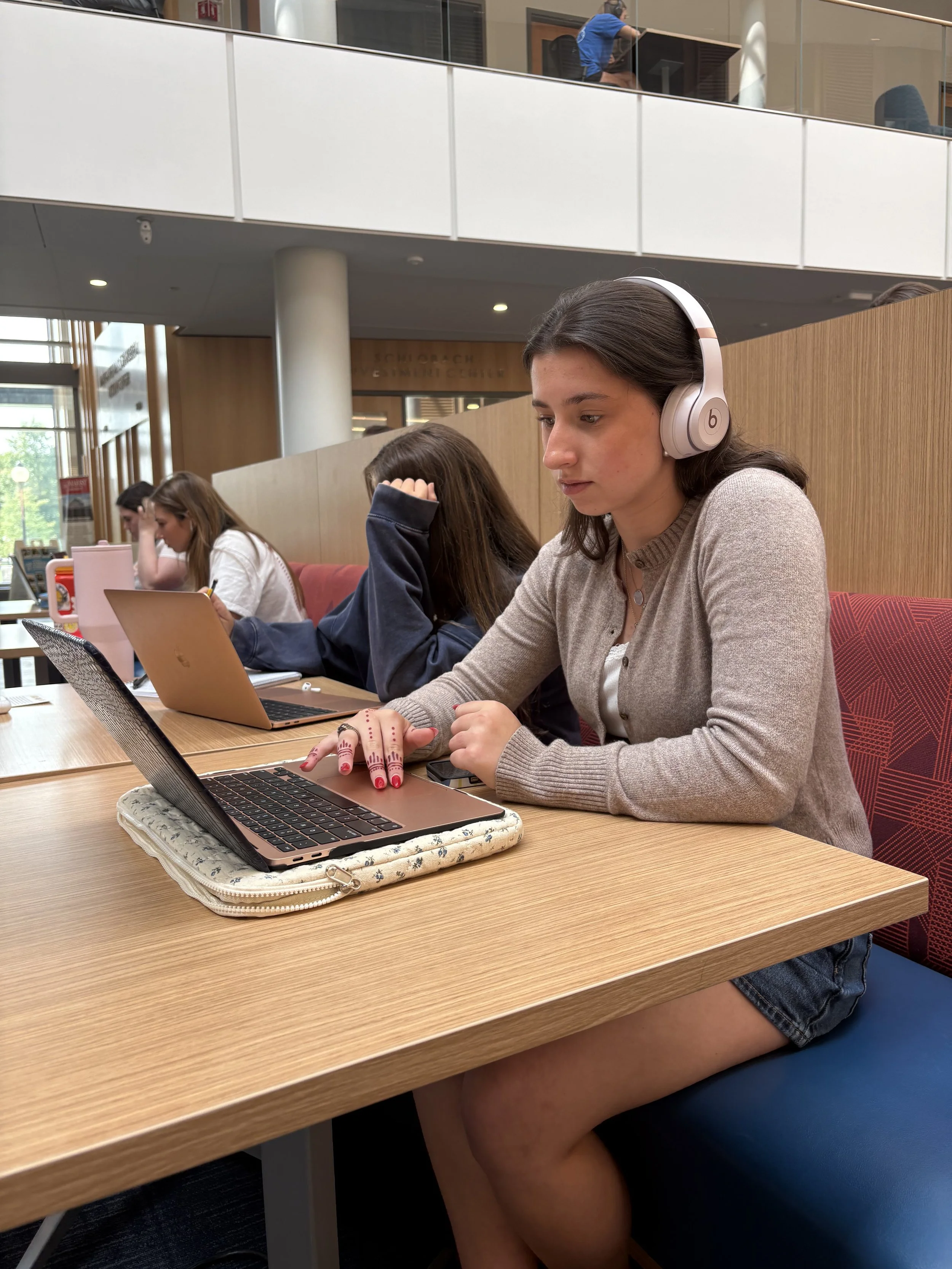
Marist Students ridden with work to do and stuck on computers. Photo by Ella Dempster '28
For many members of Generation Z, technology has become such a large part of everyday life and even culture that interpersonal communication can seem not only anxiety-producing but also difficult. With the presence of social media, many people wonder if Generation Z’s social skills are being diminished and if there are larger consequences at hand.
An article titled “Signs of Phone Addiction” from Bradley University reports the following statistic:
“Gen Z spend 6.5 to 6.6 hours on their smartphones daily.”
What does this amount of screen time mean for those in Gen Z? Is this a conscious choice or an involuntary action?
“For me, disconnecting after classwork and communication via social media is really important,” Lindsay Craig ‘28 said. “I like finding inspiration from different things around me and making time to create art because it helps me disconnect and stay creative. Spending time with my friends in person and going out to do fun activities is what makes me feel the best, and it’s better than spending my time sucked into my phone.”
On the other hand, many individuals in Generation Z don’t have the willpower to self-regulate and balance their technology consumption with social interactivity. There is a much larger disconnect seen in Gen Z as compared to older generations who didn’t grow up with such mass and instant technology.
Over time, this detrimental change can affect personal, professional and functional abilities for future societies. With so much good that technology has brought, it has also instilled mass social anxiety and an escape from facing social connection.
“I see so many peers in class struggling to present or even socialize during class,” said Kayla Diaz ‘28, voicing a problem that has become very prominent within the classroom.
How can this be corrected? Limits on technology are a major solution; this could mean setting time limits, deleting social media or setting goals for oneself until the phone can be used.
Generation Z tends to stray from discomfort, often gravitating towards the safe space of their phone, ultimately removing any hope for growth and change.
“Joining the dance team has really given me a great opportunity to meet new people who have similar interests as me,” Diaz said.
Joining clubs, staying in contact with class groupmates and even part-time jobs can be a community that fosters increased social activity and a change from the use of phones.
It is concerning to think that technology usage may only get more advanced. Eventually, Gen Z must learn to balance their digital lives with real-world connections before technology begins to replace the social skills and relationships that truly matter.