The Lost Tour: The Effects of Phone Restrictions on the Concert Experience
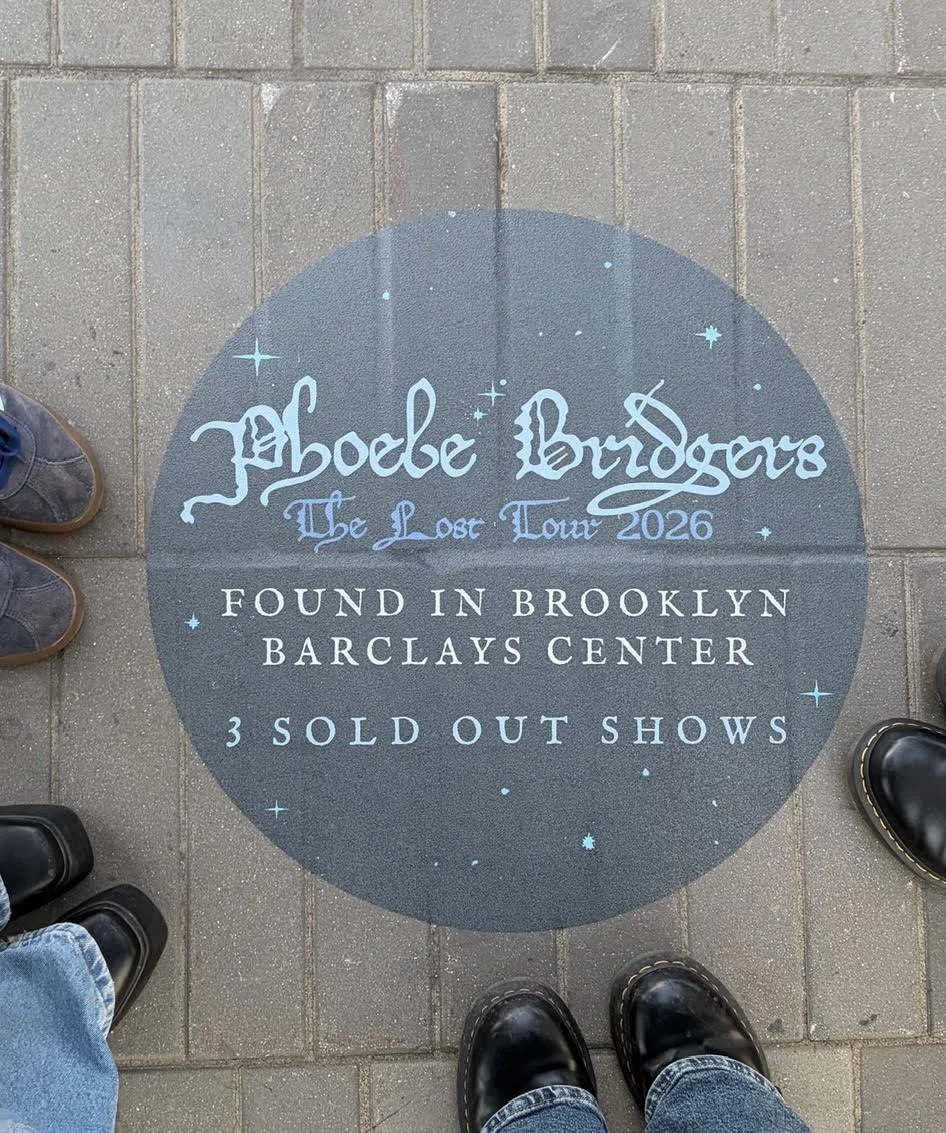
Phoebe Bridgers's "The Lost Tour" logo projected outside of the venue. Christina Brown '27
Phoebe Bridgers’ “The Lost Tour” prohibits any phone usage. In fact, it prohibits essentially any means of documentation, including digital cameras, recorders and smartwatches. An earlier surprise show even banned pencils and paper.
At these shows, attendees place their devices into Yondr pouches, which lock and prohibit individuals from taking out their items within the concert arena. If someone wants to access their items, they must exit the area and use an unlocking station to open the pouch.
The goal of this system is to emphasize a device-free experience, especially during an age in which concerts have become a sea of phones, possibly undermining the engagement of the audience.
Some artists have employed other tactics to combat this pervasive aspect of concert culture. Harry Styles’ Manchester show for the launch of his new album, “Kiss All the Time. Disco, Occasionally,” asked fans to place phones in a bag that allowed general functions of the devices while blocking the camera.
These alternative approaches raise several questions. To what extent can, or should, artists and performers regulate photography and videography? Furthermore, how do these rules affect the overall concertgoing experience?
Marisa Brown ’27 went to Bridgers’ tour in Brooklyn. She noted that the artist made an announcement at the start of her set clarifying that her hope was for fans to feel the music and visuals free from distraction.
Meghan Sharpe ’27 found fans were “more present and in the moment.” She believes other artists should incorporate these policies into their shows.
Marisa Brown also noticed that fans around her were not shy about belting out lyrics. She believes the social pressure to sound good on video prevents audience members from being as engaged.
Lily Wickersham ’27, another attendee, felt more willing to be emotional with the lack of videography around her. The restrictions prompted fans to open up and enjoy the concert as their raw, expressive selves.
The concert was deliberately designed to be experienced without phones.
“She created a set and lighting show that used the advantage of not having people’s phones lighting up in their hands,” said Wickersham.
Marisa Brown finds that sometimes people record for social purposes, to post online or to prove that they saw the show. However, the restrictions made her feel less of this desire since no one was allowed to document the experience.
The lack of videography also prompted fans to remember the show through more creative means. Sharpe has seen many people use art to recreate what they saw.
Despite a seeming consensus of a positive experience, there were logistical issues from phone restrictions. The arena only showed a clock at the beginning of the show, leaving fans in the dark and causing confusion about catching trains or communicating with others.
Christina Brown ’27 noted that the lack of phones required her to clarify meeting spots ahead of time in case her group was separated since they were unable to reach each other using their mobile devices.
She felt some paranoia surrounding the possibility of a crisis and the chaos that could ensue considering the restricted communication.
Similarly, Sharpe worried about missing urgent news from her family or the outside world because of the restrictions.
Leaving the venue was especially difficult. With large crowds, it can take a while to exit, but with the additional obstacle of needing pouches to be unlocked, Christina Brown remembers the process as especially lengthy. She described it as a “stampede of people.”
These issues may be improved with extra staff or more widespread experience dealing with the pouches.
Wickersham said fans know the artist’s conditions when buying concert tickets. Ultimately, she said, those who object to the policies should not attend.
Device restrictions at concerts may become more mainstream following this tour, though it is clear that logistical hurdles must continue to be workshopped with the goal of a more seamless and stress-free experience for concertgoers.