Chloé Zhao’s “Hamnet” Reimagines Shakespeare Through Family and Loss
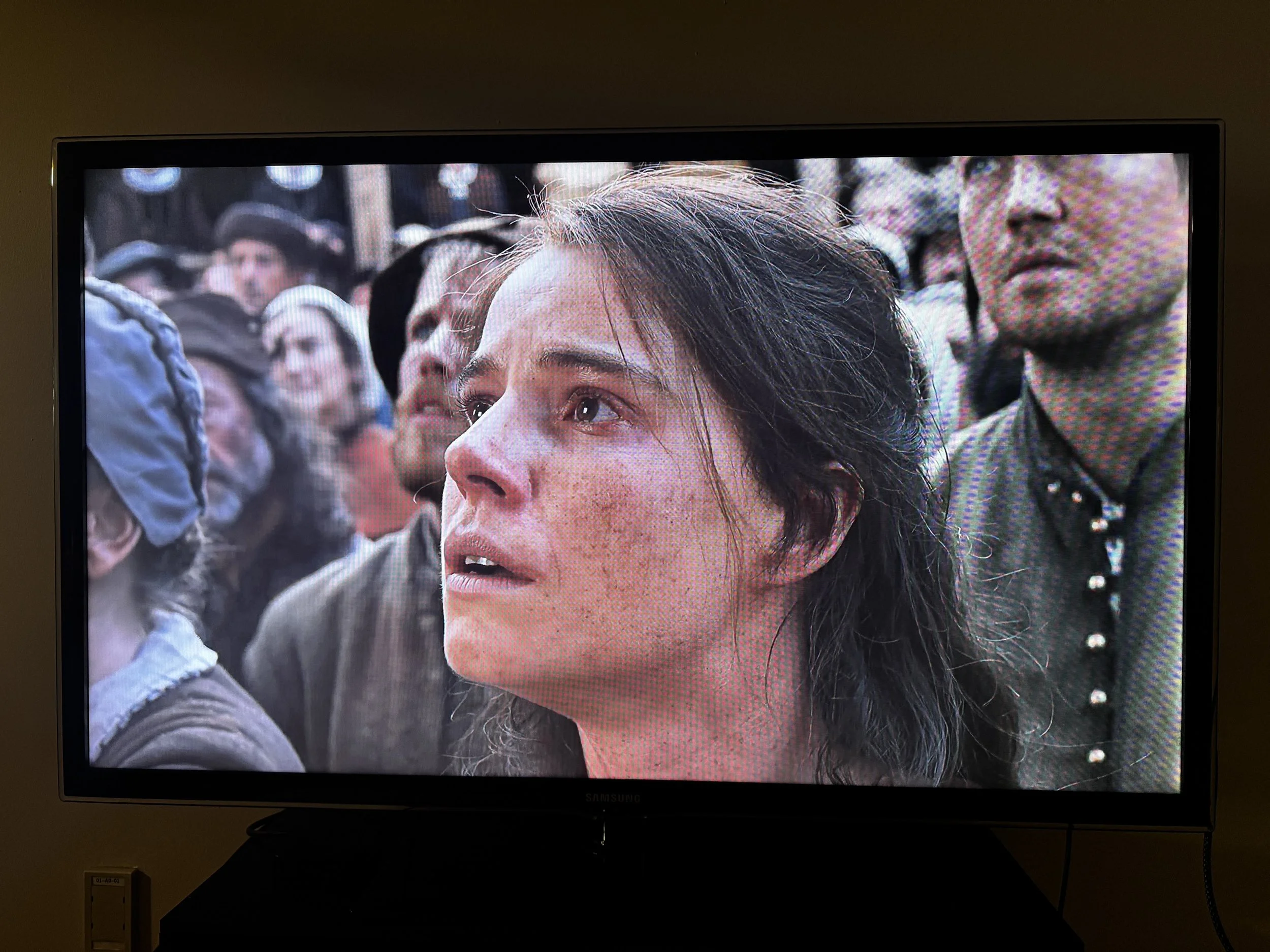
Jessie Buckley's acting received immense praise for her role in "Hamnet," with her winning the Golden Globe for Best Actress - Drama this past January. Photo by Francesca Oliva '28
In just about any English class, the name William Shakespeare will be mentioned quite a few times. Yet, in “Hamnet,” a film centered on Shakespeare’s family and the devastating loss of his only son, his name is spoken only once.
Directed by Academy Award winner Chloé Zhao (“Nomadland”) and adapted from Maggie O’Farrell’s acclaimed 2020 novel of the same name, “Hamnet” tells a story not only about family, but about love, grief and life after tragedy.
Published in 2020, O’Farrell’s novel was celebrated for its historical fiction take on Shakespeare’s familial life, making Agnes Hathaway, Shakespeare’s wife, the emotional focus of the narrative. Zhao joined the film adaptation in April 2023 and co-wrote the screenplay with O’Farrell, helping to translate the tragic themes of loss to the screen. The film relies on organic sounds and stunning visuals, with the production design and cinematography allowing emotions to unfold naturally, much like they do in real life.
Nominated for eight Academy Awards, “Hamnet” has achieved critical acclaim for its extraordinary acting performances. Jessie Buckley’s portrayal of Hathaway is truly remarkable.
Throughout the film, Hathaway is haunted by her own traumatic past, which Buckley conveys beautifully on screen. Hathaway’s grief is complex, expressed through quiet moments of stillness and screaming outbreaks. Buckley manages to capture the overwhelming nature of a mother’s love and the trauma of losing a child with passion and care.
Buckley, who is the most awarded actress of this awards circuit, with over 32 wins, has established herself as a strong contender for the Academy Award for Best Actress in a Leading Role. Her performance as Hathaway was considered one of the top performances of 2025 according to Rolling Stone, which is no surprise, as her portrayal of Hathaway sticks with you long after the film is over.
In his role as William Shakespeare, Paul Mescal reinvents the typical portrayal of the famous playwright, referred to plainly as “Will” for most of the film. Known for his emotionally demanding roles in “Aftersun” and “All of Us Strangers,” Mescal brings depth and vulnerability to Shakespeare.
With the bubonic plague looming, Shakespeare moves to London to pursue his writing career, leaving Agnes and his three children in Stratford-upon-Avon. Mescal presents Shakespeare’s grief through avoidance, with silence and distance informing his emotions surrounding Hamnet’s death.
The emotional backbone of “Hamnet” belongs to Jacobi Jupe in the titular role. Only in his third film appearance, his performance as Hamnet reflects the acting skills of someone beyond his years. Hamnet grapples with complex emotions such as death, love and siblinghood in a way that only a child could. Jupe perfectly captures the confusion of a child trying to understand mortality and loss.
Cinematography and set design immerse viewers in a 16th-century England setting, with earthy tones and natural light, setting the scene for the film. Everything about the costumes and makeup feels genuine – the dirt on her skin and the scar on Mescal’s head all feel innately human and real.
“Hamnet” does so much more than tell the story of Shakespeare’s only son and the tragedy of his death. It touches upon grief in a way that is tender and sensitive, without being overly cliché. This unimaginable loss affects Hathaway and Shakespeare in ways that are difficult to interpret, but it's their love for Hamnet that shines through by the end of the film. "Hamnet" is a beautiful exploration of love and loss. To quote “Wandavision,” “Hamnet” begs the question, “What is grief, if not love persevering?"