“Undertone”: A Film That Should Have Been A Podcast
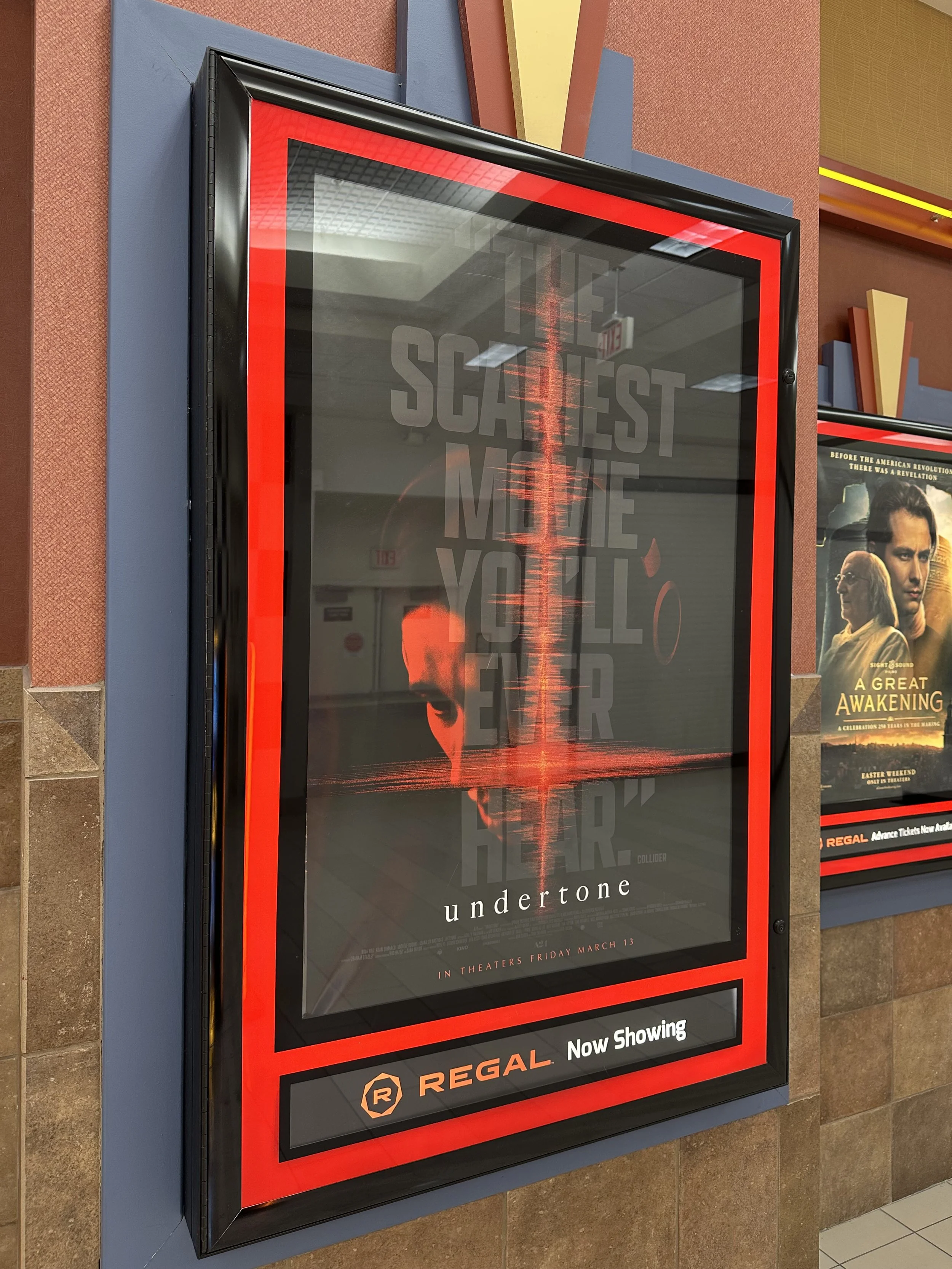
With its long string of successful films, A24 hits a ceiling with their most recent horror release. This review analyzes where the film fell short of its concept and aspirations, adding to the pile of uninspiring horror films released in 2026. Photo by Emma Gaecklein '26
Among the plethora of films to come out from A24 this year, the recent horror release of “Undertone” is a project that captures the attention of viewers with its premise. With critics claiming it to be “the scariest movie ever,” at the center of “Undertone” is an experience driven through the core elements of audio and sound design.
A distinct, fascinating concept for the horror genre, all the tools are there for this to be another hit within A24’s prolonged success in filmmaking.
Written and directed by Ian Tuason in his directorial debut, the film premiered in July 2025 at the Fantasia Film Festival hosted in Montreal, Canada, winning the gold audience award for Best Canadian Feature at the event. Following its release in the United States and Canada, the film’s reception has been mostly positive, in addition to earning over $15 million at the domestic box office.
The story of “Undertone” centers around the protagonist, Evy, host of a paranormal podcast, who records content with her co-host, Justin, all while caring for her dying mother at home.
The two hosts are sent a set of audio recordings from an unknown source, with each file revolving around a pregnant couple that begins to experience ominous sounds in their home. As they slowly piece the story together, strange things start to occur around Evy that slowly drag her into insanity.
To summarize, “Undertone” is a film that says a lot more with its idea than it does in execution. There is a lot of promise here that the film looks to deliver, offering a unique pitch that would make for another successful A24 production. Ultimately, it fails to properly piece itself together in practice and may leave many crowds disappointed coming out.
To give the film credit where it is earned, there is a creative, professional direction from Ian Tuason with his first project. Whether it is the sound design, editing or cinematography, a lot of competency is presented in the final cut that provides the film with a firm foundation.
In only his first feature-length film, Tuason shows an innate eye for the camera.
The film also shares a good habit of visually illustrating information to the audience. As opposed to outright expositing information through dialogue, the cinematography is utilized to convey certain ideas or context that allows the viewer to follow along. It goes a long way in immersing an audience into a film and keeps them engaged throughout the runtime.
Unfortunately, the ounces of quality are unable to outweigh the negatives in this scenario.
Digging into the major letdown of “Undertone”, what stands out immediately is the monotonous, dreadful pacing. Almost the first half of the film consists of the exact same scenes repeating themselves one after another, all moving at an agonizingly slow clip. It creates an absence of tension in the story, a slow narrative direction and a taxing experience for audiences to sit through.
Unfortunately, Nina Kiri, in the lead role of Evy, is unable to elevate the film through her lone performance. While she has her moments as the only character on screen, she fails to portray any tangible emotion or interest surrounding her character for the audience to connect with, making for a dull protagonist to follow. While the source material and short cast play a part in this issue, the film leaves the audience wanting more from the main lead.
Also of note is the amount of redundant, overused shots that contribute to the poor pacing. Whenever the film attempts to establish tension by lingering on certain shots or switching the angle to capture an uncanny feeling, because it has been used countless times previously, it starts to feel arbitrary and even pretentious from the filmmaker.
Not even the sound design that the film marketed itself around makes an impact. With how many times the same creepy sound effects play over each other, it becomes blatant that it is merely stock sound effects that play over the footage, completely breaking the film’s originality.
As a final, blunt note, there is a complete absence of a plot in “Undertone”. No journey carries the film forward and no real build-up to anything meaningful in the story, all concluding on a vague ending that leaves the viewer empty.
It brings the question of what the film could have been if it had been able to hit all the right buttons.
“Undertone” had all the makings to be a great surprise for 2026. Presenting an intriguing idea and greenlit by a renowned studio, the film could have been a bright spot in recent horror history.
Alas, for the disappointment it turned out to be, it can be argued that this piece could have worked in a podcast medium compared to the big screen.