The Irish Are Here to Stay
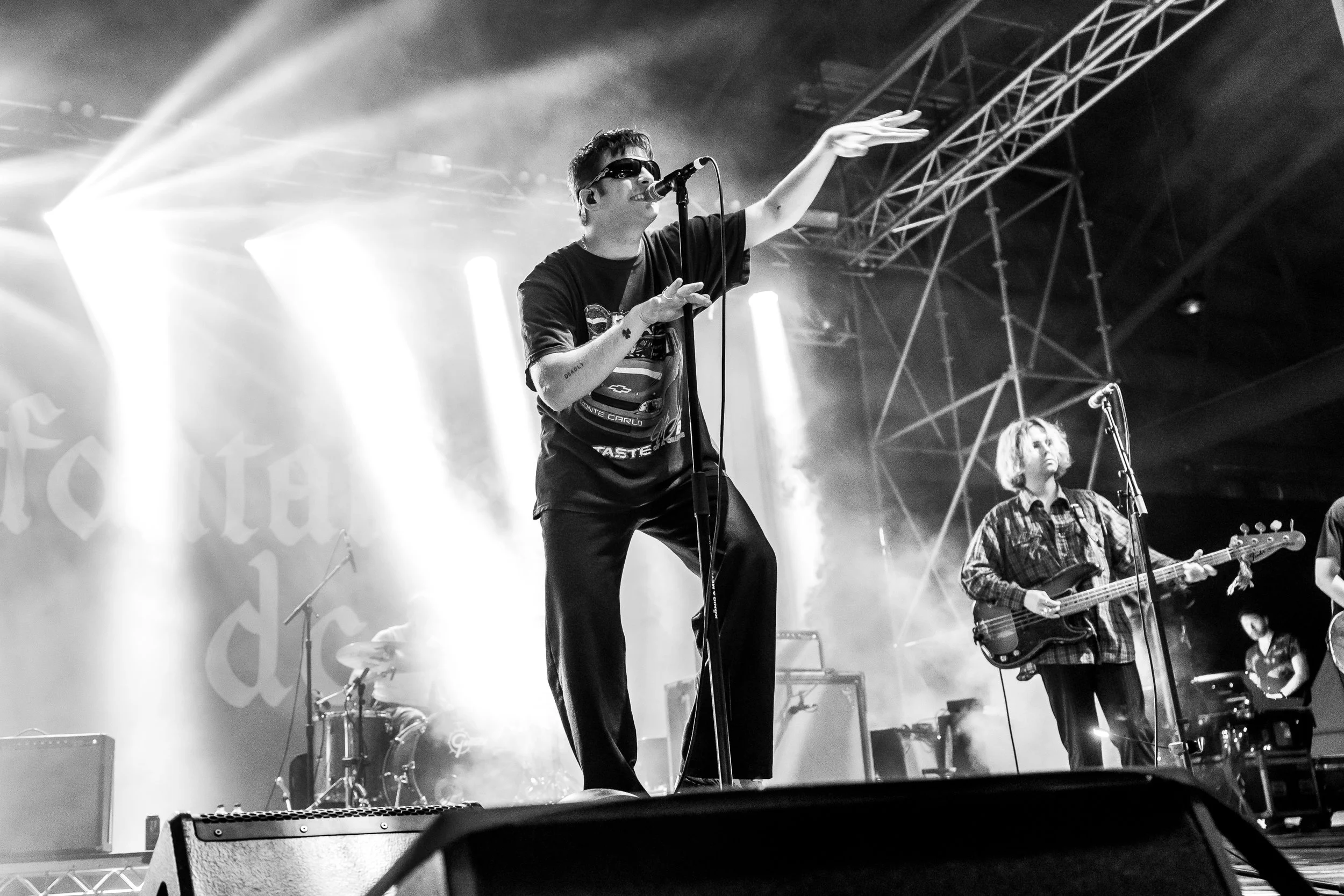
Fontaines D.C. performing at the Laneway Festival in Sydney in 2023. Frontman Grian Chatten is pictured in the foregeound, with bassist Conor "Deego" Deegan III in the background. Photo by Bruce Baker via Flickr
An influx of Irish talent has dominated the music and film artistic landscapes in recent years. From Jessie Buckley’s recent Best Actress Oscar win at the 98th Academy Awards and music artists like Fontaines D.C., Kneecap and CMAT becoming increasingly popular, the prominence of the Irish is striking.
The Irish are no strangers to being leading bastions of culture, with U2, Sinéad O’Connor and The Cranberries being influential musicians; and actors like Colin Farrell, Liam Neeson and Cillian Murphy leaving their mark on the film industry.
However, this sort of second wave of Irish talent has come into the foreground, signifying a new era. Inhaler, a rock group hailing from Dublin, is part of this resurgence and is a direct product of precursors to this Irish music boom.
The band’s lead singer, Elijah Hewson, has music in his DNA. Son of U2 frontman Bono, Hewson formed Inhaler in 2012 with bassist Robert Keating, guitarist Josh Jenkinson and drummer Ryan McMahon. The group released their first single, “I Want You,” in 2017.
Fast forward to today, Inhaler has since released three full-length albums, has opened for Noel Gallagher’s High Flying Birds on tour, and has garnered over 1.2 million monthly listeners on Spotify.
Fontaines D.C., another Irish band from Dublin, is also at the forefront of the resurgence. The band formed in 2014 and has released four albums, with their most recent album, “Romance,” gaining the most popularity.
Fontaines received a Grammy nomination in 2021 for Best Rock Album for “A Hero’s Death,” and the same nomination in 2025 for “Romance.” They also received a nomination for Best Alternative Music Performance in 2025 for their single “Starburster,” the lead single from “Romance.”
Lead singer Grian Chatten has also recently contributed to the new “Peaky Blinders" movie soundtrack, strengthening the relationship between Irish actors and musicians.
Kneecap, a hip-hop trio from Belfast, Northern Ireland are arguably the most controversial of the resurgence. Kneecap, who rap in a mixture of English and the Irish language Gaeilge, are known for using their music to speak out on social issues including Irish language rights, Irish republicanism and the reunification of Ireland. The group has also spoken out against the ongoing genocide in Gaza and was at the center of a terror charge dispute with the British government last year.
Kneecap has sparked conversation surrounding the Irish language and British rule in Ireland. At the center of their message, the group wishes for people to come together. “It doesn't matter who you are, where you're from,” Mo Chara said in an interview with Rolling Stone. “Just because we rap in Irish and might not align with your political views, we can be friends with people that we don't align with politically."
Ciara Mary-Alice Thomspon, better known as CMAT, is another musician in this Irish music canon. Hailing from Dunboyne in County Meath, CMAT’s Irish identity is integral to her image as an artist.
In the title track from her most recent album, “Euro Country,” which came out in March 2025, CMAT sings in Gaeilge briefly and touches upon themes of depression, financial crisis and the nation’s identity following the collapse of the Celtic Tiger economic boom in Ireland.
As Irish musicians gain renewed prominence, a parallel wave of actors is reshaping the film industry on a global scale. Actors like Cillian Murphy, Paul Mescal and Jessie Buckley, among others, are leading a resurgence on screen.
That presence has been especially visible throughout recent award seasons, where Irish actors have been prominent nominees, sometimes nominated alongside one another.
Jessie Buckley is the most recent Irish actor to take home an award with her historic Best Actress Oscar win for “Hamnet,” in which she became the first Irish woman to win the award. Rounding out her acceptance speech, Buckley said “Go raibh maith agaibh, slán,” the Irish for “Thank you all, goodbye,” making her Oscar win personal and closer to the heart.
Increasingly, identity is being expressed through the Irish language in both music and media, reframing it as something modern and culturally relevant rather than purely traditional. This reclamation and revitalization of the Irish language is a display of agency from these Irish figures, taking back something that was once stripped from them.
After accepting his Best Actor Oscar in 2024 for “Oppenheimer,” Murphy was quick to frame the moment as larger than himself. “I’m a very proud Irishman,” he said, acknowledging the significance of the win for Irish representation.
At the same time, Mescal and Andrew Scott were generating widespread attention for "All of Us Strangers," reinforcing how central Irish actors have become in shaping the emotional tone of contemporary film.
Increasingly, that identity is also being expressed through the Irish language, or Gaeilge, in music and media, reframing it as something modern and culturally relevant rather than purely traditional.
Actors have played a key role in that shift as well. Mescal has spoken publicly in Irish, embracing the language as part of his identity while also reinforcing a broader sense of cultural confidence.
When asked about the possibility of meeting the King of the United Kingdom, Mescal responded, “I’m Irish, so it’s not on the list of priorities.” The remark, simple but pointed, reflects a generation that no longer feels the need to look outward for validation.
The new wave of Irish talent from musicians and actors shows how big an impact this small island nation has on the grand scheme of popular culture.
Together, this convergence reflects a broader cultural shift: a generation of Irish artists not just participating in global culture, but redefining it on their own terms, with renewed emphasis on their language, stories and ties to home.