ICE Shootings in Minneapolis; Marist Professors Hold Lecture to Discuss
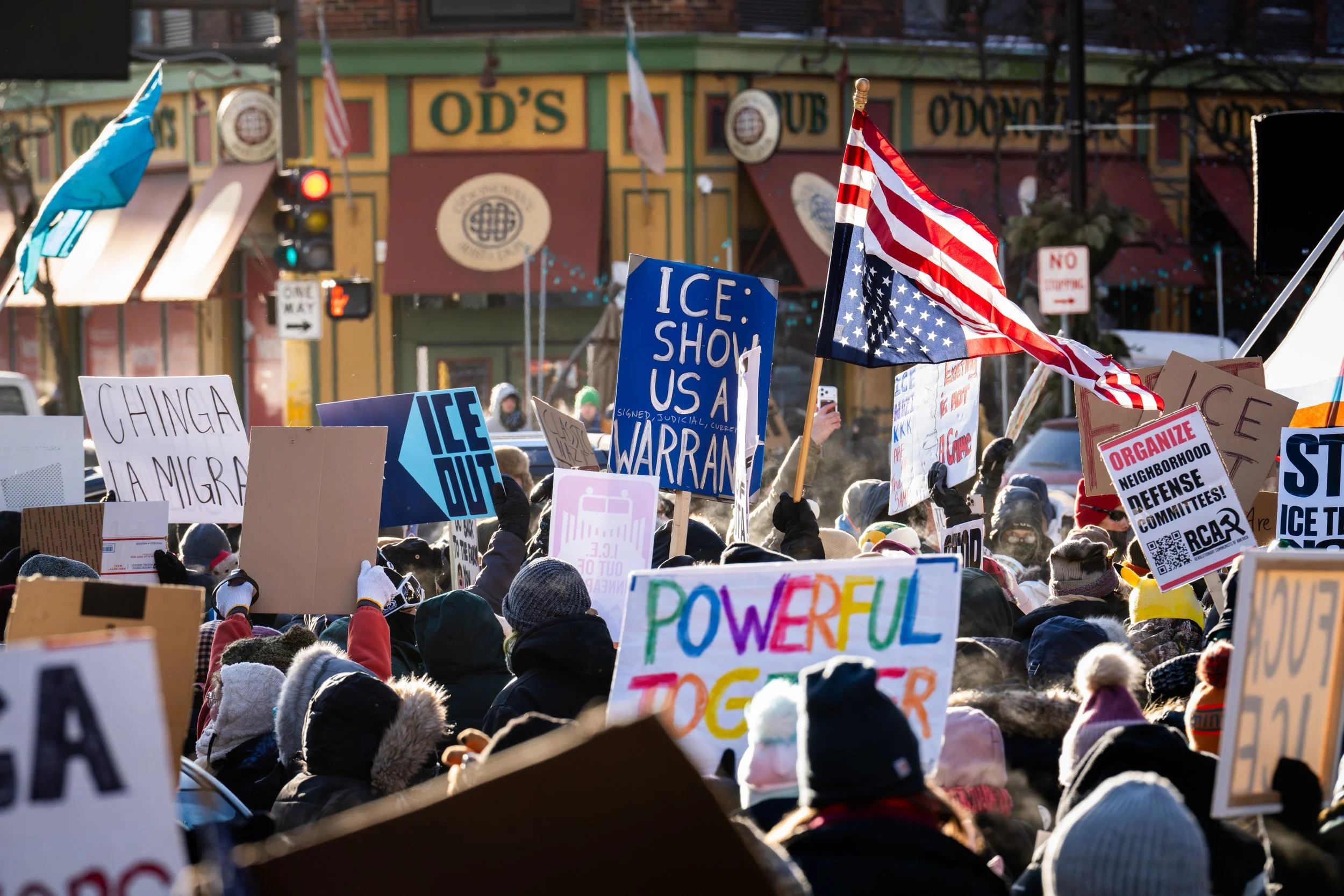
Protesters in Minneapolis. Photo courtesy of Chad Davis via Flickr
The city of Minneapolis, Minnesota, has been the target of the Federal Bureau of Investigation (FBI) and Department of Homeland Security (DHS) since the end of December, in an effort called Operation Metro Surge. The presence of the U.S. Immigration and Customs Enforcement (ICE) agents in the city has grown exponentially in the new year, resulting in the death of two protesters as well as a widespread resistance effort.
The Somali population in Minneapolis-St. Paul, also known as the Twin Cities, is a primary target of ICE. The Twin Cities are a hotspot for Somali Americans, with 84,000 out of 260,000 Somalis in the country living in the area. Of this population, 58% were born in the U.S., and 87% are naturalized citizens.
This comes after President Donald Trump referred to the group as “garbage.”
“When they come from hell, and they complain and do nothing but bitch, we don’t want them in our country,” said Trump in a Dec. 2025 cabinet meeting. “Let them go back to where they came from and fix it.”
Trump also identified rampant fraud, specifically involving Medicaid, as a reason for the use of federal intervention, calling the state a “hub of fraudulent money laundering activity.” This crackdown began with former President Joe Biden in 2022, with 47 people being charged for fraud. According to the Minnesota U.S. Attorney’s Office, 82 of the 92 defendants in these fraud cases surrounding housing services, food programs and behavioral health programs are Somali Americans.
A YouTube video posted by creator Nick Shirley, detailing the history of fraud in the state, rekindled attention to the scandal. This video was further shared by Trump, Vice President J.D. Vance, Elon Musk and Attorney General Pam Bondi.
After this, Trump paused federal funding for childcare in Minnesota and announced a new protocol for states to claim daycares funded by Medicaid through receipt and photo submissions proctored by the U.S. Department of Health and Human Services (HHS).
The large presence of ICE agents in the city has sparked large backlash and protests both in the state and online.
This heightened response began after an image began circulating of a five-year-old boy being escorted into a car by ICE agents. The boy, later identified as Liam Conejo Ramos, was taken into custody along with his father. The two were taken from suburban Minnesota and flown to a family detention facility in Texas.
The boy’s family is from Ecuador and applied for asylum to border officials in December, 2024. DHS claimed that the boy’s mother refused to take custody of the child, which is why he was taken alongside his father, while the mother claims that agents were using her son as bait to get her to step outside of the house.
This backlash skyrocketed after a 37-year-old woman named Renee Nicole Good was shot and killed by ICE agents during an “enforcement operation.” Good was driving on the morning of Jan. 7 when her car got stuck in the snow. DHS Secretary Kristi Noem later claimed that agents were attempting to help Good when protesters approached.
Good’s partner exited the vehicle and began speaking with the agents and filming them. Agents approached Good, telling her to exit the vehicle while she was moving in reverse. Good, then put the car in drive, moving away from the agents when she was shot three times. After agents called emergency services, they refused to allow a physician, who was a bystander to the incident, to check on Good’s condition. After Good’s death, DHS claimed she “weaponized her vehicle” in an “act of domestic terrorism."
The most recent altercation resulted in the death of 37-year-old ICU nurse, Alex Pretti. Pretti was protesting ICE’s presence in the city. Before his death, he was assisting a woman who had been pepper-sprayed by agents and approached them while filming on his phone. Pretti was taken to the ground by agents and shot five times by two agents.
A statement made by DHS claimed that Pretti “approached US Border Patrol officers with a 9 mm semi-automatic handgun.” It was later revealed that while Pretti was carrying a gun, it remained holstered until it was removed by agents before his killing. This has sparked backlash from gun rights activists and organizations who say Pretti had the right to carry a firearm.
In response to the widespread protests and international attention brought to the events occurring in Minneapolis, the Marist University Political Science and History departments held a panel to discuss the tragedies on Jan. 30. The lecture was led by five history and political science professors. The panel included Dr. Sally Dwyer-McNulty, Dr. Steven Garabedian, Dr. Julie Raines, Dr. Kristin Bayer and Dr. Lynn Eckert.
To begin, Dwyer-McNulty described historical precedence for these events, specifically post WWI.
“I will say for most of us in this room, it seems as though what’s happening is unprecedented, but it is only unprecedented in our lifetime,” she said. “There are other times in the history of the United States where state-sanctioned violence has been brought against peaceful civilians. That doesn’t mean you shouldn’t be shocked and horrified; you should be.”
Building on the historical context, Garadbedian discussed how polarization has shaped the public’s reactions to the deaths of protestors in Minneapolis.
“The extreme polarization in the United States right now means that some folks, like me, see them as martyrs who took a heroic stance for justice and other folks see them as ‘domestic terrorists or extremists,’” said Garadbedian. “They discredit them in their mind in terms of having anything but a kind of villainous reputation."
The panel also touched on the moral and legal implications of the actions of federal law enforcement.
“An unjust law is not a law,” said Raines. “I think that's probably the sentiment that most of us are feeling…this is not just. This is not justice in how we define equality and equity, and protecting vulnerable populations.”