100 Days Into Mamdani’s NYC Experiment
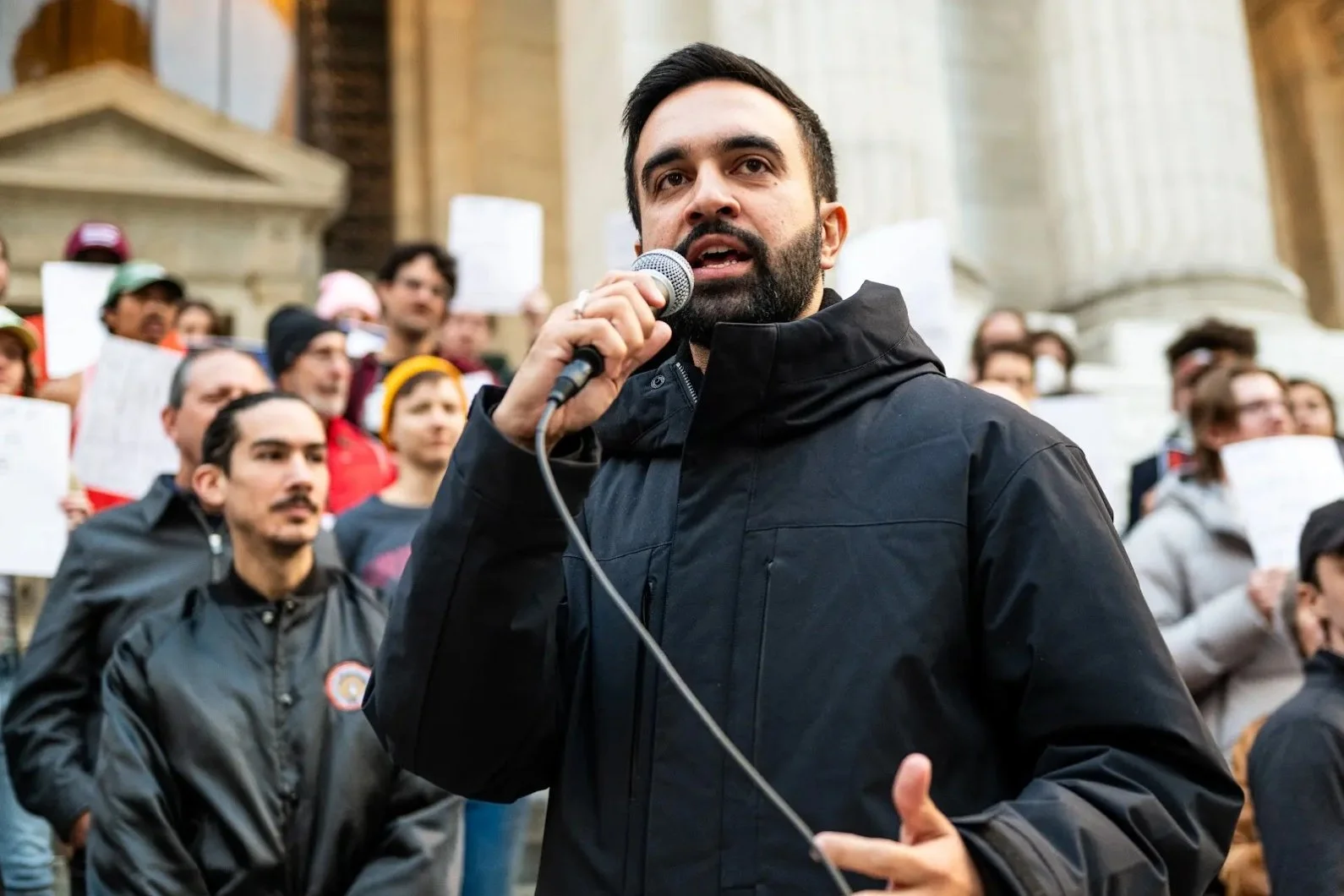
Mamdani’s first 100 days in office as NYC mayor has been shaped by bold proposals and visible action, with his big ideas often facing big pushback. Photo by Bingjifeu He on Openverse
Mamdani’s first 100 days serving as New York City’s mayor have been defined by idealism, universality, urgency and perhaps most noticeably, pothole repairs.
The youngest mayor in over a century and the city’s first Muslim and South Asian mayor ran on a controversial democratic socialist platform. On April 12, Mamdani delivered an address in Queens, where he touted a $1.2 billion investment for universal childcare, solving exorbitant grocery prices and the repair of 100,000 potholes through multiple “pothole blitzes.”
Mamdani’s election drew harsh criticism from President Donald Trump, who called the foreign-born mayor a “communist.” Mamdani, however, has seemingly navigated the complicated nature of their relationship, avoiding Trump’s wrath and keeping intense immigration crackdowns out of one of the most diverse cities in the country.
Perhaps the most inconceivable promise for skeptics during election season was Mamdani’s plan to open city-owned grocery stores. On April 12, he announced La Marqueta in East Harlem as the first of five sites that will attempt to keep groceries and the city itself, affordable and livable.
Mamdani visited La Marqueta on April 14, where he noted that late Mayor Fiorello LaGuardia attempted to achieve the same goal of reduced cost of living after the Great Depression.
“New York City, it is time for a grand experiment once again,” Mamdani said, according to CBS News. “Just as LaGuardia used government to respond to the challenges of the Great Depression, we will use government to respond to rising prices and unaffordable groceries.”
This project, which is expected to cost $30 million, is still awaiting approval from the City Council, but has drawn criticism from Antonio Pena, president of the National Supermarket Association. He described the plan as a “slap in the face,” as other grocery stores in the area are already operating on thin margins and facing steep competition.
The concept has also been criticized by Fernando Mateo of United Bodegas of America. “These stores are going to get jam-packed; they’re only four or five in the entire city of 8 million people,” he said. “It’s a great punch line for him and for the socialist movement. But New York is not a socialist city.”
According to the Marist Poll, however, 48% of polled New York City residents approved of the job Mamdani is doing as mayor during his first 100 days, while 30% disapproved, and 23% were unsure. The results vary by borough, however. Mamdani has the highest approval ratings in Brooklyn (54%) and Manhattan (55%). In Staten Island, the city’s political and geographical outlier, 57% actually disapproved of how Mayor Mamdani was doing his job.
New York City resident and college senior Kate Gigliotti commends Mamdani’s personable approach to the lived experiences of New Yorkers. Her sole grievance with his proposed plans, however, lies in his tax proposals.
“[The tax proposals] aren’t great for middle-class families and businesses,” she said.
As part of his Democratic Socialist platform, one which he promises to continue to govern by, Mamdani is seeking to close the city’s projected $5.4 billion budget deficit by taxing the ultra-wealthy. He was facing pushback from moderate Democratic New York Governor Kathy Hochul, so he threatened to increase property taxes by 9.5% to subsidize the budget gap.
Mamdani has said that he did not want to resolve the budget crisis on the backs of working middle-class New Yorkers.
The two allies have since reached an agreement. Hochul is backing an annual surcharge on non-primary New York City residences worth $5 million or more, also known as a pied-á-terre tax. By reversing her opposition to increased taxes on the wealthy, she is further aligning herself with Mamdani, which will hopefully bolster support for her in the city to win reelection.
Mamdani’s first 100 days in office have proved that his administration is looking to intervene in traditional capitalistic affairs in order to ease the financial burdens of New Yorkers. From highly visible efforts like pothole repairs throughout the five boroughs to more ambitious projects like universal childcare and city-owned grocery stores, his approach is unlike anything the city has seen before.
Early polling still shows that large percentages of residents are skeptical of his vision and governing style. It remains unclear amongst New Yorkers across the boroughs whether Mamdani represents lofty idealism or is capable of enacting meaningful change through risky experimentation.