Online Accusations against Apple for Deleting Cities in Lebanon from Maps
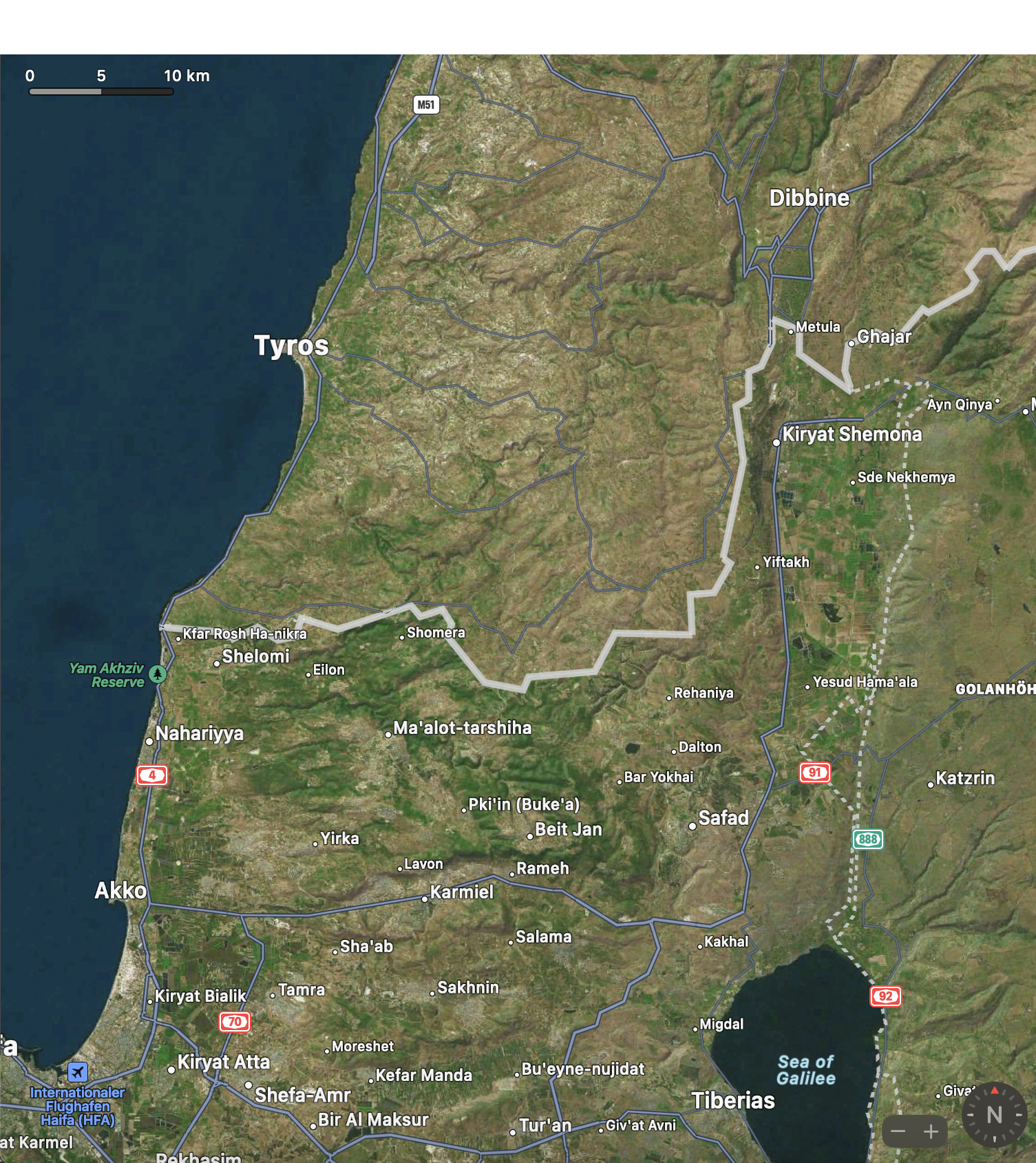
Photo courtesy of Julie Yazici via Google Maps and Apple Maps
Apple has been accused online of purposefully deleting the names of Lebanese cities from its mapping services in support of the ongoing Israeli military attacks in the region.
Posts stating that Apple removed Lebanese cities from their Map service after Israeli bombings have gone viral, causing an uproar online. Official accounts, such as @gazafreedomflotilla, an organization that is known for trying to deliver food, medicine and other goods to the Gaza Strip, have called both Apple and Google out, demanding a boycott of all of these companies.
There have been accusations of complicity with Israel’s drastic increase in military attacks in the regions through the erasure of various towns in Lebanon on these online platforms.
Apple denies these accusations, telling Wired Middle East, a magazine run by the same publisher as Vogue, in an official statement that the locations were not deleted since they were never included in the first place, and that the newer mapping experience is not currently available “in that region.”
Other news agencies, such as Euro News, have reported a justification, stating that even before Israel’s invasion, the Apple Maps were not complete and locals preferred Google Maps for getting directions. A lack of “before-and-after comparison” screenshots made the accusations of deleting cities and villages less credible.
When looking at the surrounding area, countries such as Israel have significantly more data available with Apple Maps showing multiple cities and villages in the region. Euro News suggests that the problems may be linked to the company’s software rather than a political decision.
Various other platforms have now started sharing screenshots from the area, predating Israel’s attacks. These images show an already sparse coverage in the area. Furthermore, there have been discussion threads on Apple's Website from 2019, reporting that people living in Lebanon do not usually rely on Apple Maps because of the lack of information for the area.
Meanwhile, Wired Middle East argues that “when a place cannot be easily found, users may experience that absence as erasure – regardless of the technical explanation.” Apple’s denial of the viral accusations has so far not been disproven, but different voices interpret the lack of information on Lebanese territory as a statement of its own.
The original post stemmed from an independent Journalist on X, formerly Twitter, and has since been deleted. Other journalists have reposted and later apologized for the spread of misinformation, but the accusation is still being defended and discussed on various social media platforms. When looking up the terms “Lebanon,” “Apple” and “delete” on TikTok, the first videos to show up still claim active erasure.
Both Euro News and Wired Middle East agree that without an in-depth analysis of Apple's software and collaborations with third-party providers, accusations of purposefully erasing the country's infrastructure will remain as accusations.