AI Usage Restrictions in Public Schools and the Implications on Higher Education
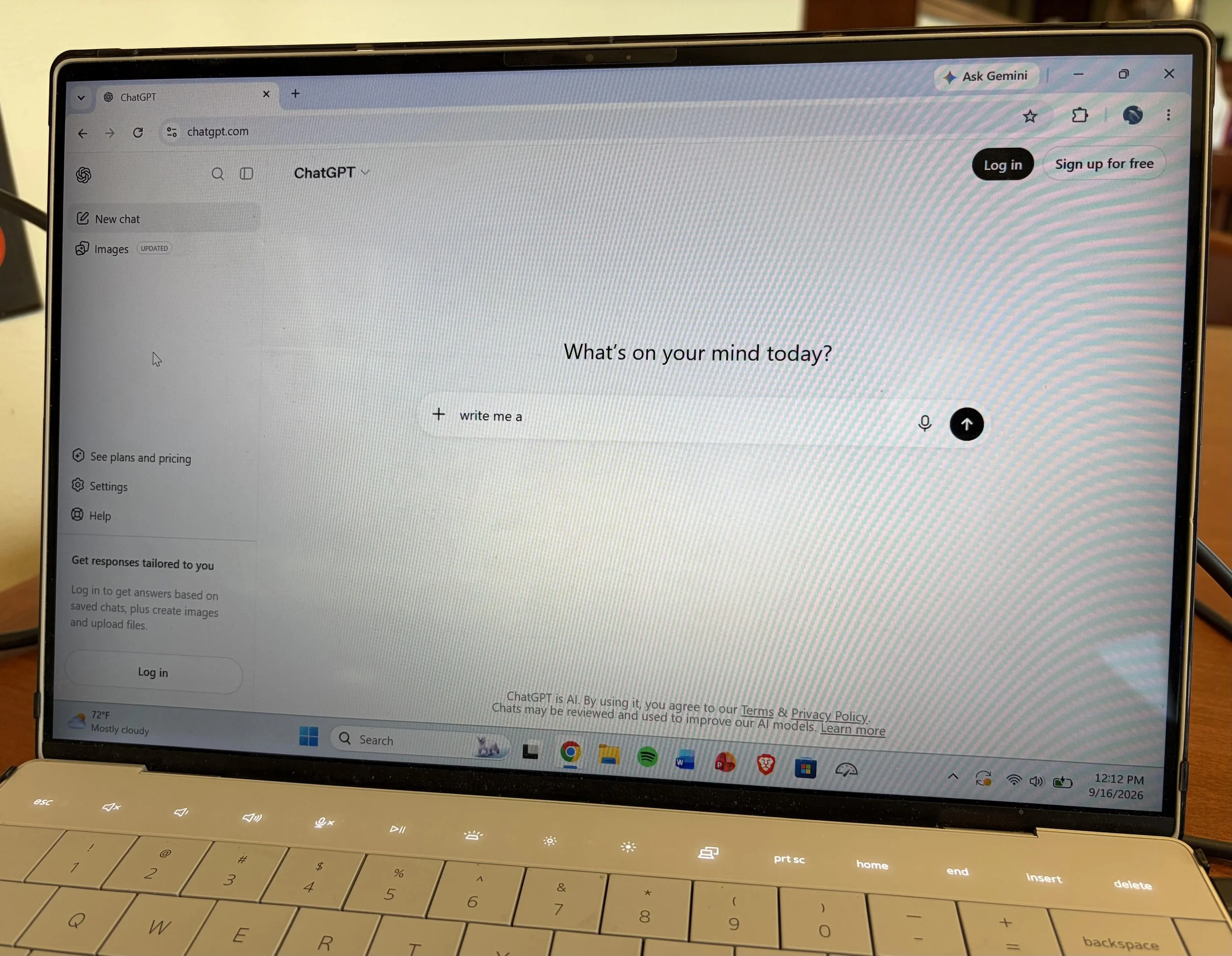
Student utilizing AI to write for them. Photo by William Silkowitz '27
Artificial intelligence is rapidly advancing and questions regarding its place in education continue to percolate. Both New York City and Los Angeles, the country’s two largest school districts, have significantly restricted the use of generative AI in elementary and middle school classrooms, permitting use in certain circumstances for high school students.
These changes have garnered controversy over whether they properly encourage students to harness their own intellectual abilities or rather damage their adaptability to new technology. Still, AI companies continue to incentivize their use with new tools for both students and teachers alike.
Considering the exceptionally competitive job market’s increasingly reliant on AI, secondary and post secondary education too must evaluate how or how not to utilize artificial intelligence. Educators and students are left asking: what is the best way to prepare students for an AI-powered professional environment without sacrificing academic rigor?
Olufunke Gando ‘28, a computer science student, believes learning coding fundamentals free of AI support better equips students to use it as a tool later on. In a field so intertwined with AI development, approaching its use in the classroom is especially contentious. Gando details that AI is vital to navigating many tasks within the degree. Where she believes it becomes dangerous is when AI is used to replace the work students could do themselves, simply for convenience’s sake.
AI use disproportionately affects different academic disciplines. Courses in the humanities and social sciences have been noted to contain more classroom disruptions due to unpermitted student use, likely because writing is a central part of their curriculums.
Mary Kirk ‘27, a history student, believes that AI has no place in a liberal arts classroom. Kirk finds that using it for essays and other assignments robs you of the lessons you learn from the writing process. She expresses her desire for an academic environment where students provide original analytical contributions to in-class discussions, a rarity with the ease of finding AI summaries. Still, she acknowledges the value of learning about AI in an academic environment as a form of preprofessional training, especially for more quantitative fields.
Nolan Borders ‘27, a business marketing student, has taken classes where AI use was integrated into the content and projects. These skills translated to internships afterwards where he was required to use AI.
Borders says AI is changing the whole space in the industry he plans to enter. It replaces redundant analytical work in the business field at large.
Nevertheless, many of his professors still do not endorse AI usage. Rather, specific courses catered towards learning AI skills lean the most into it. Many professors across the country lack the confidence in understanding AI to properly inform students how to use it as a critical tool rather than as a crutch.
This Fall, Marist is launching its own AI Academy with the goal of encouraging innovative yet mindful use of AI amongst both faculty and students.
Even if professors disallow AI usage, it is becoming increasingly difficult for them to enforce these restrictions. Some professors are even resorting to assigning in-class essays to avoid the risk of generative AI being used.
The use of generative AI tools may simply be out of the control of the general consumer. Following a proposal to slow down AI advancement by Anthropic CEO Dario Amodei, other AI company heads expressed their agreement, possibly indicating an incoming change in regulations that may affect its use in higher education.
Evidently, the ethics of using artificial intelligence in higher education are incredibly situational, especially depending on the work assigned, content of the course and endorsement of the professor.
Certain departments, like those within the humanities, aim to hone an individual’s own capabilities in reading, writing and analysis to prepare them for a variety of professional environments; in such cases, AI usage seems relatively futile.
Alternatively, preprofessional departments, including business, aim to develop skills directly applicable to the industry. For industries engaged in AI, utilizing these tools seems more understandable.
The prominence of generative AI proceeds to grow and higher education institutions will continue to shift their policies accordingly. The New York City and Los Angeles restrictions will serve as examples for education at large regarding the handling of the integration of these new technologies.