The Future is Not AI: John Warner’s Talk
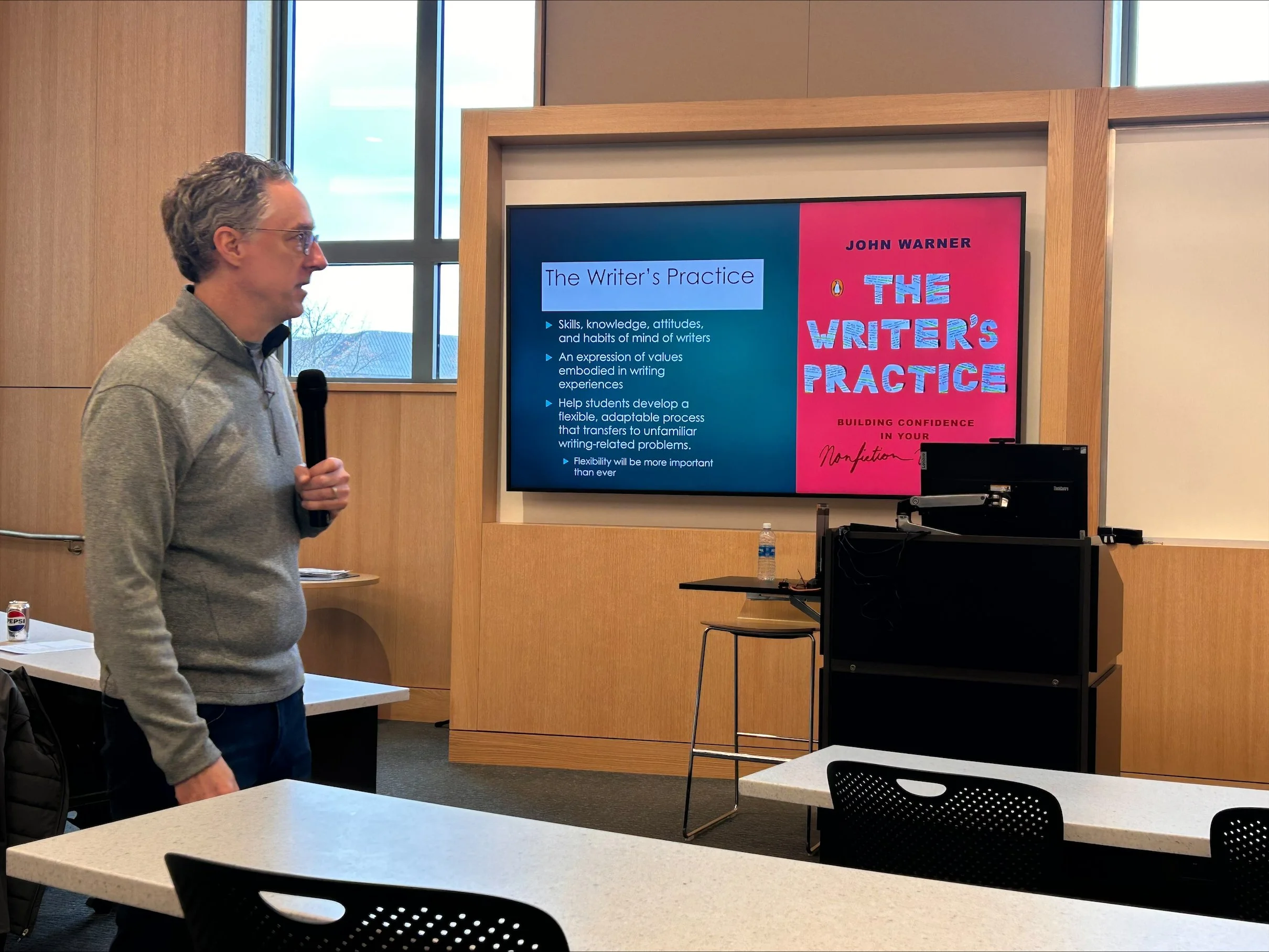
Author John Warner giving a lecture at Marist University about AI and writing. Photo by Sarah Gurskis
“Persistence matters more than curiosity,” author and educator John Warner said as he paced in front of Dyson room 1008. On Nov. 12, Warner pulled from his book “More Than Words,” which explores writing in the era of artificial intelligence, to discuss AI and the modern classroom.
The lecture speculated on the future of academic writing and college students as they enter the new generation of generative AI. Many students may use AI as a resource to get a multitude of tasks done, the most common task being homework. This new “homework machine” is used for a couple of reasons, he theorized: education is a matter of transaction that turns students into “customers,” and the only result that matters is their grade.
Tool utilization, like AI, is nothing new in schools. Students will always use tools that will provide a means to an end. Prioritization and outside factors can influence students to find shortcuts and other help, since “it’s a culture of performance and optimization,” as Warner said. However, he argues that this is the opposite of what education should be doing.
Warner sees AI like a Labrador. He provided a visual, AI-generated example of his thinking: a glossy image of a white dog wearing goggles. Every time he prompted the AI to take the goggles off, it returned another picture of the dog wearing them. He explained that, unlike humans, it can only fetch information and can’t conceptualize anything original. “The Labrador is there to fetch things that I can’t,” he said.
“Each of us has a unique intelligence,” Warner added.
“Resist thinking we’re doomed,” Warner said. He advised leaning on peer support, asking questions, and keeping a positive outlook on education. If students want to learn more about AI, Marist's Ethics Statement on Artificial Intelligence is available to read. Their mission is “to foster enlightened, ethical, and productive lives,” and cultivate that through six principles: human-centered innovation, ethical oversight, social impact, environmental awareness, equal access and opportunity and community engagement and education.
Many students have opinions about AI; they view it as a revolutionary technology or a job-taking machine. Warner considered all this and reassured all of us: the future will never be in the AI’s hands—it will be in ours.