Future World Simulation Event at Marist: Students form governments in a fictional future
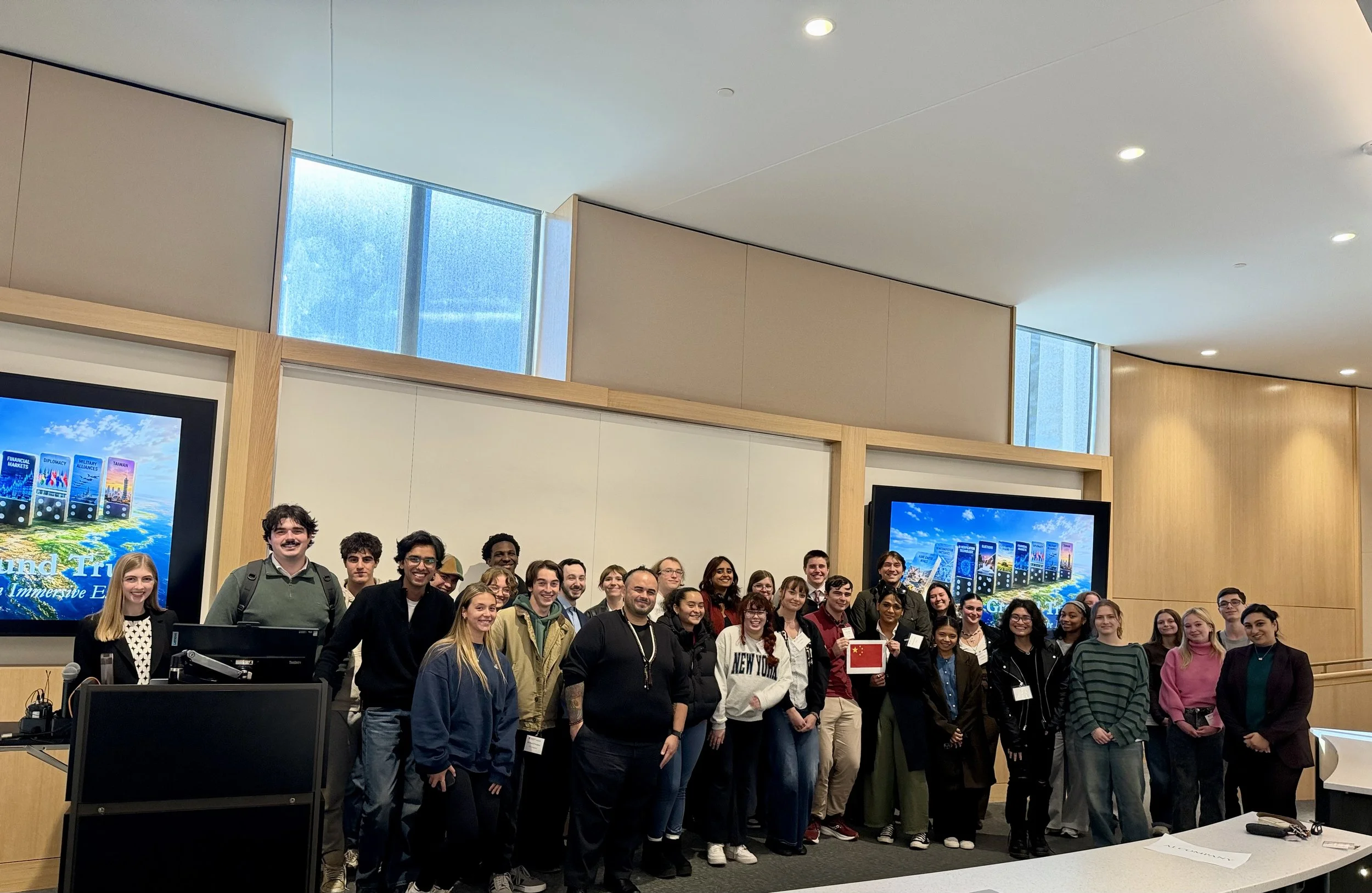
Photo by Julide Yazici
The world was watching as a new AI company revealed their technology that promised truth verification of videos and images through observing entire populations.
This scenario, taking place in the year 2029, was simulated on Oct. 24 in the Dyson Center. Supported by Expert Theory, a rising company that focuses on creating AI supported future simulations, Marist University students took different roles in simulating a global situation, navigating negotiations, environmental crisis and public unrest. The role play simulation, organized by Jeremiah Perez-Torres, assistant professor of crime and justice studies and executed by Expert Theory (formerly Valens Games), divided students in five teams, consisting of China, Brazil, India, the United States and a fictional AI Company known as WitnessAI. These teams competed to pursue their interests of expansion and growth on the global scale.
After a detailed, fictional news briefing on the events from today all the way to the year 2029, which included Tweets, newspaper articles and celebrity statements, players spent over five hours negotiating and plotting different strategies to guarantee the best outcome for their own teams. Ending with a dramatic attack on agriculture, the team representing China was crowned the winner of the simulation, having successfully manipulated global soybean production.
Coming out of the simulations, students were meant to have gathered insights into all the different factors that influence modern day politics. Perez-Torres reached out to Expert Theory and has been utilizing their simulations in his class on terrorism (CRJU 377L) to give students a more hands-on approach to learning.
Fowzan Ul Haq ‘29, participant and team leader of WittnessAI, said “It really helps to understand what goes on behind the scenes.”
Using Expert Theories platform ‘Providence’ players are able to communicate with each other, as well as make in-game decisions and even contracts. Every team was provided with a briefing package that included fictional events that happened between the current moment and time and the fictional starting point of the game in 2029. Over the course of the simulation, players had to communicate both digitally and in person to try and create the best possible outcomes for their own team. Players would schedule meetings with other players online, agreeing on an agenda before representing their own team in person to have face-to-face negotiations.
Expert Theory Game Designer Minna Jaffery-Lindenmulder explained the purpose of this exercise as a way to understand the “multipolar world.”
“We want to help people become better consumers of news and better analysts of what goes on around the world,” Jaffrey-Lindenmulder said. The experience followed the example and collaborated with Marist Model UN and encouraged students to put themselves in other people’s shoes.
Expert Theory has conducted events like these with different colleges as well as businesses as team building exercises and possibly will visit Marist again in the future for more future simulation experiences.