New Alert System Ensures Immediate Notification of Potential Incidents for the Marist Community
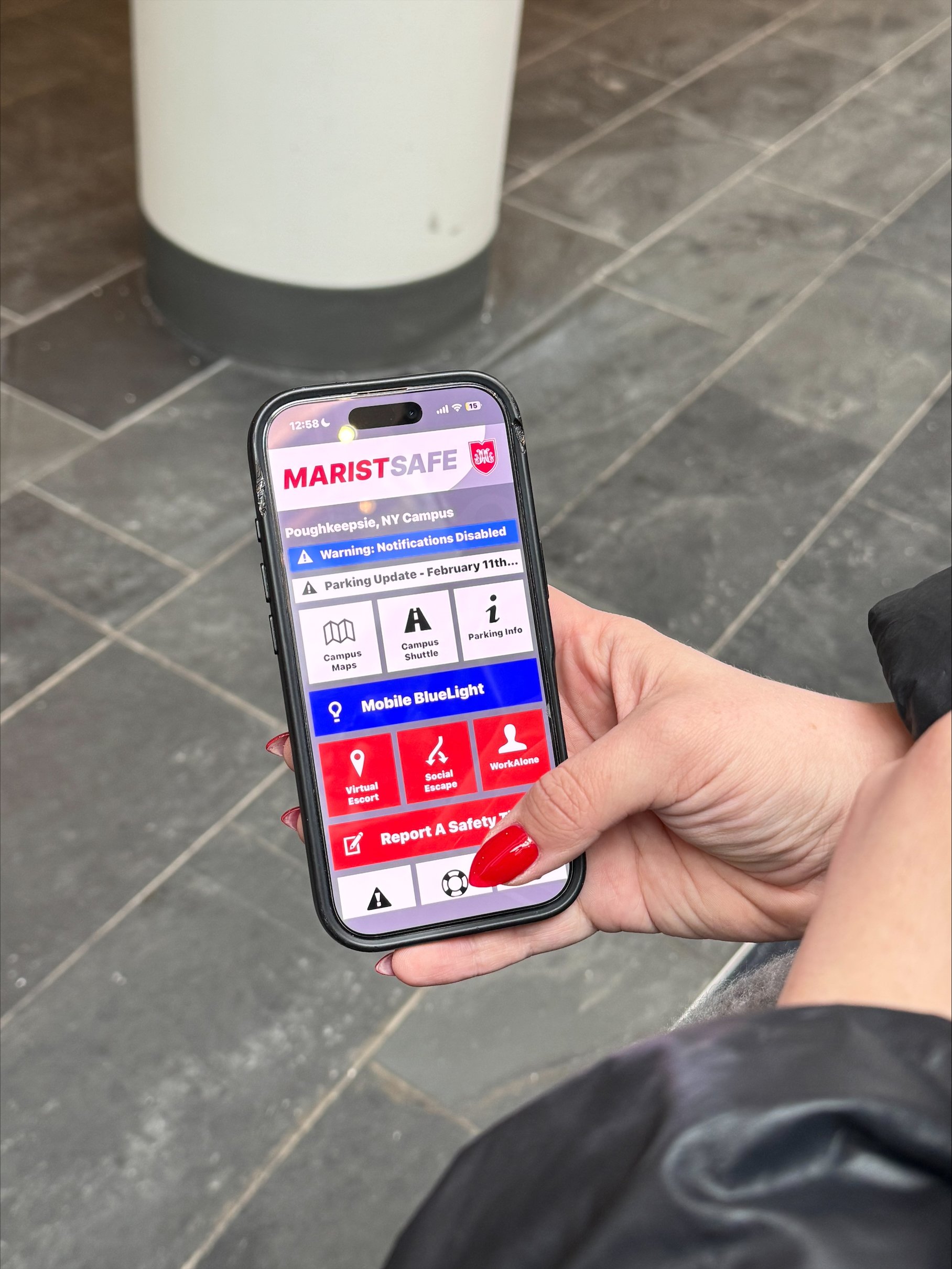
The new MaristSafe app. Photo by Hannah Tone ‘26
Director of Campus Security Daniel Gough sat at home on Dec. 13 – a rare place for him to be outside of the 18-hour shifts he often spends on Marist University’s campus – when he saw the news of the Brown University shooting.
Now over 20 years into his career in higher education emergency management, each time a tragedy such as the one that took place in Providence unfolds. But as a Brown graduate himself, it cut deeper.
These events put things into perspective for Gough and his entire team of officers and stand as valuable case studies – especially as Marist rolls out its new alert system.
Previously, MaristAlerts was an opt-in system, meaning that members of the Marist community only received text messages, phone call and voicemail alerts regarding campus safety if they voluntarily signed up for them. Only 18% of the community had done so.
“If we had an emergency on campus, like an active shooter, the only way every student, faculty and staff member was getting that [information] if they didn’t opt in was via email, and you're not checking your email at all times,” Gough said of the old system.
Thanks to the Federal Communications Commission, under the Telephone Consumer Protection Act (which allows consent for organizations to contact through the use of phone numbers for emergency purposes only), Marist Security accessed phone numbers through Duo Security, which everyone uses on campus for multifactor authentication on platforms such as MyMarist and Brightspace.
MaristAlerts is now an opt-out system; through the use of phone numbers, the entire community is now “automatically enrolled to receive emergency alerts via phone voice and text message,” as per Gough’s campus-wide email on Jan. 16. The system can be opted out of at any time.
Due to the size of the school and its contact list, within 30 seconds to two minutes of when Gough clicks send on a campus-wide message, those still opted in will receive the content as a text. It goes without saying that time is of the essence in emergency situations, and what happened at Brown University is an important case study.
At 4:03 p.m., Neves Valente entered an exam review session in Brown’s Barus and Holley building and fired over 40 shots, wounding nine and killing two students. It wasn’t until 4:22 that Brown sent out an active shooter notification.
In such an event like that, Marist Security has specific buttons located in its dispatch room that send out instantaneous alerts, rather than Gough having to craft a written message on his own. One button, titled shelter lockdown, elicits an immediate “run, hide, fight” message.
It goes without saying that the goal of Marist Security is to never let an incident get to that point. With their new opt-out alert system, Marist aims to prevent catastrophic events and relay important messages through faster communication directly to where its community will see them.