AI Accusations for SCA Showcase in Lowell Thomas
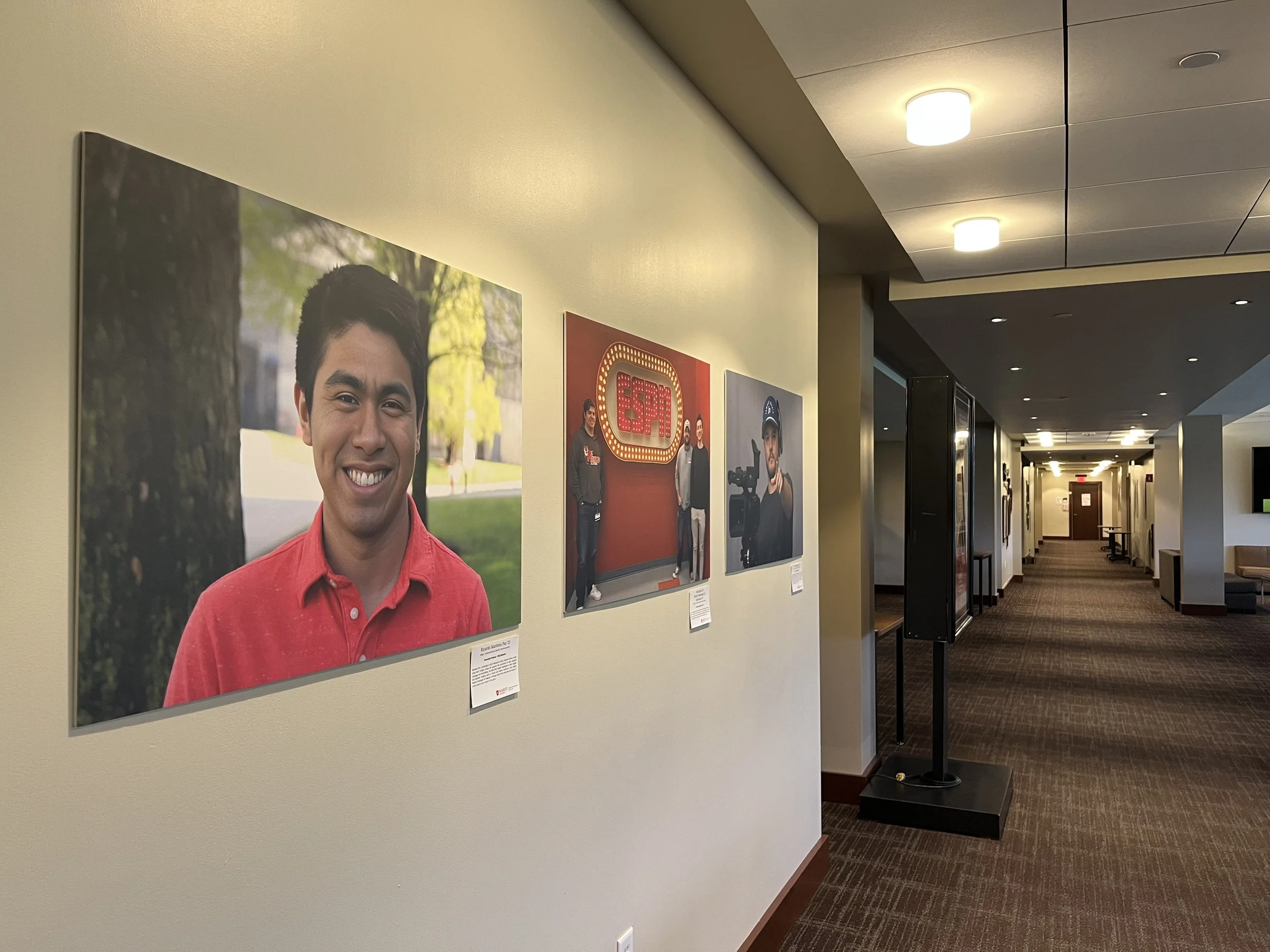
The recent photos that went up to advertise students in communications gained attention when students realized AI was used to alter the images. Photo by Lilian DeFilippis '26
Since April 10, Marist’s building for communications and the arts, Lowell Thomas, has featured an exhibition of Marist alumni and their careers post-graduation. Recently, some of the images featured in the exhibition were accused of being edited or even generated using AI tools, which caused discontent amongst students from the department.
Hanging above a little sign that proudly reads “Marist University - School of Communications and the Arts,” visitors of the Lowell Thomas Building were greeted by large images of Marist alumni from recent years. What was intended to complement this year's first SCA Showcase for current and prospective students is still on display today.
Recently, students have noticed inconsistencies and mistakes within some of the images, leading to suspicions of the use of artificial intelligence. The accusations were accompanied by irritation in the school of Communication and the Arts - fields which are currently undergoing drastic changes because of the rise of AI.
Acting Associate Dean and faculty member of the Marist School of Communications and the Arts, Jennifer Finn, has been the one to organize and bring the project to life. According to Finn, there was no use of Artificial Intelligence on behalf of Marist, and rather, the “airbrushed and polished” look of some of the images should be attributed to the images being professional headshots.
Finn explained that the faculty of the SCA had reached out to their former students to gather the content for the exhibition. Finn wanted to provide current and incoming students with relatable perspectives on their future through highlighting alumni success across various fields and majors.
All pictures featured in the exhibition have been submitted by Marist’s Alumni, which explains the large variety in quality and content of the images. While Finn repeatedly assured that no AI was used during the process of bringing the showcase together, there is no way to guarantee that the images submitted are free of AI editing.
When put through AI-detection software, results vary, with some of the programs saying that no Artificial Intelligence was used at all. Others, such as Google’s Gemini, say that while the image was most likely not entirely created by an AI, there was probably some editing done after the image was taken.
Distorted text on shirts and strangely warped hair and feet are strong indicators for the use of AI, and several Marist students, as well as professors, unanimously classified the images in question as AI when shown.
Students are supposed to ask themselves, “Could I see myself?” and find themselves represented in the exhibition. The goal was to present those who study the arts with a future perspective in a world that seems to shift further and further away from human creation.
Relatability was a large motivation when creating the project, according to Finn, and it was supposed to show the connection that Alumni still had with their former professors and Marist in general. With AI still being a controversial topic, especially in fields such as the arts, the message behind the exhibition is shifting to something almost ironic.
The accusations can neither be fully proven nor denied, and the lack of transparency is possibly the biggest issue for current students and faculty. With no clear way to determine the editing or even creation process of these images, accusations remain unsolved, with no clear way to attribute the use of AI to one party or person.