Lake America: How Does Restoring American Greatness Affect the Country's Reputation?
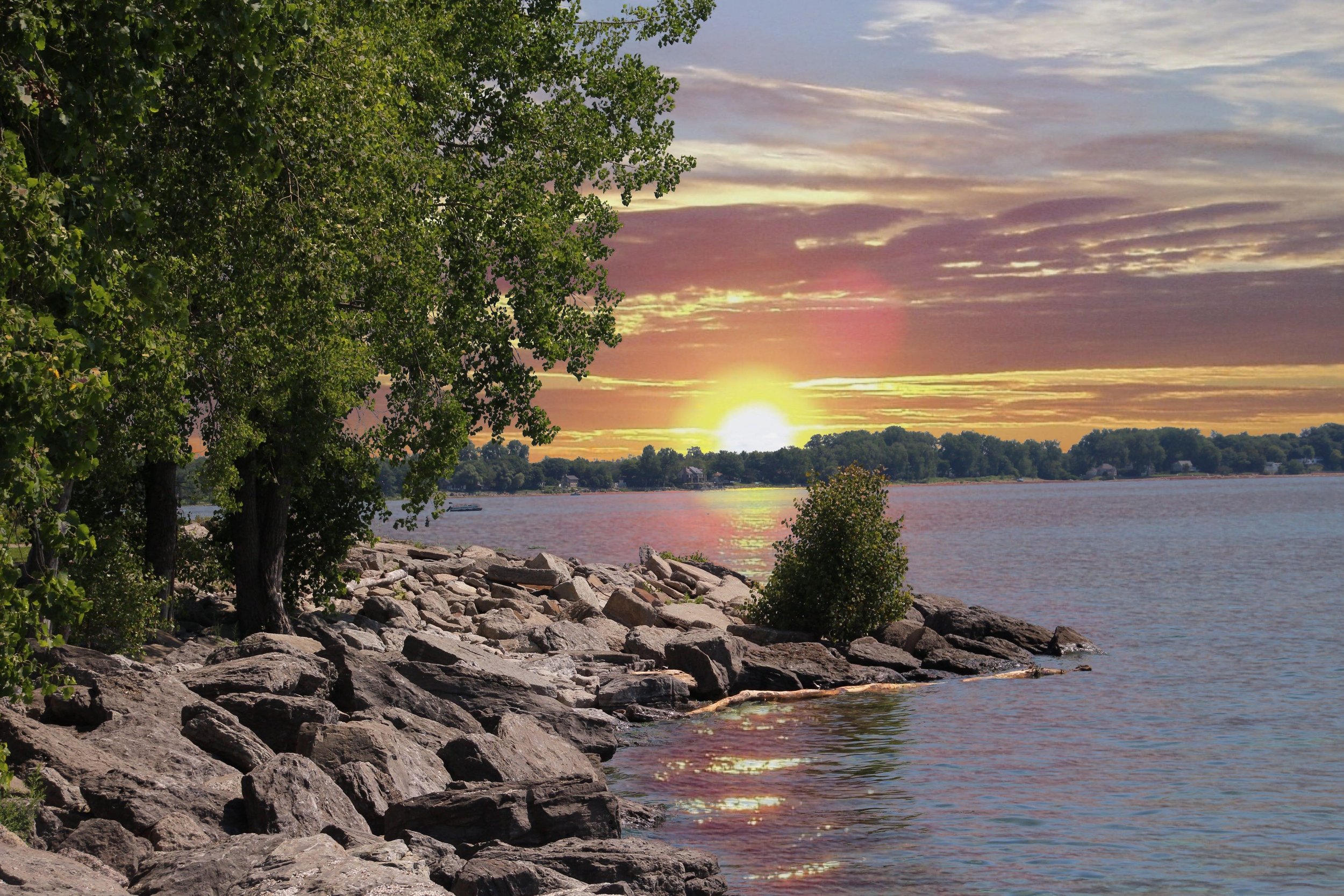
Scenic view of Lake Ontario. Photo by Bill Badzo on Flickr
Recent orders signed by President Donald Trump have begun to lower global opinions not only of the president himself but also of our country as a whole. On Aug. 27, 2026, Trump signed an executive order to rename Lake Ontario as Lake America. This action follows the U.S. imposing a 50% tariff on a list of Canadian goods, which Canada countered by imposing a 50% tariff on U.S. goods.
In the executive order, found on the official White House website, Trump justifies his decision by saying that the lake would not be open for all of the benefits it provides, including recreation, commerce and defense, if it weren’t for the protection of the U.S.. Trump also defends his choice by explaining that the deepest parts of the lake lie in American territory. While these may be valid reasons to name the lake after the U.S. if it were just being found today, renaming the lake centuries after its discovery is considered childish and vain by many Americans and most foreign leaders, including Canadian Prime Minister Mark Carney.
The name Ontario has Indigenous roots from the word oniatarí, roughly translating to “lake of shining waters.” By changing the name of the lake, Trump is also removing the deep culture and heritage associated with the name. Prime Minister Carney has explicitly rejected the new name and a sign has been placed near the lake that reads, “Lake Ontario. Now and Always.” Trump responded to this by posting an AI-generated video of him kicking the Lake Ontario sign and replacing it with a Lake America sign, then proceeding to dance to “Y.M.C.A.” One may view the video as a blatant mockery, reinforcing the author's view of the childishness of the original order itself.
Apple Maps and Google Maps have both renamed the lake on their platforms for American users while leaving the original name for Canadian users. It is evident that this order is not popular even amongst Americans, as shown by MapQuest, a navigation app that continues to identify the lake as Lake Ontario, topping the charts of new downloads in both Canada and the U.S.
The loss of respect for President Trump from other countries, not exclusively due to actions such as this and renaming the Gulf of Mexico, has begun to affect the world’s opinion of the country itself. According to Pew Research, the majority of South Koreans had little confidence in Trump to make good decisions in regard to world affairs during his first term.
Only 16% expressed confidence in him. Yet, amongst the 78% that did not hold confidence, 71% still thought fondly of the U.S.. During Trump’s second term, however, 68% of South Koreans who lack faith in Trump also have a negative opinion of the U.S.
Negative responses have had little to no effect on Trump’s determination. Since renaming Lake Ontario less than a month ago, Trump has also expressed a desire to rename the Strait of Hormuz to “Trump Strait” and to rename New Mexico to “New America,” as seen in posts the president made on X.
Donald Trump does not have the legal power to rename the strait or the state and he has made no further comments since his initial desire. By damaging the reputation of our country, he is creating excess work for future leaders to rebuild a respectable reputation.
Trump is appealing to Americans’ patriotism by sticking to his slogan of “Make America Great Again.” But focusing on petty decisions such as these takes away time, energy and thought that could be put into actions to help American citizens and truly restore American greatness.